Chapters:
00:00 Intro
00:30 Welcome & Introduction of the Catholic Education Panel
02:07 Introducing the Educational Leaders and Their Mission
09:12 Why Catholic Education Matters More Than Ever
10:12 Hope, Loneliness, and the Crisis Facing Young People
12:27 Meaning, Purpose, and Objective Truth in a Secular Culture
17:22 Why Parents Continue to Choose Catholic Schools
21:16 Beyond Academics: Formation, Prayer, and Character Development
30:18 Faith in Action: Living the Gospel Through Service and Community
41:25 Incarnational Education and the Crisis of Despair
43:26 Forming Service-Minded Graduates Through Faith in Action
46:46 Why Catholic Schools Must Prioritize Relationships Over Technology
50:15 How the Alpha Program Reintroduces Students to Jesus Christ
52:25 The One Virtue Young People Need Most: Grit
57:10 AI, Human Connection, and the Future of Education
1:00:01 How Catholic Schools Keep Their Identity and Faith Alive
1:09:09 Answering Difficult Questions About the Catholic Faith with Confidence
1:12:00 Outro
If you are interested in our school, make sure to check out our website:
https://www.sjp2academy.com/
Follow us on social media:
Watch on YouTube
Instagram: https://www.instagram.com/sjp2academy/
Facebook: https://www.facebook.com/sjp2academy
X (formerly Twitter): https://x.com/SJPIIAcademy
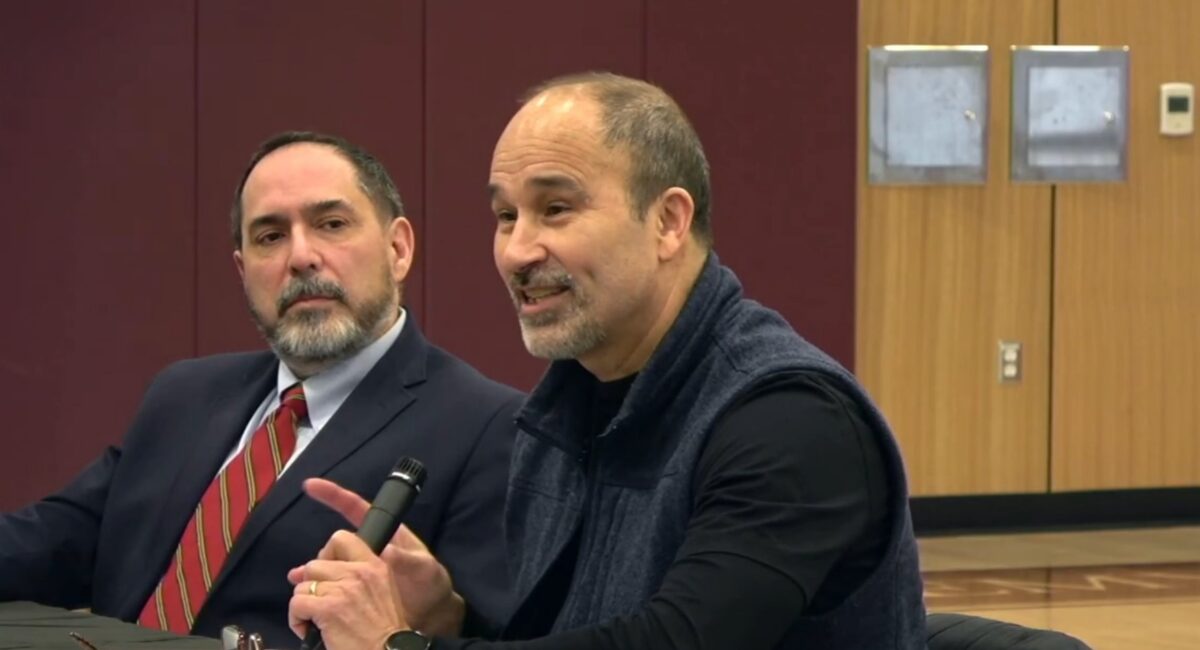
In this special live panel discussion on the future and importance of Catholic education, host Troy Van Vliet brings together an outstanding group of Catholic educational leaders including Dr. Gerry Turcotte of Corpus Christi College and St. Mark’s College, Scott Roy of Catholic Pacific College, Anthony Walters of St. John Paul II Academy, and Mich DesLauriers for a thoughtful and engaging conversation about why Catholic education matters now more than ever. The panel explores the challenges facing young people in today’s increasingly secular and digitally driven culture, including loneliness, confusion around truth and identity, and the search for meaning and purpose. Throughout the discussion, the speakers explain how Catholic education offers students something deeper than academics alone — providing hope, authentic community, moral formation, spiritual grounding, and a clear sense of purpose rooted in faith in Jesus Christ.
Drawing from decades of experience in Catholic schools, colleges, and universities, the panelists share personal stories and powerful insights about the role of prayer, service, virtue, leadership, and authentic Christian witness in shaping young people. The conversation dives into important themes such as objective versus subjective truth, the importance of living faith through action, the integration of intellectual and moral formation, and how Catholic schools help students develop confidence in their beliefs while engaging respectfully with a world that often challenges Christian values. From classroom culture and athletics to service projects and daily prayer, this discussion highlights how Catholic education seeks to form not only successful students, but compassionate, resilient, and faith-filled leaders prepared to serve their communities and live with integrity in today’s world.
Transcript:
[00:00:01] Intro: Welcome to Catholic Education Matters, the podcast that celebrates the beauty of Catholic education, highlighting excellence in academics, athletics, and the transformative power of faith. Join us as we share the stories of those making a lasting impact on Catholic education. Let’s begin.
[00:00:26] Troy Van Vliet: Welcome everybody to another episode of Catholic Education Matters. And thank you all for being here today. We’ve had, several successful podcasts so far and this is the first time we’re utilizing this format and we’ve got a panel here that we’re going be asking a bunch of questions to. So this should be lots of fun. And before we get started though, do want to say a couple of quick thank yous. Silveria Roselli is the producer of the show and she’s done a fantastic job so far.
[00:01:01] So thank you very much, Silveria. And I I actually get the easy job sitting and asking questions and what have you. So but she’s the one putting everything together. So thank you very much, Silveria, for that. Also, Ben Sears.
[00:01:17] Ben, you set everything up here and got everything ready to go. So truly appreciate that. It looks great too, by the way. And then Clay. Clay is the man behind the scenes for all the podcasts and he’s come out for Vancouver today to help us set up here to make sure that it’s all going to run tickety boo.
[00:01:40] So thank you very much Clay for all your help. Once again, you all for attending and joining us here today, both live and also on YouTube and all of the other venues that the show gets posted on. So I’d like to get a couple of introductions out of the way. And first of all, I’d like to start out with Dr. Gerry Turcotte.
[00:02:07] Dr. Gerry Turcotte serves as President and Vice Chancellor of Corpus Christi College and Principal of St. Mark’s College, the Catholic liberal arts and theological institutions affiliated with the University of British Columbia. A distinguished scholar, author, and academic leader, Dr.. Turcotte brings decades of experience in higher education leadership across Canada and internationally.
[00:02:31] Dr. Turcotte has strengthened the partnership between Catholic higher education and the broader university landscape, ensuring that students studying with a public university context remain grounded in a distinctively Catholic worldview. He believes that Catholic post secondary education must do more than provide credentials. It must cultivate disciplined thinkers, articulate communicators, and morally grounded leaders prepared to engage confidently with a contemporary culture. His speaking and media engagement reflect both intellectual rigor and pastoral sensitivity.
[00:03:14] He continues to champion an educational vision that integrates scholarship, virtue and service for the good of the church and society. Welcome Dr.. Turcotte. Next we have Scott Roy. Scott serves as president of Catholic Pacific College, a Christ centered liberal arts institution partnered with Trinity Western University.
[00:03:43] His leadership reflects a strong commitment to classical education, intentional faith formation, and close academic mentorship. Catholic Pacific College has become known for its integrated model of education where intellectual excellence and spiritual life are intentionally interwoven. Under Mr. Roy’s direction, the college continues to expand its reach while maintaining a strong sense of community and identity. Mr.
[00:04:11] Roy consistently emphasizes that Catholic higher education must form the whole person. Students must graduate not only career ready, but rooted in virtue, clarity of thought, and confidence in their faith. He has worked to strengthen faculty formation, program development, and student life in ways that support both academic rigor and authentic Christian discipleship. His leadership highlights the importance of cultivating young adults who can engage complex ideas, navigate secular environments, and with confidence, and contribute to society with integrity and compassion. Welcome Scott Roy.
[00:04:59] Did I get that all right, Scott? Nailed it. Okay. Mr. Anthony Walters.
[00:05:07] Sorry, this was no particular order. Just say Principal at St. John Paul II Academy. Anthony Walters serves as principal St. John Paul II Academy in Surrey, British Columbia, a seasoned Catholic educator.
[00:05:25] He brings experience, steadiness and clarity of mission to the leadership of the school. Mr. Walters is committed to maintaining a strong Catholic identity rooted in sacramental life, disciplined academic structure, and intentional character formation. Under his leadership, St. John Paul II Academy continues to strengthen its academic standards, expand student leadership opportunities, and foster a culture of service and excellence.
[00:05:55] He believes Catholic education must be unapologetically faithful and intellectually serious. His approach integrates structured classrooms, thoughtful discussion, athletic development, and community engagement into a coherent formation model. Students are challenged to think critically, live virtuously and lead courageously. Mr. Walters remains deeply committed to forming graduates who are confident in their beliefs, respectful in dialogue, and prepared to contribute meaningfully to their communities and professions.
[00:06:32] Welcome Mr. Tony Walters. And lastly we have Mr. Mich DesLauriers. Mich is a longtime Catholic educator whose leadership has had a lasting impact on Catholic secondary education in British Columbia.
[00:06:55] More specifically, St. John Paul II Academy as the founder, Vancouver College as an administrator, and also St. Thomas administrator. As the founding principal of St. John Paul II Academy, he helped establish the school’s academic structure, Catholic culture and formative vision during the earliest years.
[00:07:19] With extensive experience in leadership roles at Vancouver College and St. Thomas More, Mr. DesLauriers brings decades of institutional knowledge and deep understanding of what sustains vibrant Catholic schools. His leadership has consistently emphasized disciplined academics, faculty mentorship, strong student culture and clear mission alignment. He has long championed the integration of intellectual formation and moral development believing that Catholic education must shape both character and competence.
[00:07:51] His work is focused on cultivating resilience, leadership, and service minded among students while strengthening faculty culture and institutional stability. And as a founding educational leader, Mr. Deloria helps lay the groundwork for school environment rooted in clarity, accountability, and Catholic identity. His influence continues to be felt through educators and students he has mentored across multiple institutions. Welcome Mr.
[00:08:23] DesLauriers. So we’re just going to I’m just going to give you a quick review of the format, what’s going be happening here. I’ve got a list of questions that we’re going to be asking our panelists and then we’re going to kind of go through one at a time. It’ll flow into a discussion as well. So feel free to chime in whatever you want.
[00:08:51] And then when we’ve finished going through all the questions, then we’ll actually open it up at the end if anybody in the audience wants to ask any questions of our panelists as well. So first of all, first question. In today’s increasingly secular culture, why does Catholic Education Matters More Than Ever? So starting out, maybe Dr. Turcotte, maybe you can start out.
[00:09:19] Dr. Gerry Turcotte: Thank you. Can you all hear me? I don’t have a great voice for these types of broadcasts. I think it’s more important than ever in part because we are in what is sometimes even a kind of a toxic secular culture that is very anti faith and I find that that can really demoralize individuals. And I think what we offer through faith based education is that sense of hope and positivity.
[00:09:46] This is a different generation. I think all of you guys really believe in service, giving back to the community, and I think that’s how we identify and live our faith in a really concrete way. I think in the context of the negativity, hope is is the perfect antidote, and I think our faith life is one way to really champion that and and just create, you know, positive dynamic connections in our community.
[00:10:13] Troy Van Vliet: Why is this sense of hope so important today? Why is that? You said it a couple of times in your answer there. Have we been lacking hope? Are we living in a hopeless society right now?
[00:10:29] Dr. Gerry Turcotte: I don’t think we’re in a hopeless society, but we’re definitely in a social media culture that leads into a type of specificity of interest. So if you are going down a negative pathway, the algorithms will give you that kind of negativity. The world really is in a really precarious time. That’s all you see. There’s a really odd phenomenon right now where I think we are more connected than we have ever been, and yet when you talk to people, they’re lonier than they’ve ever been.
[00:10:59] I think that kind of internet, social media world creates an artificial space, and that space can become very, very negative and very polarized too. If you happen to not agree with somebody, you often either don’t see that view or you are reinforced in your particular space and mindset that goes into negative rabbit holes. I think this is why we’re seeing a surge in students returning to their faith, because students are looking for hope. They don’t believe this world is toxic, and they want ways to engage productively and constructively. This is certainly what I’ve seen with our amazing students, that they give back to the community.
[00:11:38] Yes, they’re looking at amazing academic opportunities, but they also care about their fellow students and their community, and they want to make a difference where it matters.
[00:11:47] Troy Van Vliet: That’s great. Thank you for that. Mister Roy, do you want to take a stab at that? Do you want me to read the question again?
[00:11:58] Scott Roy: No. No. I think Nope. I think I got to hear hear me alright. Yeah.
[00:12:02] Yeah. Mean, in a in an increasingly secular culture, when you boot God out of the equation, you boot meaning out. And I think that’s something that the world is suffering. There’s a vacuum of meaning. And what happens is when you don’t have your end, when you don’t have your purpose, it’s hard to be motivated to move.
[00:12:23] And so, you know, I always use this example with my with my kids. I say, you know, I’ve got something somebody coming over for coffee, we ran out of cream, and this is gonna be an enjoyable experience for them. I’m gonna send my son out to go and grab some cream for the coffee. And the the route that he chooses is gonna be based upon that end. So he’s not gonna go I mean, he could get to the store by going around the other end of the world and coming to that store, but he’s gonna choose the quickest way there.
[00:12:51] He’s gonna choose a bicycle maybe over walking, and he’s that end determines his movement and how he gets there. And I think when you don’t have meaning, when you don’t have that purpose, what we try to do is is fabricate. We we create our own meanings. And we’re seeing that everywhere in our culture today. Meanings are being fabricated, but we don’t have the confidence in those meanings.
[00:13:15] You can never validate any of those meanings and you find people shifting and and trying different meanings. Ultimately what ends up happening is despair, which is as Dr. Turcotte was saying, the need for hope. The Catholic church, well particularly Christ in particular is the meaning, the ultimate meaning. He is the goal. He is the end purpose for all of us.
[00:13:37] He is then what determines our actions and and how we do, you know, live virtuous ly and and move towards that meaning. So ultimately, a Catholic education brings meaning, brings hope. The closer we adhere to the Catholic intellectual, the Catholic church’s tradition and their their deposit deposit for for us. Us.
[00:14:00] Troy Van Vliet: So where does subjective truth and objective truths fall into that? Like
[00:14:08] Scott Roy: I’m gonna let Mich answer that. Oh. Okay.
[00:14:13] Troy Van Vliet: Well, when you’re talking about meaning and you’re talking about purpose, you’re talking about, you know, basically a moral compass and what have you. And now we’re in this secular world of subjective truths out there. Sure. But my truth, your truth. But what about the truth?
[00:14:28] Scott Roy: Well, I think it was Scott Hahn who’s probably quoting somebody else but he said that the the sins of the current world are the the errors that the church has made and so where we’re deficient, I shouldn’t say the church and but us as as members of the church, when we fail to live according to what the church teaches to see that way of life, we open the door for people to step in and to say, if we don’t live it well, then people go, well, you know, look at those Christians. They get it wrong. So they try to come up with their own ways of doing, doing things. So ultimately, if Christ is the center of truth, the the center of reality, and and you look at everything so much differently if you see that God is the one who created the world, that he has put everything in a particular order. As you come to know things and and and discover this order, you become more and more convinced of the truth, the ultimate, the objective truth.
[00:15:29] And that’s that’s how we relate to this objective truth. But if I don’t live the Christian life well and somebody else sees and says, well, that Catholic doesn’t they obviously don’t have the truth. That people are left to their own devices. They’re left to their own means and this is ultimately where you get people saying well that might be your truth, but this is my truth. And and this is this wayward path ultimately in many areas been leading to despair.
[00:15:59] It’s been leading to maybe maybe I shouldn’t be here anymore. So I think the the relationship between objective truth is why God created the world and how it is ordered and then how we perceive that order. And and ultimately clinging close to Christ and the more we are like Christ is how our subjective truth meets up with the objective truth.
[00:16:24] Dr. Gerry Turcotte: Great. I know that’s
[00:16:26] Scott Roy: Well done. Meandering around with that.
[00:16:28] Troy Van Vliet: That’s good. That’s great. And Mich, have you got something for us? Do want me to read the question again? Are you No.
[00:16:35] Okay. Good. It’s okay. Good. Good.
[00:16:37] Mich DesLauriers: Good. Thanks. No. I think without trying to state the obvious, I think Catholic education has always mattered. Look, people vote with their feet.
[00:16:49] If they see something of value, they’re gonna go to it, and they value Catholic education. They value it for its academic, for its community, and for the faith. As a longtime administrator, one of my duties was to visit visit grade seven classrooms. We have an annual open house where we we invited prospective students to come and listen to why it was that they should come to our school. And I remember attending one forum that was done by an elementary school, which had both a Catholic representative, but also public school representatives.
[00:17:27] So it was an interesting dynamic. And I know when it was my turn to speak and I said to the parents, I’m not here to talk about what high school your son or daughter’s gonna attend next. I’m here to talk about what Catholic high school they’re gonna attend. Because you see there’s a connectedness between Catholic and education. You know, parenting, as you know, the parents that
[00:17:55] Troy Van Vliet: are
[00:17:55] Mich DesLauriers: here, can be challenging at the best of times, even more so when you guys become teenagers. Right? So parents want to make sure, I know I did, I know you guys do, that they are in an environment that’s safe, disciplined, has high expectations in all aspects, and most importantly, as the gospel values running through all parts of the curriculum and both in and outside the classroom. I know that was important for my parents, and I know that was important for me and our four children as to why we wanted to send them to Catholic schools. Tony, you’re
[00:18:48] Troy Van Vliet: Thank you, Mich. No. Wait a minute. I was gonna give him a different question.
[00:18:55] Anthony Walters: Follow-up for Mich.
[00:18:56] Troy Van Vliet: No. Ahead, Tony. Love to hear your comments. Well,
[00:19:03] Anthony Walters: everybody said everything already, but I think I think the thing is that for our students, and again, correct me if I’m wrong, students, but in the classroom, we often come to the realization that Catholic education provides us with hope, provides us with meaning, provides us with purpose, provides us with value. Because in this secular world, which is so called post truth, it offers us the reality of God’s loving relationship with us. And at the end of the day, correct me if I’m wrong, at the end of the day, all we ever desired was a relationship with our father loving God. And so we search for that in so many places. We might search for it in the in the public system.
[00:19:57] We might search for in sports, we might search for it wherever in our hobbies and our passions. And those are those are all good. But what the Catholic school offers students, parents, the community is is a place that provides the answers to life’s essential question. Questions. Why am I here?
[00:20:23] What is my life for? What happens when I die? And that story of that those answers is the story that the secular school system tries to approach but it falls short because it doesn’t have the understanding of the moral cosmos of God’s creation. So that’s what we do.
[00:20:49] Troy Van Vliet: Alright. Fantastic. Thank you. We’ll move on to the next question. And this is an interesting question, actually.
[00:21:04] What does authentic Catholic formation look like beyond academics? And how do we measure its impacts on character and faith? That’s a challenging one.
[00:21:18] Anthony Walters: I’ll start.
[00:21:19] Troy Van Vliet: Okay.
[00:21:24] Anthony Walters: Well, we’d have to say that, you know, to quote the Bible, by their fruits you shall know them. So that character formation, that moral formation, that human formation of the student is, again, ordered towards an end. The end is the flourishing of the human person. And that flourishing of the human person must include a moral life. And it includes the athletic life, it includes, you know, academic life, But it it includes a a moral life because we are creatures made in God’s image and likeness, and therefore, our end is to be with him.
[00:22:08] And to be with him, we need to imitate him. So the moral formation of the student in school is paramount because when they leave the school, need to go out into the world and sort of interface with the world in such a way that they continue to spread the gospel that they have internalized through their relationships. So that’s what I
[00:22:38] Troy Van Vliet: Okay. That’s great. Thanks, Tony.
[00:22:43] Mich DesLauriers: Know, amongst some of the very first things that we had to do, a list of a lot of first things that we had to do when we were starting the school was establish a motto. And our motto was, has become enter to learn and leave to serve. Any of you know that? Enter to learn is the information piece. K?
[00:23:07] It’s the classroom learning. Super important. The leave to serve is the formation piece, the development of the whole person, both in and outside the classroom. And this is a critical piece, but together. The two work together.
[00:23:27] And one of those formation pieces that I like to speak about is prayer. I feel very fortunate to have worked in a Catholic school environment where prayer was an integral part of the day. I remember, and I’m gonna
[00:23:47] Troy Van Vliet: point
[00:23:47] Mich DesLauriers: out Jared, because at Holy Cross, Jared led the prayer in the morning on the PA. He’s gonna be embarrassed by this. But I told him many times how well he did that and how important it was. And I felt great that we could have prayer at the beginning of the day, end of the day, and as teacher and coach, you could pray before class. We prayed before practice.
[00:24:17] We prayed after practice. We prayed before games. We prayed after the game. And whether we took it for granted or not, prayer was ingrained as part of our day to day operation. Not operation, but a day to day things that we did.
[00:24:33] As an administrator, I can tell you a story where this, was really prominent to me. One of the most unpleasant tasks I had as an administrator was when I had to ask a student to leave for disciplinary reasons. I remember having to do that, and there was a young man who came down to my office and very respectfully wanted to talk about it. But he wasn’t so much interested in the details as he was distressed over what he could do about it now. And I said, one of the best things you can do is to pray for this student.
[00:25:18] Now thinking that that was the end of our conversation, and, of course, I had counseled him accordingly, and I was taken aback by what happened next. This young man sat back in his in the chair across from me, closed his eyes, folded his hands, and began to pray out loud for this student. I’ll tell you, I was extremely touched by this and on the verge of tears. After he had finished, he said, you know what? I feel better, and I’m gonna continue to pray for him and his this this student and his family.
[00:26:07] And I was just so impressed by what this student did in my office. Now I don’t take any of the credit. Credit’s gotta go to his parents, his teachers, the school environment, the spirit. He obviously felt comfortable enough to be able to pray for this student in front of me with very little prompting. And I’m hoping that prayer is one of the things that you as students, we, you as students, continue to fall back on constantly in your lives.
[00:26:49] Because there’s gonna be times, k, when you want to pray, not just for things that you need. You wanna win the lottery, I know, but don’t just pray for that, but pray for others and pray for each other.
[00:27:05] Troy Van Vliet: K? Thank you, Mich.
[00:27:12] Scott Roy: Same question.
[00:27:13] Troy Van Vliet: Same question.
[00:27:15] Scott Roy: Well I mean Tony and Mich touched on these in such a beautiful way. I think how I envision this answer is is basically rather our institutions need to be rather than merely ways of thinking, ways of living as well. And I think that’s you know the examples are given here when we’re talking about the intellectual, the moral, and the spiritual life and forming them well, one at the head of that needs to be the the spiritual life and it needs to inform and the others need to be at the service of that. But no matter what, it needs to be authentically witnessed inside and outside the classroom by all. It needs to be experienced as a community.
[00:28:05] It’s teachers, administrators, everyone is part of the formation in colleges or schools like these. And that is because everyone learns. You you can’t stop people from learning. And so they know. They will learn.
[00:28:25] If it’s just information download, if you’re just telling them things but they do not experience it as relevant in their lives, they will not retain it. You know, if you know wanna bring your kids up to go to mass and yet you’re willing to skip Mass in order to watch the football game, or the hockey game or whatever may be on, the kid learns that. The child knows what is the most important thing in this family. We’re constantly learning and so our our institutions need to be more than institutions that are transferring a way of thinking. We need to be passing on a way of living.
[00:29:11] And so it needs to start with us. They’ve said everything so beautifully beautiful, you know, example here. I’ll finish there.
[00:29:19] Troy Van Vliet: That’s great. Thanks. Thank you, Scott. Same for me. Same to you.
[00:29:25] Dr. Gerry Turcotte: I think doctrine without practice is just rehearsal. It’s just memorization. And what I’ve really been impressed in the last decade or so in Catholic education is students are looking for faith in action. I grew up in a very different age where the priest grabbed you by the ear and dragged you to faith and berated you if you didn’t do everything right. That doesn’t work with this generation.
[00:29:52] They want to see action, including educators, that we live what we preach. But they also want to carry it through into community. Authentic faith is lived. Jesus didn’t sit in an ivory tower and preach. He went out into harm’s way, and he made a difference that way.
[00:30:10] I think sometimes we get so caught up in teaching the rules that we forget the impact of of action. You know? And I I gave that example the other day where I I ran a big volunteering program when I was president of a a different university. And I had one of my, really, my most faith informed student. She followed the rules and everything to the letter.
[00:30:35] Rarely volunteered though, but she was really my probably my most loyal student in terms of catechism and everything. She was criticizing one of my young students who literally came with me on every volunteering exercise that we did. For years, he was always there. He was in the shelters, he was in soup kitchen. She came to complain to me because he was using the food bank that I’d created too much.
[00:31:00] She thought he was exaggerating and so forth. By pure coincidence, the three of us ended up being the last ones in the shelter one time, and we were mopping up at the end of the day. This young fellow who had come with me on every single volunteering exercise with me pointed to the corner of this homeless shelter, he said, Oh, yeah, that’s my bed. Here was this student who had been studying with us, who was homeless. And he was using the food bank, but he never failed to serve.
[00:31:30] I looked at the face of this young lady, suddenly feeling really embarrassed about this, but I wondered in that moment, Who’s closer to Christ? You can learn all of the lessons, but if you don’t apply them, you are not Christ like. I think this is what this generation’s all about. They’re the social justice generation. They take words into action.
[00:31:51] They want to change the world for the better. Jesus, I don’t know what is.
[00:31:56] Troy Van Vliet: Wow, that’s great. Is that where faith and works merge, coming into? That’s a touchy topic amongst many Christians. Faith without works or faith alone, what have you.
[00:32:20] Dr. Gerry Turcotte: Well, I can only use the number one teacher. I can only model myself badly, but as best I can. By Jesus, what did he do? Did he sit back? He knew all the texts, and he supported and praised the prophets, but he went out and did action.
[00:32:41] He wasn’t afraid to call out the hypocrites, and he wasn’t afraid to call out those who were all words and no action. I think that’s what Catholic education does. I find it very ironic that the government often doesn’t fund education. We encounter this because we have a religious affiliation, this is not academic. The Catholic Church created the first universities.
[00:33:04] We created Catholic education, as we did with healthcare and all these other social services. In fact, contemporary culture would collapse if you were to pull the Catholic agencies that support healthcare, education, social services, and took it out of the system and government suddenly had to fund it. But Catholic education is a central core of what the church does, and it’s all about action. So yes, you learn, but you have to take it forward and do something concrete.
[00:33:34] Troy Van Vliet: Fantastic. Thank you for that, Dr. Turcotte. Well, we’re only on question three, and we’ve got great answers so far. How can schools help students remain confident in their beliefs while engaging respectfully with a world that often challenges those values?
[00:33:57] We’re persecuted out there as Christians, as Catholics. And it’s quite challenging in the real world to put your faith in the forefront. So how can schools help students with that? Mr. Walters?
[00:34:18] Anthony Walters: Well, I I think there, the key is to be grounded in the why. So you’re grounded in the why of of what you’re doing and who you are and I think going out into the world or engaging with the world oftentimes is is scary. It’s risky. You you have to engage with people who don’t believe the same things as you or don’t act the same way or their principles are different. But the key here is to understand and be grounded in in who you are.
[00:34:59] So it is an identity issue to understand who you are and being strong in that understanding of yourself. You’re able to engage in any situation. And we brought, you know, Dr. Turcotte about the examples of of Jesus and his ministry. He knew exactly who he was. He knew exactly who he is, that he was the son of God the father.
[00:35:33] And so every interaction that he had with the with the world around him, whether or it was the Pharisees or the blind man or his own disciples and the apostles, he was grounded in the why of his mission, and his identity was clear. He was the son of God. And so as he approached people, he approached people, with a very clear identity and purpose.
[00:36:00] Troy Van Vliet: That’s great. Thank you. Mister Walters.
[00:36:07] Mich DesLauriers: The short answer, which I’m sure you appreciate, is to stay the course and to trust in God’s goodness, but it’s easier said than done. It’s easy when our lives are comfortable. It’s easy to believe. It’s way more challenging when that trust is broken or it’s challenged. And you know that trust is very fragile.
[00:36:32] It can have an impact on all our relationships, whether it’s our relationship with our friends, with our parents, with our teachers, with in our marriages, with God, with the church. And when that trust is challenged, there’s lots of questions, and there’s a lot of finger pointing. There’s a lot of people who wanna blame God for what’s happening. They can’t make sense of when bad things happen to good people. And so what we need to do, I think, is in schools, our job is to not ignore the questions, but to listen to them.
[00:37:20] We need to make sure that our students have a voice when they speak to us, even when we disagree, and we need to be humble enough to say simply, we don’t, I don’t have all the answers. As Christian leaders, we need to realize that the school is the Christian message. And when we see that message incorporated into all aspects of school life, and we often call it school spirit. And it’s incorporated in our relationships. It’s incorporated in the structure of the school.
[00:38:03] It’s incorporated in the operating procedures. Then that message lives. Catholic education is alive and well, and as someone said, it’s kicking. It’s kicking.
[00:38:20] Troy Van Vliet: That’s great. Can I I’m gonna ask the two of you a different question, if I may? Sounds good. Because your two schools are are different in the sense at CPC, kids are blended in with another Christian university being Trinity Western. Right?
[00:38:44] So you’re amalgamated all the way through. So whereas Corpus Christi, it’s a little different. Your first couple years are there, and then quite often, a lot of the students are off into the, the the the greater world at the University of British Columbia. So what I wanna ask is the question, what are the biggest threats to Catholic identity in the education today? And how do we protect how do we protect and strengthen that identity?
[00:39:15] So and it should be different answers of course because you have two different worlds that you’re that you’re in somewhat in the two different universities. Scott?
[00:39:25] Scott Roy: Yeah. So I think one of the important things to do is ask like what is that Catholic identity that’s being threatened. And it is a conviction that truth is a person. This is our starting basis is that truth is a person and that as we pursue truth, it must be done in an interpersonal, in a personal way, and it can’t negate that way. Because truth is a person, we need to approach it in relationship.
[00:40:01] And so I think some of the biggest threats, coming down the line, and I don’t know that this is necessarily gonna be a different approach, so much as, because as Mich was saying, education is wrapped up in Catholicism. And if we are truly handing on a way of thinking and a way of living, we have to live that authentically. It needs to manifest itself as is being said in all aspects of the college and in all ways of life. And in our school, I mean it’s it’s particularly the content is all about Catholic formation, whether it’s, you know, learning to write using, Catholic authors, whether it’s learning about liturgy and sacraments, whether it’s learning about scripture or all these different topics. They’re great content, content, but it can’t be just as we said information download.
[00:40:57] Now the threats then. I think that helps us understand what threats are maybe growing. I think there’s always been threats to this. Always been threats to this way of approaching education, which is incarnational. Which is the way that Christ, with the way that God approached humanity and forms us is in the incarnation.
[00:41:18] Hebrews tells us that God became one of us. That he became flesh and blood in order to set us free from the one, the devil, who has us bound by the fear of death. And we see a lot
[00:41:34] Troy Van Vliet: of that.
[00:41:35] Scott Roy: We talked about it earlier. We talked about despair. We talked about the need for hope because what is growing is a sense of despair. A fear of suffering and a fear of death. And so Catholic education in itself should be a remedy because we’re clinging close to what Christ himself gave to the church and has given us for human flourishing.
[00:42:00] The Catholic intellectual tradition ought to be a road map to human flourishing. And so what we need to do is teach it and live it. And the threats, I mean they’re coming. I mean we could talk about AI. We could talk about lots of different things that are decarnational, that are causing us to be less than what we are called to be.
[00:42:24] And and if if these new technologies or anything comes along that is trying to take us apart from humanizing or incarnating our education, we need to be careful of them. Because it’s more again, one more thing. One more time I should say, it’s more than just an information download. If Christ is truth, if truth is a person, then we need to approach even the pursuit pursuit of truth in a personal and relational way with God and with each other. I’ll leave it at that.
[00:42:59] Troy Van Vliet: Okay. Can I thank you Scott? Dr. Can I ask you a different question?
[00:43:06] Dr. Gerry Turcotte: Please.
[00:43:07] Troy Van Vliet: Okay. How do we ensure graduates are not only career ready, but also service minded and committed to the common
[00:43:20] Dr. Gerry Turcotte: good? I’m gonna sound like a one trick pony because I really do think it is about modeling. So providing a path that you can see that leads to action. I think if you look at our students, they’re all involved in really dynamic ways. Yes, they’re fantastic academically, but they care about the community, they care about each other, they care about their parishes and so forth.
[00:43:44] I think that’s how you can guarantee that continuity in terms of bringing the faith out into the world around you. Yes, it might be hostile, to get to your previous question about the negativity that’s there. But at the same time, you just have to be you. You have to build a strong environment where you model a dynamic faith life and champion the faith where you are able to. In our case, we have two wings.
[00:44:11] One is the first two years, and then many of our students go on to UBC or SFU or somewhere else. But you have those two years where many of our students get to do things in those two I didn’t get to do until I was a Dr.al student, purely because of size. Even in the map to system where we won the Oxford University thing against all the universities of the world, 1,700 universities, our little team was basically first and second year students competing against doctors, lawyers who were doing their post graduate degrees. They would never have had that chance. I think one of the things that we try to do with Corpus Christi is to make sure you have that chance to step forward, to do things you might not be able to do in a bigger place just by virtue of There are so many bodies that have an opportunity.
[00:44:55] And that we make that a dynamic space for your faith engagement, to take the good and the positive out into the world. Then we have, of course, our Graduate School of Theology, which is St. Mark’s, which really works with teachers, with principals, even members of this panel to develop strategies and opportunities to connect that faith life to our community, to our students, and so forth. So I think really, again, for me, it’s always faith in action. That’s always the answer.
[00:45:30] Faith life is dynamic. You can resist any negativity if you have the faith in you. You don’t have to perform for the secular world. There’s only one person you have to perform for and he will guide you. You will step surely if you follow that path.
[00:45:49] Troy Van Vliet: Performing to an audience of one. Thank you very much for your Mr. Walters, this is an interesting question. What innovations or changes do you believe Catholic schools must embrace in the coming years to remain vibrant and sustainable? And Catholic.
[00:46:19] Anthony Walters: And Catholic. I think one of the dangers or risks is that a Catholic school may think, like like all schools, may think that they need to be on the cutting edge of technology. Mhmm. That whatever new and shiny technology is out there should be embraced because it’s it’s what’s there, it’s what’s progressive, it’s what’s new, it’s what’s current. And so sort of what Scott was talking about, this idea that we are an incarnation, an incarnational people because of, the son of God becoming incarnate, that I would suggest that the innovation that we should embrace as a Catholic school would be the most radical innovation and radical in the sense of the words of the etymology of the word like radix, the root, that we should embrace the innovation of relationship.
[00:47:38] So technology will come and go, technology will become better, faster, more pervasive. But in the classroom, what I’ve seen in the classroom is that learning happens in relationship, moral growth happens in relationship, and so the most radical innovative thing we could do is become more relational in the way that we teach. That means in the classroom if we have a screen and and we know this, we see it at Starbucks, see it in our own homes, oftentimes the screen comes between us and our parents or brothers and sisters or fellow students and that becomes in a sense a barrier. So it is counter cultural to say that the most innovative thing to do would be to focus on growing person to person, face to face. And so the teacher at the front of the room or the people in the group, the students on a project, would dialogue, would talk.
[00:48:53] And we would facilitate that, we would scaffold that, we would make that happen, but there’s where the learning happens, where people interact face to face.
[00:49:03] Troy Van Vliet: Would follow-up question. We’ve been talking at the school here at the society board level about introducing the Alpha course next year for students coming for all students, but especially as Mich had mentioned earlier on about how the popularity of Catholic schools is growing amongst all communities. So we’re ending up with a lot of people from different Christian faiths or other faiths that are coming to the school as well. And a great way would be introducing the Alpha program to everybody, sort of a reintroduction of the faith to all different faiths. Do you want to expand on that or comment on that?
[00:49:48] Anthony Walters: Definitely. I think that we’ve talked about this idea of truth and so possibly are living in this post truth era and part of that post truth and if truth is a person then it’s almost as if it’s a post god era. What Alpha would provide for us, for our students, for our community is a way of reestablishing relationship with the person of Jesus Christ to get to know him. And so Alpha is is a is a great, is an effective way of introducing the person into your faith. That it’s not just a list of doctrines and dogmas and things that we do.
[00:50:43] This is this is about relationship. This is me and this is me and God. And God is my loving father and Alpha provides me a chance to get to know him at a very introductory level, but you can go far more deeply into it, but you have to start at this sort of introduction to the person. Sort of like a like a speed dating. Right?
[00:51:12] Right. It’s gotta get it Gotta get there. Gotta get to know this person as quickly as possible, and then I can follow-up. So that’s what Alpha would do for us.
[00:51:19] Troy Van Vliet: Right. And you mentioned earlier the the relationship and having relationships with the students. But this is the same type of thing I think that can promote as well is a relationship. That’s great. That’s super.
[00:51:31] And I think we’ll have time maybe for one more question and then we’ll open up questions to the audience. Mich, I’ll have you finish up here. What skills and virtues do you think that young people most need to thrive in the next decade and how does Catholic education uniquely develop? Them? Specific skills, we want to know, Omid.
[00:51:58] Thank you.
[00:52:02] Mich DesLauriers: When we first started the school, or just even before we started the school, we put out a brochure. And in that brochure, there were about 30 characteristics that we words that we used to describe what we believe a student who graduated from SJP two should have. And then when we started the school, the staff narrowed it down to 12 characteristics. And they formed our first legacy awards that we gave out at the end of the year. So words such as leadership, serves, joy, sacrifice, creativity, courage, perseverance, etcetera.
[00:52:49] And then we even named those awards after people who were most influential in getting our school started. So we had the Archbishop Miller Award for reverence, and we had the Silveria Roselli Award for stewardship. Stewardship. But if I had to narrow that down to just one word, and we gave out only one award, that would be for grit. Grit.
[00:53:18] K? And it’s aptly named after Troy Van Vliet. K? You know, he is the he is the guy that made the dream of this school become a reality. I love what grit stands for.
[00:53:37] Stands for courage, perseverance, resilience. K? Conscientiousness. This is what we want, k, in our students, and you will need a lot of grit. You know, one day, if you think about where you are now, students, and where you’re gonna be ten years from now.
[00:54:01] And I remember asking my own grade 12 religion students way back in the day, a hundred years ago when I taught it. K? Where did they see themselves? And most of them said they’re gonna see themselves being married and having a family. Now I know you guys aren’t thinking about that right now.
[00:54:16] You’re thinking about your post secondary options and what career path you will follow. That’s good. That’s a good thing. K? But in order to get and get through those things, you’re gonna need a lot of grit.
[00:54:31] At the end of this month, close to the end of this month, my wife and I will have celebrated our forty fifth wedding anniversary. Now I don’t tell you that so you can send us cards and everything, but I’m telling you that because I know one day is gonna be my last. It’s gonna We’re have that one day. And I’ve often said, if the only thing written on my tombstone is that he was a good father and a good husband, I will die a happy man. That is my legacy, and I hope it is your legacy as well.
[00:55:24] Troy Van Vliet: All right. Thank you to all four of you, first of all, for those scripted questions and scripted answers. But now we’re going to take it to another level. We’re going to open it up to our audience and find out if we have any questions that anybody would like to ask any of the panelists. Do we have anybody?
[00:55:43] Quick hand wave. Okay. There’s a mic. Good one.
[00:56:19] Dr. Gerry Turcotte: I should go first just because you’re one of my students. Again, I think it really is about engagement. Right? One of the things that all of you, and I’ve worked with a lot of you, at the shelter or day to day and so forth, but it’s people that make the relationship work. We can study, AI is replacing I’m a writer, my daughter’s an artist, and AI is replacing a lot of what we do.
[00:56:49] We’re seeing students leaning in on this sometimes because you’ve got a deadline and it’s easier to use AI to do something. My question is always, if you’re going to use AI to replace this skill that you’re actually going to need once you get out into the real world, you won’t have that skill. AI is just growing as something almost predatory. I don’t have the answers to that. Thank goodness I’m so old that it’s not going to matter soon.
[00:57:17] But the antidote to AI is the human being. I think one of the things that we try to champion at Corpus Christi is really the interrelationship, that we get to work together, that we know each other. I students I used to teach in Australia, I used to have classes with hundreds and hundreds of students, and I was broadcasting to five satellite campuses. And I wasn’t even allowed to speak. I was standing in front of this huge audience with spotlights on me, I wasn’t allowed to speak till my tech guys told me I was allowed to go.
[00:57:46] So you’d be standing there like an absolute nerd looking out at this audience. They’re wondering, What’s wrong with this guy? He’s not speaking. Yet, I would find ways to connect with those students because at the end of the day, the lecture was important, the content was important and so forth, but what they remember is the human being. And I think this is what we work at Corpus Christi because of our size.
[00:58:11] A lot of our students, many of you, are directly accepted into UBC or elsewhere, but you choose to start with Corpus because you start with community. And that community, those contacts, those skills that you develop are what you bring into that world. That’s the response, that antidote to the negativity and so forth, that skill set. Yes, it’s grit, but it’s also self confidence, but it’s also community. So I think the answer to AI is use it as a tool, but understand that it’s really a tool.
[00:58:37] It’s like a pen. But don’t let it replace what’s coming out of your mind into the writing because it’ll fix that in the short term, but then you have to go out into the world You have to be able to use those skills that you actually know and acquire, the faith that you bring and so forth. None of that can be artificially created. For me, it’s people. Just connect with people.
[00:59:03] Troy Van Vliet: Great answer. Thank you.
[00:59:31] Anthony Walters: I better answer this question.
[00:59:32] Troy Van Vliet: How do we keep our Catholic school Catholic? Well,
[00:59:40] Anthony Walters: one of the things that is two two stories that are absolutely beautiful. One is that we have mass at 07:45 in the morning thanks to Father Augustine Good Shepherd Parish. It’s off the it’s off the timetable at 07:45 in the morning and thirty forty people come. And, this morning was mass and I was serving, and it was the communion meditation song and a number of the students have created this choir that they sing at the 07:45 mass. And they were singing Ave Verum Corpus.
[01:00:29] It was the acoustics in that chapel are incredible. Their voices are angelic. It was just absolutely beautiful. And I was praying and I was so grateful and there is a perfect example of how we keep our school Catholic. We we offer all of these opportunities for grace and the students respond.
[01:00:59] I did not go out to them, they came to me and said can can we do this? I’d like we like to do this. And so offering opportunities for grace is really important. Last quick story. At any time there’s prayer in the building, so first thing in the morning at 08:30, last thing at the end of the day, and then at lunchtime, everybody in the school stops.
[01:01:28] And so for just thirty, forty five seconds, there’s no sound other than the sound of prayer on the PA. Again, another opportunity for grace, another opportunity to do what we believe, practice what we preach, pause for prayer, pause for that relationship with Jesus in our busy day. So how do we keep the school Catholic? We do things, we say things, we live things, we serve, we we we think, we pray, we do all of these things that order ourselves towards our end. And that’s how we continue.
[01:02:12] It doesn’t matter the size, We’re gonna be six, seven, 800 people, whatever the case is. But the core of who we are as a school is the culture of being being Catholic, doing Catholic all day long, day in, day out.
[01:02:27] Troy Van Vliet: That’s great. Thank you, Tony. Do you have anybody else? Question?
[01:02:42] Scott Roy: The
[01:02:46] Troy Van Vliet: Alpha program. Do any of you wanna what is the Alpha program was the question?
[01:02:52] Anthony Walters: Well, just just at its core, Mieshko, is that Alpha was Alpha was created in a in a response to a world that had lost its understanding of who Jesus is. And so it was created to respond to this desire of people to get to know him. So it’s structured program with modules and one of the one of the key elements to Alpha is the table talk, to to share a a meal together together and to chat, to just to talk. And to circle back to what we were mentioning earlier about relationship, Alpha teaches the faith, teaches understanding of of God through the relationships with other people. So it’s structured, yet at the same time, it’s open to just just being together and being on this journey of understanding who we are and who God is together.
[01:04:05] Yeah.
[01:04:07] Anthony Walters: That’s great. Thanks, man.
[01:04:08] Troy Van Vliet: Quick question. I have a question. Is Alpha ever offered at Trinity or Corpus Christi or CPC? Nope. Might it be a good idea?
[01:04:21] Maybe?
[01:04:24] Scott Roy: Maybe. I I think though Thank you. I think though that what Alpha is trying to accomplish is just sort of naturally accomplished within CPC itself. Person of knowing who Christ is in an order, you know there is a certain academic aspect to to Alpha. And then you know, so within the college itself and the formation, the why of why people are there is to you know, learn obviously that academic component.
[01:04:58] It’s principally why we’re at school. But to the community, I mean, we we already have in in right in the in the midst of the the college, a strong community that ministers to both men and women, and and then of course the sacramental aspect of it where everybody comes together for mass. We offer mass, you know, daily and yeah. So I think I think that it’s the components are there. We have socials weekly that gather all the students together for table talk and for that kind of thing.
[01:05:27] Troy Van Vliet: Okay, great. We have, do we have maybe one more question? Bella Kazzam, SJP two grad.
[01:06:02] Mich DesLauriers: Great question, Bella. There’s been a lot of talk about social justice opportunities in our schools, you know, where you have a chance to do some hands on. I’m sure you’ve had the same. I remember talking to one of my brothers, I have five, but one of my brothers who was working in the public school system, and we were comparing notes. We were talking about all the social justice opportunities that happened both in his school, public school, and in our school, Catholic High School.
[01:06:34] So there were way more similarities than differences, which posed question. He said, so what’s the difference? What’s the difference between someone doing it in a public school, and what’s the difference between someone doing it in a Catholic school? I thought a long time to myself, I think the biggest single difference is that we can take that experience and look at it in light of our relationship with Jesus Christ, And we can talk about that openly. And we can share that experience in that light where he couldn’t.
[01:07:21] And he said to me, yeah, that’s true. He’s a strong Catholic. He worked in Catholic schools for a long time too. But he recognized that is a huge opportunity for us, and I think we should never, never, ever miss that chance to do that.
[01:07:45] Troy Van Vliet: Have we got everybody? Okay, one more. This is good stuff. Do we have do you want me to run up there? Thanks, Ben.
[01:08:42] Scott Roy: Thank you for that question. It’s a good question. And I think one of the things I think just for just for yourself preparation for yourself is, just be confident. Confident one that we’re in a church and we’re part of a tradition that is 2,000 years old. And it has seen empires, revolutions.
[01:09:01] It has seen popular popular trends trends and and all that kind of thing. And and new ways always new ways of thinking about things. And I think it’s important for you to be confident in yourself first off. Second of all, I mean, we’re talking about any kind of particular question that might be out there that might be offensive. But if you don’t have the answer, it is okay to say I don’t know, but I’m gonna go find out you know, and I’ll come back to you with the answer.
[01:09:27] Because I can guarantee you there is an answer. There’s an answer to any question that’s out there. Again, because the church is not just a new idea that’s come up and we need to test it. We have two thousand years of testing different theories and ideas. Right?
[01:09:42] So I want you to have confidence. And two, just know that there are so many there’s so many different things available to us today. Go talk to your priest. Go talk to friends you know who might have that kind of answer. Come to literally, come to the college and and talk to some of the professors that they would love to talk to you and to be able to help and equip you with those answers.
[01:10:04] You’re not alone. And that’s the second part that I would say is because, again, we’re we’re not talking about a particular question or answer, but you’re not alone. There are are is a community of Catholics around who will have an answer to share with you. But also I would say too,
[01:10:24] Troy Van Vliet: when
[01:10:27] Scott Roy: good answers usually come in the context of relationship. And that’s the hard part is that you know if this is just somebody you’ve never met before, you know it’s probably no answer is gonna impress the guy or girl. But you know it’s it’s it’s oftentimes witnessing takes time. It takes care like to love the other person for God’s sake and for their own good. And so that’s that’s a hard part is that and that’s why an answer like, I don’t know a a good full answer, but I go I’ll I’ll go and I’ll find out and I will come back with it.
[01:11:00] It’s such a good way to to build that relationship and be able to so that those would be the way that I would answer that. That’s great.
[01:11:09] Troy Van Vliet: Alright. Thank you. Thanks, Scott. So to be respectful of everybody’s time, we’ve got to wrap it up here. But I want to thank our panelists for coming.
[01:11:21] Dr. Turcotte, Scott Roy, Mich DesLauriers, Mr. Walters, thank you for being here today. And thank you all for joining us.
[01:11:29] And, Bella Kassam, sorry. And everybody from Corpus Christi. Yes. You pointed right at Bella, and I was like, yes. So we have students from Corpus Christi.
[01:11:39] Thank you for joining us. And thanks everybody also for watching us online. Appreciate that. And be sure to keep tuning in to Catholic Education Matters for future episodes. Everybody have a wonderful day.
[01:11:56] Thank you. Thank you. Thank you for listening to Catholic Education Matters. If you enjoyed this episode, please follow the podcast on your favorite listening platform, rate it, and also leave a review. Don’t forget to share this episode with your friends and family to help spread the word about the impact of Catholic education. Be sure to listen again.