Chapters:
00:00 Intro
00:40 From Australia to Vancouver: A Love Story in Hawaii
03:02 A Journey to Catholicism: Conversion Through RCIA
05:00 Searching for Meaning: Growing Up Without Faith
06:12 Loss and Hope: The Stillbirth of Their Son
11:14 Grief, Faith, and the Dark Night of the Soul
17:05 Teaching at Trinity Western: Faith in Counseling Psychology
27:09 Internal Family Systems: Integrating Therapy and Catholic Faith
31:10 Internal Family Systems: Making Space for Our “Parts”
33:10 Discovery, Blended Parts & Exploring Anger and Shame
36:26 Emotions, Victimhood & A Catholic View of the Human Person
42:45 What Does Healing Look Like? Faith, Trauma & Counseling
44:15 Grief Work: Ceremony, Nature & Moving Through Pain
48:21 Healing Family Relationships & Letting Go with Peace
52:09 Motherhood, Career & Trusting Maternal Intuition
56:30 Weaving Faith into Daily Life, Family & Education
1:00:00 Outro
If you are interested in our school, make sure to check out our website:
https://www.sjp2academy.com/
Follow us on social media:
Watch on YouTube
Instagram: https://www.instagram.com/sjp2academy/
Facebook: https://www.facebook.com/sjp2academy
X (formerly Twitter): https://x.com/SJPIIAcademy
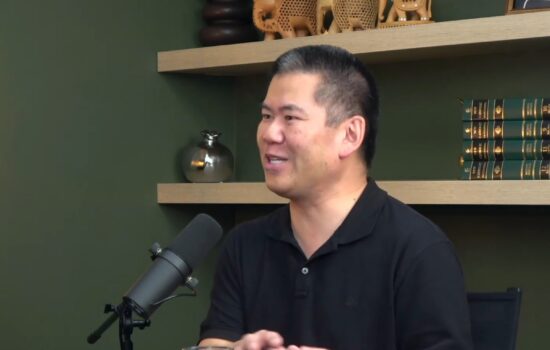
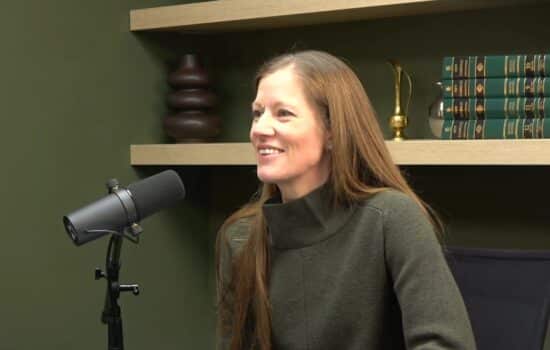
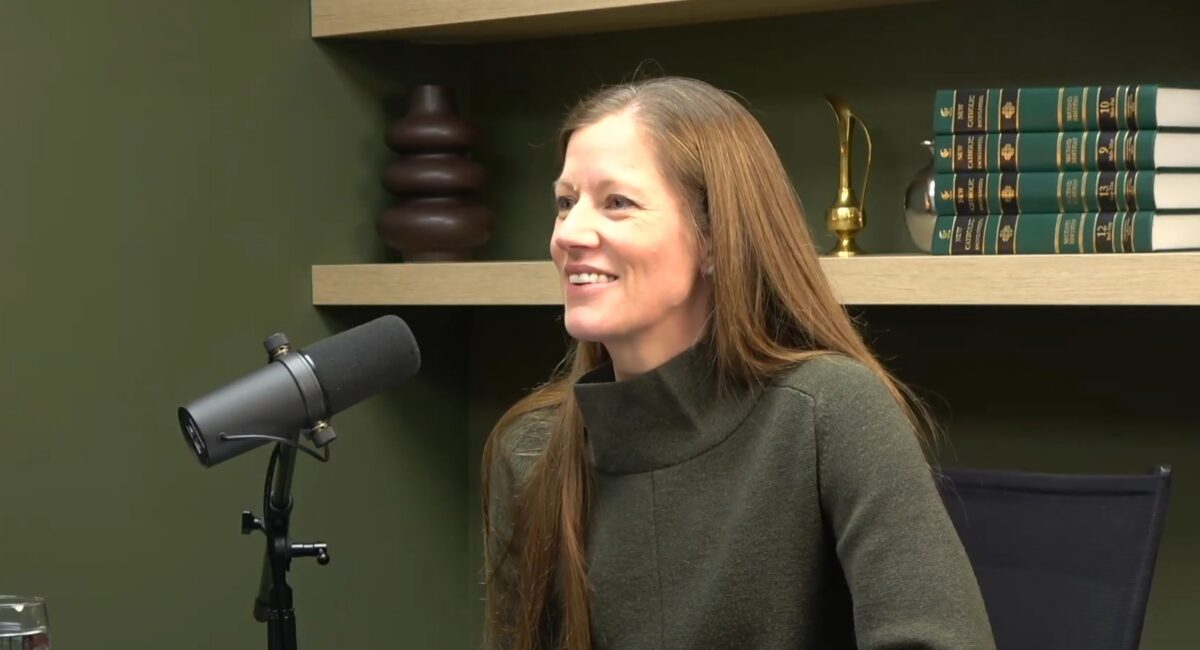
In this episode of Catholic Education Matters, host Troy Van Vliet chats with Dr. Larissa Rossen, Assistant Professor of Counseling Psychology at Trinity Western University, to share her powerful journey from growing up without faith in Australia to converting to Catholicism in 2018 and building a life rooted in Christ in Vancouver. Dr. Rossen opens up about meeting her husband on a beach in Hawaii, her intentional RCIA journey, and how the tragic stillbirth of her firstborn son profoundly deepened her faith and understanding of hope, eternity, and the “dark night of the soul.” Now a wife, mother, professor, and practicing therapist in West Vancouver, she discusses how faith intersects with counseling, the formation of future therapists, navigating accreditation within a Christian university, and her clinical work using Internal Family Systems through a Catholic lens. This heartfelt conversation explores grief, resilience, vocation, and how authentic faith can transform both personal suffering and professional calling
Transcript:
[00:00:01] Intro: Welcome to Catholic Education Matters, the podcast that celebrates the beauty of Catholic education, highlighting excellence in academics, athletics, and the transformative power of faith. Join us as we share the stories of those making a lasting impact on Catholic education. Let’s begin.
[00:00:26] Troy Van Vliet: Good day, everybody, and thank you for joining us here today and I’m here today with Larissa Rawson from, I should say Doctor Larissa Rossen from Trinity Western University and I’m just going to read this little intro here before we dive into this.
[00:00:40] So first of all, you’re an assistant professor at Trinity Western University known for your deep commitment to your faith and academic excellence. Also, your dedication to your Catholic family life. That’s awesome. Now your values align beautifully with the mission of St. John Paul II Academy, making you an ideal candidate for Catholic education matters.
[00:01:03] So, thank you so much for joining us here today. And we’ve got lots of fun stuff to talk about.
[00:01:08] Dr. Larissa Rossen: You’re welcome.
[00:01:08] Troy Van Vliet: So good
[00:01:09] Dr. Larissa Rossen: to be here.
[00:01:09] Troy Van Vliet: And of course, everybody’s gonna be able to hear real quickly that you’ve got an accent. Originally from Australia. Welcome to Vancouver.
[00:01:20] Dr. Larissa Rossen: Thank you so much.
[00:01:21] Troy Van Vliet: Yeah. And you’ve been here for how long?
[00:01:23] Dr. Larissa Rossen: I’ve been here for seven years now.
[00:01:26] Troy Van Vliet: Seven years.
[00:01:27] Dr. Larissa Rossen: Moved in 2018 in Australia.
[00:01:30] Troy Van Vliet: And rumor has it you met your husband in Australia that was originally from Vancouver.
[00:01:37] Dr. Larissa Rossen: Yes. Yeah. He grew up in Vancouver. And we actually met in Hawaii. Oh, good.
[00:01:42] That gets on mutual holidays. And we met just on a random beach. And, yeah, I was just yeah. Pretty much just intrigued and curious about him from the very beginning. He wore his cross and I was just really yeah, he was quiet and I wanted to get to know him more.
[00:02:02] That’s what led me to
[00:02:03] Troy Van Vliet: come on my couch. So was he living in Australia or he was He living in
[00:02:09] Dr. Larissa Rossen: was living in Vancouver. Oh, So he lived long distance for about eighteen months before I moved here. Yeah, we met back in 2015.
[00:02:19] Troy Van Vliet: So how long were you together when you met in Hawaii? Like, just vacation?
[00:02:25] Dr. Larissa Rossen: A week. It’s like a holiday.
[00:02:27] Troy Van Vliet: Yeah. Then you continued relationship afterwards.
[00:02:30] Dr. Larissa Rossen: And then we stayed in contact and we visited each other’s, know, where we lived and families and met people. Then, yeah, I made the
[00:02:38] Troy Van Vliet: blood sugar. And so how long ago was the trip to Hawaii?
[00:02:41] Dr. Larissa Rossen: So that was in 2015.
[00:02:43] Troy Van Vliet: 2015. I went
[00:02:44] Dr. Larissa Rossen: to Hawaii and then yeah. Took me a while. 2018 was when I finally moved here and came to Trinity.
[00:02:51] Troy Van Vliet: Who would have thought that a trip to Hawaii would end up with you living in Vancouver?
[00:02:57] Dr. Larissa Rossen: I know. I feel like God had incredible So
[00:03:02] Troy Van Vliet: and we were talking just before we started. You’re a recent convert, which we didn’t know.
[00:03:08] Dr. Larissa Rossen: I also converted in 2018 as well when I actually, just before in Easter, just before I moved here in April 2018. As long as I’ve lived here, long as I’ve been a Catholic as well.
[00:03:22] Troy Van Vliet: So can you tell us a little bit about that story? What brought you on board?
[00:03:27] Dr. Larissa Rossen: Again, like I said, it started with my husband. He wore his cross, and I was really curious about getting to know the Catholic faith, mainly as a way of sort of knowing whether he was gonna be someone that I Yeah. Would like to marry and spend my life with.
[00:03:42] Troy Van Vliet: Mhmm.
[00:03:42] Dr. Larissa Rossen: And so while I was in Australia, I was working for a Catholic organization. And out the back, they had a church. And so I decided that I would go and see the priest and see if I could meet and ask all my questions about the faith, in which he said, the only way that I can answer all your questions is if we go through the RCIA process together. And so with no pressure or and my husband was absolutely not pressuring either. He was almost like, don’t do this for me.
[00:04:16] And so I I met with this Catholic priest for about twelve months
[00:04:20] Troy Van Vliet: Yeah.
[00:04:21] Dr. Larissa Rossen: And one on one. And we I asked all my questions, and he answered all my questions. And by the end, I just knew that that everything that I was learning was so beautiful and holy and that I had to become a Catholic. I just that’s what I wanted. And yeah.
[00:04:38] And so
[00:04:40] Troy Van Vliet: So how did you grow up? Yeah.
[00:04:42] Dr. Larissa Rossen: I grew up without the faith. My parents were not of the faith. They were very open to us making our own decisions and supported whatever we would choose. Mhmm. But I didn’t know God and I had a lot of questions growing up, especially my teenage years about why are we here?
[00:05:00] What what’s this all about? I often really struggled with, like, friends who would go out partying and, you know, drinking. And I often wondered, well, what’s the point of this?
[00:05:13] Troy Van Vliet: Like, why
[00:05:14] Dr. Larissa Rossen: I always had this deeper sense of there’s gotta be more than just living out our lives day to day. And so but I just never could find my answers anywhere. I looked everywhere. I used to go to a Buddhist temple with my dad. I used to yeah.
[00:05:31] I’ve searched I searched high and low. And then, yeah, it was stumbling upon my faith, the Christian and Catholic faith that I really got all the answers that I was looking for all these years.
[00:05:45] Troy Van Vliet: Fascinating. So what has now so you’ve got married.
[00:05:50] Dr. Larissa Rossen: Mhmm.
[00:05:50] Troy Van Vliet: You have two girls now, I think two and four. And you belong to Christ the Redeemer Parish? Okay. So And what have you noticed about your faith since then? And now you’re teaching at a Christian university.
[00:06:15] So, maybe you can walk us through that a little bit into where you are today.
[00:06:20] Dr. Larissa Rossen: I would say that one thing I didn’t mention kind of in the corridor was that in 2020, we actually gave birth to our son, Braden.
[00:06:31] Troy Van Vliet: Oh.
[00:06:32] r. Larissa Rossen: And he was stillborn.
[00:06:34] Troy Van Vliet: Oh, I’m sorry to hear that.
[00:06:35] Dr. Larissa Rossen: Yeah. That’s okay. But I think that through birthing and yeah. And losing our son, I think that that journey is what has deepened my faith in ways that no other places have. I think I really had a lot of struggles and tensions, and I took all those questions to various mentors and people and really nutted out my faith in a way that I hadn’t.
[00:07:09] And especially around facing death, you know, and what is what is after death. Like, for us as humans, like, we’re all gonna die. And having faced death in such a tangible way with my son in my body, I really wanted to know, well, what is really afterlife? Because I think we can live so here on Earth. And so this whole idea of eternity and what is after Mhmm.
[00:07:38] You know, for me became so instrumental in deepening my faith. And it’s really what got me through that loss because I listened to near death experiences and people who came who met Jesus.
[00:07:52] Troy Van Vliet: Mhmm.
[00:07:52] Dr. Larissa Rossen: You know? And it was those stories that really strengthened my faith and made me realize that it’s not just about now that we’ve lost our son, he’s actually now alive and well in heaven. He’s considered a saint that lives with us and with our family and helps guide me. And so it gave me a different hope for our future that it’s not just about living the day to day here, but it is about being reunited with him and
[00:08:22] Troy Van Vliet: Yeah.
[00:08:22] Dr. Larissa Rossen: And the glory that we receive when we when we all get to meet hopefully, get to meet Jesus at the end. And so I would say that’s been a real key piece of deepening my faith. Yeah. That’s particularly relevant to, I guess, family life. Yeah.
[00:08:39] Troy Van Vliet: And your son was your first born?
[00:08:40] Dr. Larissa Rossen: Is that
[00:08:40] Troy Van Vliet: what you said? Oh my goodness. Must been a challenge.
[00:08:44] Dr. Larissa Rossen: And
[00:08:47] Troy Van Vliet: how do you think your faith helped you through that? Like, say for instance, I mean, you came from a we’ll call it an agnostic background or whatever. You didn’t know what you believed, so to speak. And if you were still the way you were before you were married, before you met your husband and you had a baby that you lost, can you walk us through how you think your faith helped you?
[00:09:15] Dr. Larissa Rossen: Oh, I absolutely think about this all the time. And I often wonder I see a lot of clients who’ve I now sort of tend to see a lot of clients now that have lost their children or lost babies.
[00:09:30] Troy Van Vliet: Mhmm.
[00:09:30] Dr. Larissa Rossen: And honestly, like, without god, I don’t know how people make it through such a tragic loss because it’s just so devastating. And I think if that had been me rewind many years without a faith, I don’t know. I think I would have really been despairing. I think there wouldn’t have been a lot of hope. I think I would have gotten stuck in the death and the loss
[00:09:55] Troy Van Vliet: Mhmm.
[00:09:55] Dr. Larissa Rossen: Rather than the and that’s still there, but then there’s still the hope that we have in our faith that that this life is not the end for us. Yeah. And I think my faith really helped me to deepen into that, that not everything is about the day to day living here and, you know, in the here and now.
[00:10:14] Troy Van Vliet: Mhmm. Mhmm.
[00:10:15] Dr. Larissa Rossen: This life is so short. Yeah. And that we have this whole other eternity that we get to hope for and long for.
[00:10:24] Troy Van Vliet: Mhmm.
[00:10:24] Dr. Larissa Rossen: And I think that that truth there is what saw me through and has seen me through and gives me a lot of hope about meeting my son again. While if I didn’t have that, I wouldn’t even know whether I would meet my son again or not.
[00:10:40] Troy Van Vliet: So, in some ways I know when we go through tragedies or losses, it can be seen as a gift in certain ways. It can be a gift in learning something. It can be a gift just because it’s bringing us closer to our faith. And sometimes it’s a true test of faith because you start questioning things, you know, how could God let this happen? How could it you know, and that’s a whole different sort of philosophical debate.
[00:11:15] But in our faith there are answers to those questions and I’ve seen it more often than not, like people that are going through really, really hard times in their lives and a massive loss that people can carry on because of their faith. Where you can see others that it destroys them.
[00:11:36] Dr. Larissa Rossen: Yeah. Absolutely. And I think, you know, when I work with grief, I think sometimes we when people are going through loss or really tragic time, I think as a society, we tend to hurry people through that. We want them to get to the other side where they feel the hope, where they feel connected to God. But in loss and grief, I think often we don’t hear God’s voice.
[00:12:02] Like, we don’t we’re stuck in that and for a while and can be. And I think and I guess what I wanna say in that is that sometimes it takes people a long time. And sometimes for some losses, they’ll never really, like, get over the loss. Yeah. It will be with them.
[00:12:22] And I think yeah. I think in my work, especially as a therapist, we really make space for the pain and the suffering and the loss. And I think sometimes that’s missed because we want to kind of get to the other side of the hope. But I wouldn’t say they’re, like, they’re two ends of the spectrum. I think they we actually can hold them together, that there is still really a lot of suffering and pain in losing a child.
[00:12:52] And we have a god that we can hold onto and provides us with sustenance Mhmm. You know, through difficult times. So that’s how I wanted to just, like, add a little bit more to that because I think as a society, we’re so numbed out now to pain and grief and loss. And so I think a lot of my work is making space for that, for
[00:13:17] Troy Van Vliet: us to
[00:13:17] Dr. Larissa Rossen: feel into that pain. Right. I think ultimately and you’ve probably heard of Saint John of the Cross. He talks a lot about walking through the dark night of the soul. Mhmm.
[00:13:28] And that if we hurried that and got to the other side, we wouldn’t get the things that we are learning through the process. If we rush that Mhmm. We actually have to go through the dark and walk through the dark. And it’s in that process of facing the darkness, facing the pain that we are refined and come out, you know, beautiful Yeah. And have hope.
[00:13:54] Troy Van Vliet: Mhmm. Mhmm. And you’ve learned those lessons that you can’t learn from just being told them. You have to live them. Yeah.
[00:14:03] You’re able to help others later in life when you can empathize and even sympathize with what other people are going through. And that’s a gift in itself.
[00:14:19] Dr. Larissa Rossen: Well, they say that in our profession that you almost can’t walk someone through something if you haven’t walked through it yourself. And I didn’t know about that. I don’t often say that, but I think there is some truth to having walked through it. I find clients do feel connected when they know you’ve walked through it because sometimes until you experience that you may not fully understand it at the fitness level.
[00:14:45] Troy Van Vliet: And that’s where, going back to your conversion, that’s where people that have converted later in life quite often you’ve got an evangelical advantage. Somebody like myself was a creedal catholic and you learn so much about the faith so early on in life that you just don’t appreciate it. Go through everything until and then finally in grade seven, you’re 13 and you go through your confirmation. And then that’s kind of it. Like formally in the Catholic faith, there’s so much more that you can do, of course, and learn.
[00:15:19] But if you’re not on fire for it at that point, your formal teaching is kind of over by then and then you’re like: Oh, okay, now what? Then you’re relying on your family but you’re living in this world of secularism which is you’re constantly being bombarded with It’s all about me, you know, and how do I feel, you know, and that’s pushed upon us constantly. So, it’s tough to keep the faith. I’m one that, like I said, I was a cradle Catholic and went all the way through, probably took my faith for granted. It was never gone.
[00:16:09] But when we took on this project of St. John Paul II Academy, getting this new high school built for selfish reasons to start for my girls to go there. But then it becomes this giant gift that you’re giving back to the community and it also drew me back into my faith. So, there wasn’t a conversion but like a reversion of going back into the faith. And then I get to do fun things like this now.
[00:16:38] And so when I hear people’s stories of conversion, absolutely love to hear it. And I know the people tuning in also love to hear about it as well. So I find it fascinating. So now you are a professor at Trinity Western. So, Christian University, you’re a Catholic in a Christian university and there’s also Catholic Pacific College at Trinity Western.
[00:17:05] So, and my daughter is part of that program. So my oldest daughter. So tell us a little bit about Trinity Western, what you do there.
[00:17:13] Dr. Larissa Rossen: Okay. So, yeah, I’m one of the assistant professors in the counseling psychology department. So it’s a graduate program that we’re essentially training and teaching future therapists. Oh, okay. So yeah.
[00:17:28] So I do a lot of research. So that’s a lot of my background is I have yeah. I love research and I love getting to know different portions of the population
[00:17:41] Troy Van Vliet: Mhmm.
[00:17:41] Dr. Larissa Rossen: As well as supervising and teaching students and mentoring and helping them on their journey. And then once they finish our program, they become registered as counselors and they’re on their way.
[00:17:54] Troy Van Vliet: So in your program there, how much does faith form the counselors that are coming out of or the people that are going into psychology? How much does it form part of the profession?
[00:18:10] Dr. Larissa Rossen: It’s a great question and I would say one of the most common questions of people coming into the program. The beautiful thing about our program is that we have so much room to talk about faith, and we have students from all different faith backgrounds. So we’re not just necessarily like a Christian counseling program that trains Christian counselors. We train counselors, and we get to have these really meaty discussions about faith and how that intersects. And in our program, I what I really love is that we put a lot of emphasis on the person of the counselor.
[00:18:46] And so it really is a lot of personal formation work. And so for some, that might be exploring their personal faith, maybe their Christian faith growing up, or or maybe if they didn’t have a faith, what that might look like. And so and so we believe that to be really important in the formation of counselors because when you’re meeting with a counselor, you’re not just meeting with someone with a bunch of skills and techniques. You’re actually meeting with a human. And so we really believe that the formation of the counselor and of or the person who is the counselor to be so central to who you meet in the room.
[00:19:23] And so making room for understanding how our faith intersects also makes a lot of room, you know, for and we can add on the skills and techniques later. But our program is especially unique in that that is what we focus on.
[00:19:38] Troy Van Vliet: Mhmm. That must be so do you find yourself kind of balancing or like from student to student trying to figure out where their foundation is? I mean, you’re in a Christian university.
[00:19:50] Dr. Larissa Rossen: Well, we’re pretty clear as faculty. We’re very clear that we sign a covenant statement, and I’m usually very clear about where I stand. Yeah. But I’m and maybe this is, you know, because of my background. I can I can sit with people from different backgrounds
[00:20:07] Troy Van Vliet: Yeah?
[00:20:07] Dr. Larissa Rossen: And help them and work through that. And I suppose as a counselor, we do that too. People always kind of making sense of their faith Mhmm. In the context of their lives. And so, yeah, we’re helping all students.
[00:20:21] I you know, within a research capacity as well as a counseling capacity. And especially for me, it’s a lot about theoretical development where people like, what modality people are, you know, finding themselves drawn to, which align with their personhood. And so, yeah, we spend a lot of time. And students are very interested in hearing about that because that intersection of faith as well as, you know, our counseling profession
[00:20:48] Troy Van Vliet: Mhmm.
[00:20:48] Dr. Larissa Rossen: Is an ongoing discussion that we’re always having, which modalities align well with our faith and which ones can be adopted and fit within our profession.
[00:21:01] Troy Van Vliet: And is there a governing body that you have to follow a certain guideline that kind of said you can recommend this but you can’t recommend that or what
[00:21:15] Dr. Larissa Rossen: have you? That is the tension we find as a program because we are accredited by a professional body and other departments also have that. The nursing faculty, the education faculty, and us in counseling psychology, we are profe like, accredited by a professional body. So we do have to follow their guidelines. And, obviously, sometimes they you know, when they know that we are a Christian university Yeah.
[00:21:39] Some we have to marry those pieces up. And, you know, we’re not obviously evangelizing to our students. We’re helping them to become counselors. Mhmm. But we believe that spiritual and faith based conversations are really important to that.
[00:21:55] And so we navigate that, right, that tension of being a Christian university in secular profession Yeah. Essentially. Yeah.
[00:22:03] Troy Van Vliet: Wow. That must be challenging.
[00:22:05] Dr. Larissa Rossen: Mhmm. Yeah. There’s a lot of you know, like you’ve mentioned, like, navigating and there’s a lot of conversations that we have with our accrediting body. We’ve actually just had a big process of discussing that. But, I mean, it’s really clear that Trinity’s programs, nursing, counseling, psychology, even education are some of the best out there.
[00:22:27] Yeah. And so I think what was really what’s really noticeable to our accrediting bodies is just the love and the care and the hospitality and those good Christian and Catholic values that we have as a program really stand out, especially in professions like counseling psychology, education, nursing that are the helping professions. And so our students really embody those values, and so they’re noticed in our graduates as they, you know, as they go into their professions. And so, yeah, often we don’t struggle to have our graduate students find employment They’re snatched up pretty quickly.
[00:23:06] Troy Van Vliet: It’s well regarded. That’s great. So and you’ve been there for how long now?
[00:23:09] Dr. Larissa Rossen: I’ve been at Trinity since I moved here in 2018.
[00:23:13] Troy Van Vliet: So you’ve seen students go right through the program Do you have any great stories from that maybe you think you had an impact on any students? I know this isn’t part of the script, but part of the questions that we’ve fired at you. Do you have any students that you wanna talk about? You don’t have to give names but
[00:23:36] Dr. Larissa Rossen: Okay.
[00:23:37] Troy Van Vliet: Yeah. Somebody that you think that there might be a really neat story.
[00:23:40] Dr. Larissa Rossen: A story that I really wanna share and it kind of comes back to my life in Australia and will hopefully, like, make sense. When I finished my honors in psychology back home and I had applied for my PhD program, I actually didn’t get the grades to get into the PhD program. And after my interview and meeting with my supervisor and the staff there, they actually wrote letters to the university to support my application. And they actually, like, somehow got me in. Oh, okay.
[00:24:16] Even though my honors I I had all the good grades. It was just my final thesis. I didn’t do as well in for various reasons at the time. So fast forward all these years later, I just now really have a heart for students that, you know, may not have made the cut for, you know, getting into thesis track or may, you know, for whatever reason. And so I think one story that I hold really close to my heart at the moment is a student that was really struggling to get into the thesis track.
[00:24:51] And and I, you know, said, I really wanna take this student on. I really believe in them. And so I took the student on as an extra in my workload. Mhmm. And I wasn’t sure at the time because I got two young kids.
[00:25:05] So, you know, it’s not the best time to be taking on extra, but I really trust in in god leading me by the holy spirit. And and so, yeah, fast forward all these last couple years that the student did their thesis. When they went to defend their thesis, they got a commendation, not only pass, passed with commendation. No revisions to their thesis. I, like, just blew it out
[00:25:30] Troy Van Vliet: of the park.
[00:25:31] Dr. Larissa Rossen: And it was, like, amazing that he’s a student that, you know, really wasn’t even gonna get in and then did so well. And I think I think that’s what makes our university really unique and that I can, you know, believe in the students and love on them and encourage them and support them and cheer them on Mhmm. And to see the fruit of that later. And I think that’s what makes us unique at Trinity, just that we really love our students and care about them. I really cared about this student fulfilling their dream of being a psychologist.
[00:26:01] And so that student’s just finished recently. So it’s the most fresh in my mind and how it’s just really rewarding to
[00:26:08] Troy Van Vliet: Oh, see that Heart must be full when that happens. That’s great. Well, yes, I’ll have to introduce you to my daughter who’s in just second year now just in psychology there. So, she’s just getting her feet wet, but she needs a mentor. Love
[00:26:27] Dr. Larissa Rossen: to connect with her. Absolutely.
[00:26:29] Troy Van Vliet: Yeah. That’s great. And you also have a private practice.
[00:26:33] Dr. Larissa Rossen: I do.
[00:26:34] Troy Van Vliet: And that’s in West Vancouver. That right?
[00:26:36] Dr. Larissa Rossen: Yep. I’m in West Vancouver. Yeah.
[00:26:38] Troy Van Vliet: So can tell us a little bit about
[00:26:40] Dr. Larissa Rossen: that? What you specialize in? I tend to specialize my specialization is more so in my modality, not so much in the people I see, if that makes sense. So I actually use an approach called internal family systems. So and it was actually through the archdiocese and meeting other Catholic counselors in the archdiocese that I actually stepped into this particular modality.
[00:27:09] And it kinda gets into answering your questions about how can we ensure as professionals that we stays keep our faith central to our work in clinical practice. And I think what for me has been really key has been being really intentional about staying rooted within the archdiocese, within Catholic counselors meetings, and then and being part of a cohort of Catholic therapists who went through this internal family systems training.
[00:27:44] Troy Van Vliet: Mhmm.
[00:27:44] Dr. Larissa Rossen: And I think being intentional about talking and conversing and consulting and having supervision within that context has been really important to me. Because we know from the research that just because you go to Trinity or just because you go to a faith based institution doesn’t mean you’re necessarily gonna practice as someone, you know, in intersecting the faith. Yeah. Yeah. You know, we actually have to be really intentional about doing that continually
[00:28:13] Troy Van Vliet: on
[00:28:13] Dr. Larissa Rossen: our journey. And so for me, one of those pieces has been, yeah, meeting with other Catholic counselors and forming groups and you know, because I work so like, as a soul practitioner.
[00:28:25] Troy Van Vliet: Mhmm.
[00:28:25] Dr. Larissa Rossen: And so, yeah, we really need to find ways to stay connected
[00:28:31] Troy Van Vliet: Mhmm.
[00:28:31] Dr. Larissa Rossen: To other counselors and other, like, consultants and supervisors and things like that that keep And our faith alive and
[00:28:39] Troy Van Vliet: you can share ideas and information and thoughts.
[00:28:42] Dr. Larissa Rossen: That’s how I learn all the time. It’s just little tidbits and a conversation will spark an idea and so that’s how I, you know, do that.
[00:28:52] Troy Van Vliet: So would most of your clientele be Catholic then or does it matter?
[00:28:56] Dr. Larissa Rossen: At the moment, I actually tend to take most like I would say, yeah, most of my clients are now Catholic. And I think I’ve probably steered that way, not intentionally, but it’s just happened. I’m obviously registered on the archdiocese list of counselors.
[00:29:13] Troy Van Vliet: Right.
[00:29:15] Dr. Larissa Rossen: And a lot of people now from all over Canada find me through the internal family systems page. There’s actually a psychologist in The States called Peter Malinowski who Mhmm. Who started a whole Catholic group of just, like, faith formation within a counseling framework. Mhmm. So Mhmm.
[00:29:38] And so he started this group and a website called Hearts and Souls. And so a lot of people find me on there, and they come to me because they’re Catholic and they want to do internal family systems to help deepen their faith as well as their own personhood. So
[00:29:56] Troy Van Vliet: you used the phrase there internal family systems. What is that?
[00:30:01] Dr. Larissa Rossen: Okay. I’m
[00:30:02] Troy Van Vliet: glad you
[00:30:02] Dr. Larissa Rossen: asked. Alright. I think part you know, when I first learned about internal family systems, I was a bit put off by the theory of it. It wasn’t actually till I experienced it that I really learned. It’s in more of an experiential trauma informed model.
[00:30:23] Why there’s so many, I think, Catholics and people of the faith being drawn to it is that we understand so we understand God, God the father, Jesus, and the holy spirit as like a triune God.
[00:30:37] Troy Van Vliet: Mhmm.
[00:30:38] Dr. Larissa Rossen: Kinda made up of parts, if you will. Mhmm. And we take that same idea in internal family systems and understand the person in terms of parts. And so in the idea of, like, a multiplicity of the mind, the mind is not one. In our understanding, our mind is made up of many parts.
[00:30:58] And so it can be hugely validating and normalizing for people, especially clients who come my way who are really struggling with a decision, and they’ve got this internal conflict.
[00:31:10] Troy Van Vliet: Mhmm.
[00:31:10] Dr. Larissa Rossen: And so we actually help well, there’s actually a part of you that maybe wants to do this, and there’s maybe a part of you that doesn’t wanna do this, and we make space for those parts. And it’s in the same way and how I fell in love with it is that our parts actually have a different relationship with God. So some parts, I for myself, I can speak personally. I have a real evangelical part. There’s a part of me that is like loves the tradition and faith of the Catholic church.
[00:31:42] But I was really shocked to find that there were parts that didn’t believe. There were parts that struggled with my faith.
[00:31:49] Troy Van Vliet: Mhmm.
[00:31:50] Dr. Larissa Rossen: And it kind of and as I worked through these parts, it helped me to kind of revolutionize the way I approach God and my prayer life, my work, and all people in that I’m not I’m not put off when people have doubts or struggles when they’re going through loss and grief. I’m actually able to make space that there’s parts of them that, you know, really love god, and yet they’re still struggling with questions. And so internal family systems, I’ve found, has just been a really beautiful marrying up of the faith in terms of understanding a triune God made up of parts and us humans made up of parts. And so then it helps us to really validate the conflicting emotions that we have inside as people.
[00:32:39] Troy Van Vliet: Okay. So, just getting my head wrapped around all that. That’s good though. It’s good. So family made up of parts and then each individual in the family also made up of parts and different beliefs in those parts or different convictions, and you got to explore all of them.
[00:33:00] Can’t just
[00:33:01] Dr. Larissa Rossen: Well, we can explore one at a time usually. But usually in a session, many parts show up in relation to a particular topic.
[00:33:10] Troy Van Vliet: So is there like a discovery period first? You’re
[00:33:12] Dr. Larissa Rossen: just trying
[00:33:13] Troy Van Vliet: to find what your parts are.
[00:33:14] Dr. Larissa Rossen: What is a discovery period? Like I’m still discovering parts of myself that, you know, and usually and it kind of lends itself to what I was speaking earlier. Often what happens with some of those harder emotions that we feel, maybe anger, shame Mhmm. Regret, those emotions and those parts tend to get sidelined. They’re uncomfortable.
[00:33:37] We like to push them aside. Mhmm. And so in our work, we get to actually make space for them in a nonjudgmental kind of way so that people for maybe the first time are able to explore how they might be impacting the system now.
[00:33:54] Troy Van Vliet: So
[00:33:56] Dr. Larissa Rossen: in one session we would just focus on one particular part, but often there’s
[00:34:02] Troy Van Vliet: lots of can we have parts of that we are too focused on? Like before we come to see you type of thing?
[00:34:09] Dr. Larissa Rossen: Yeah. Have parts of us that are active and strong in our lives. I’ll tell you one of mine. I have a very organized planner kind of part Okay. And that one is usually at work.
[00:34:22] As you can understand, I’m an academic, a mom, running a private practice. So that one is often working really hard to stay on top of things and, you know and so, yes, we all have these parts that are most active in our lives. And part of the work is exploring some of these parts, maybe where they came from, why they’re there. Mhmm. And as we kind of makes kind of move through the parts, like, yeah, we do kind of a mapping of the parts.
[00:34:48] And often we find there’s lots of parts that we struggle to make space for. Yeah. So, like, especially for me in my journey to motherhood, especially just the angry parts that come up, you know, those frustrated parts that, you know, are really in society, like, don’t wanna own, we don’t wanna name, and have a lot of shame attached. And so it’s in in our work, and I work with other moms that we can we get to, like, actually open that up and see where’s that coming from? What’s that about?
[00:35:20] Troy Van Vliet: Okay. So there can be parts that you’re giving too much empathy because it can be a negative part, right?
[00:35:29] Dr. Larissa Rossen: Yeah. Well, I’ll find that some of the parts can be really positive and we love them. Like, I love my planner part. But sometimes they get yeah. They can get a bit carried away or, like, a bit more active.
[00:35:39] Right. And it’s maybe sometimes if you can’t if they sort of are working out of your control, like, no longer have, you know, access to them as, like, a part that they almost we call it kinda get blended with ourselves. And so we’re kind of operating from that part. And so in our work, we wanna actually make a bit of space
[00:36:02] Troy Van Vliet: Right.
[00:36:02] Dr. Larissa Rossen: To kinda see it and almost externalize it as a part. And then as we do that, we actually can get to know it a little bit better. While you kind of what we call blended, it’s hard to kinda see. But as we kind of can get a bit of space from it, we can actually, like, kind of get to know it and, you know, understand it a little bit better. And then maybe see other parts that interact with that as well.
[00:36:26] And maybe why the part is working so hard. We get to see what it might be protecting.
[00:36:32] Troy Van Vliet: Okay. Here’s a question for you. So when it comes to counseling in today’s I don’t want to say we have an oversensitive world but it can be a little bit about that. I mean, people talk about their feelings, you know, and it’s like, if somebody says, Well, I feel a certain way or the way that you’re talking to me is making me feel a certain way and there’s this hypersensitivity out there that can almost lead to victimhood in a bad way where people are wearing it on their sleeve, you know, or using it as they’re, you know, they hang their hat on it, for lack of better expression. But anyway, where do you find that in your practice?
[00:37:20] Because there’s a slippery slope of acknowledging things too much potentially and where people end up dwelling in that, where it’s something that happened to them. How do you navigate your way around that as a counselor? Some people might cherish that part of their victimhood in a weird kind of way where they’re giving it too much focus, but that’s the reason why they are a certain way or that’s why they are at this stage in their life. And it’s because all of these external things that happen to me and I can’t change anything because that’s all. How do you work your way around that in your profession and to make sure that people are being helped and guided through that in the right way?
[00:38:11] I don’t know if that came That’s out such
[00:38:12] Dr. Larissa Rossen: a question. I feel like there’s so many things that come up for me. I think one thing that I wanna reference and I actually wrote it down so I remember the actual word because it’s quite a mouthful. But there’s actually this text called the theological and philosophical premises for a Catholic Christian meta model of the person.
[00:38:34] Troy Van Vliet: Yeah. I could see why you wrote that down.
[00:38:35] Dr. Larissa Rossen: And I wrote it down because I knew I would never remember that. But essentially, it’s been such a key text for me in understanding the human person
[00:38:44] Troy Van Vliet: Mhmm.
[00:38:44] Dr. Larissa Rossen: As it relates to psychological sciences and counseling. And, essentially, one thing that that text highlights that I wanted to bring here is that we are emotional beings as humans. We are inherently emotional. And emotions aren’t good, necessarily good or bad. Like, they’re they are.
[00:39:06] They’re part of us, and God created us with emotions. And so I wanna say that firstly, that that’s part of our makeup and who we are. And I think I think emotions can sometimes, like maybe like you describe, can maybe, like, become how people are defined or how they understand themselves. Mhmm. And, you know, and I think that sometimes, like I said, the parts of us or maybe these emotions, you know, people can get maybe stuck or identify with them or feel like that is who they are.
[00:39:44] Troy Van Vliet: Right.
[00:39:45] Dr. Larissa Rossen: You know? But I would say it’s not who we are. It’s how we’re made up. We are emotional beings, and our emotions are kind of like almost like a an intermediary between our spiritual life. It can be a way that we can, you know, really refine and develop virtues of love.
[00:40:05] And so it’s just like you said, it’s almost like a very nuanced and slippery slope that emotions can kind of go in this direction of becoming, if you will, like a negative influence or getting stuck. Well,
[00:40:20] Troy Van Vliet: how is it serving you? This particular emotion. Right? Like, it serving you well or is it is it destroying you? Right?
[00:40:26] When
[00:40:26] Dr. Larissa Rossen: when people when when people come to see me in my practice, I take a very nonpathologizing view of the human and my and the way I I operate as a counselor, which means I don’t use a diagnostic model. So I’m not diagnosing people or putting them in a box in any which way. I’m actually just seeing what people are coming with and how they present and we’re going with that. Right. And so often, we’re making space for some of those parts and some of them those emotions that maybe have served really well or maybe have got them through some parts of their lives Mhmm.
[00:41:02] Are no longer functioning in the way that is helping them develop in in their virtues Mhmm. You know, as a Catholic if they are of the faith. And so we really try to what I really try to understand is where it’s coming from rather than, like, maybe judging or shaming or diagnosing something.
[00:41:26] Troy Van Vliet: Right.
[00:41:26] Dr. Larissa Rossen: I actually am working to understand where is that coming from and what is it protecting? Because often when we have maybe emotions that are really big or are defining us, often we find that maybe some of those pieces originated somewhere early on in our experience. Maybe we’ve had a traumatic experience or maybe somewhere in our family of origin, there hasn’t been space to be able to talk about some of those pieces. Mhmm. And so we go back and explore some of those pieces and maybe bring some healing because maybe some of those parts are stuck and we get to help, you know, move through that and make space for that.
[00:42:07] Troy Van Vliet: So when you’re saying healing, what would be a process of that? So if somebody has something of trauma that happened in their life, their childhood or whatever it was and so it gets brought up that, okay, yeah, that was it and that’s leading to how you are today or it’s affecting you in this way today, which we were determining it to maybe not be a positive thing anymore the way you are viewing it or referring back to it all the time or what have you. So what does healing look like? And do you bring the faith into that?
[00:42:45] Dr. Larissa Rossen: Yeah. I mean, it’s such a beautiful question. I believe that I mean, in my understanding, I believe God is the ultimate healer
[00:42:55] Troy Van Vliet: Mhmm.
[00:42:55] Dr. Larissa Rossen: For hearts. And that as a therapist, I get to be part of that process of helping to facilitate some of that healing. But it can happen in so many different ways. I don’t think there’s one particular way. I I really believe in the power and the healing of my profession
[00:43:15] Troy Van Vliet: Mhmm.
[00:43:15] Dr. Larissa Rossen: Counseling, and that people can really find healing, you know, through counseling work. And in my work, that often can be bringing healing to early life experiences or traumatic events that have, you know, led them to become stuck or operating in a way that they’re not able to kind of break out of. But in my work, we also you know, it’s really beautiful because many of my clients will bring Jesus into our sessions. And Jesus will accompany us in the process. The holy spirit is always guiding and directing us.
[00:43:51] And then there’s also beautiful elements of nature, the world that God created that we also bring in. I bring a lot of that into my grief work for people that, you know, just having a really hard time, you know, processing a grief or moving through that grief, if you will. Mhmm. I don’t like to say get over. We kinda move through.
[00:44:15] And so we often will use elements of nature. So we do a lot of ceremonial kinda work, you know, through maybe elements of our faith or nature. Mhmm. You know, going like, going in the water. Sometimes we have clients, like, write things on a rock and throw it in the water.
[00:44:33] Or even, like, using fire often when we write things and we burn it in a fire. These are all ways that we can offload some of our pain and grief and in ways that move it in a way that we can’t do with language, with words. Because I think grief sometimes is beyond the human language. It’s deeper than what we can give words for. And so we’re always looking for ways that we can move it in through, you know, nonverbal ways.
[00:45:06] And so yeah. So I draw up upon a lot of nature and, you know, we even in actually, in our notes here, we spoke about prayer and, you know, there’s ways that we bring prayer and elements of that into our work as well. So it all just really depends on the person and where they’re at and what they’re needing and wanting.
[00:45:27] Troy Van Vliet: That’s fascinating. That’s interesting. So I mean because we all know people that have had things that have happened to them in the past and sometimes it can be tough for people to let things go. So there’s gotta be, well, like you said, you gave a few different examples of either burning something or writing in a rock
[00:45:45] Dr. Larissa Rossen: and
[00:45:45] Troy Van Vliet: throwing the water or whatever. You find some of those things, they help.
[00:45:50] Dr. Larissa Rossen: I mean, it’s actually funny, like, describing it feels like very, yeah, simplistic. But I think I wanna say that I don’t think any of us can walk through this life without experiencing grief and pain. Whether we’ve had, you know, a really faith centered upbringing, I think just by virtue of living in our world, we all carry a lot of grief. And so I think we all have space to be able to make space for that. Mhmm.
[00:46:26] And like I said, we don’t necessarily get over it, but we do wanna make space for it. Because I think what we tend to do as humans is when we’re feeling grief or pain, we tend to, like, wanna push it away. It’s scary. It’s uncomfortable. We kinda wanna not feel that.
[00:46:45] Yeah. But in it’s actually the opposite in my work. We’re actually gently making room for that. And so yeah. In the ceremonial elements for me are for certain like, for situations, and I think all of us can make room for that, I certainly do now, is making space for what whatever way the client clients want to and individuals want to make space for their grief.
[00:47:13] Sometimes it’s within a church setting. They’ll do it at the cross or it’s not necessarily always like throwing a rock. Some clients have found that helpful to you know, as part of a ceremony, there’ll be multiple elements But
[00:47:26] Troy Van Vliet: Right.
[00:47:27] Dr. Larissa Rossen: You know, they may write on a purse like, the name of a person that has really harmed them, and they wanna kind of, you know, maybe create some space in that relationship. Or they’re going down a path that they’re not able to help them anymore or they feel very helpless to it. Maybe they need to, like, let go of the helplessness or the responsibility of someone else. And so, can be really powerful rather than necessarily talking about it.
[00:48:10] Troy Van Vliet: Yeah. Well, think it kind of burns in your memory too a little bit better that you’ve handled this or you’ve taken care of that and it’s time to whatever move on, whatever you want us. We won’t say get over it.
[00:48:21] Dr. Larissa Rossen: Yeah. I’ve been working with a client recently. I’ve actually it’s interesting. I’ve had a number of older clients wanting help with, you know, their relationship with their adult children. Yeah.
[00:48:37] And so I’ve had clients recently who, yeah, struggling with the direction that they may be taking. And so we’ve worked a lot around the grief of that. And, you know, because they can’t necessarily change or control what others choose to do, but they can work through what it brings up in them and the grief that it brings up in them. And particularly with one client who, you know, had a who had a child that got married and felt like there had been a certain level of emotional cutoff from that relationship, which caused a lot of distress. And so in that distress, we were able to make space for that, and it kind of tapped into it’s interesting.
[00:49:22] Find for all clients, there might be a precipitating event that brings them, but then it’s an opportunity to explore many other layers of their life that they may not have addressed or, you know Mhmm. Made space for before. And so it’s interesting that as we made space for that and we worked through that and she came to a place of, you know, accepting and a peace about that, it was at the same time that her child was actually ready to engage again. And she knew that if she hadn’t have done that work, she would have been in a much different place, probably really angry or resentful about that Right. But actually was able to welcome in and was able to, like, embrace her child with love Mhmm.
[00:50:12] And reengage that relationship. So I think it’s like a perfect example that we all have room where we can grow and change and as we relate to others in our community and family and our lives.
[00:50:24] Troy Van Vliet: Always growing. If you’re not growing, you’re dying from what I was always told. As a Catholic mother and academic, wisdom would you offer to parents trying to balance a professional life? Because you’re a professional, you’re a professor, you’ve got to practice, you’re also a wife and you’re a mom. There’s a lot of juggling going on and the university isn’t exactly down the street from where you live.
[00:50:53] It’s a bit of a commute as well.
[00:50:55] Dr. Larissa Rossen: It’s a bit of a commute.
[00:50:56] Troy Van Vliet: So, you’re juggling a lot and I’ll even broaden this question young either young mothers or say new couples that are thinking about having kids and how they’re going to balance because it’s tough, it’s an expensive part of the world to live and, you know, it’s almost assumed that there’s going be two incomes all the time in young families. But that’s a real different dynamic than like say for instance when I was growing up I had the privilege my mom stayed home when we were going to school in the early years for sure. And as an adult I see how valuable that was having my mom around all the time. And my dad was out my dad was out working. So how do you deal with young families that are juggling that and is it wrong for moms to want to stay at home with their kids?
[00:52:01] I mean, everybody’s different. Everybody’s got different priorities in that regard as well. There’s more than one or two ways of doing that.
[00:52:09] Dr. Larissa Rossen: There are so many different ways to be a mom and I really encourage and I’m actually doing a research study at the moment looking at maternal intuition and how we help moms to trust in their own decision making capacity in a world not only trending towards moms entering the workforce more, but also in a world where we’re so bombarded with digital technologies. We’re living in the age of social media, Insta moms, and Yeah. You know, expert parents. And so I got really curious as a researcher, you know, how can we help moms to make decisions that work for them, that’s good for them and their unique situation and family life? And so that’s where I really lean towards is helping moms find, you know, their own their own calling in life, whether that is staying at home with their children because that in itself is such a important calling.
[00:53:08] And the moms like me who work in an academic institution and do I think for me, what’s really important is that my work to me is not just a paycheck. It’s a calling that I felt reinforced in my lifetime and time again that god has really called me to this, to my work at Trinity as well as my role as a counselor. And so I think that if I was pushing that in my own strength, it would be really hard. You know? I think it’s really discern like, using discernment to really lean in and understand where god has called you and what that looks like.
[00:53:48] And so it’s been really clear for me for me from the outset that that’s gonna be a part of my calling because I feel it really not only helps, like, grow and help me to be a better academic and counselor, but it really helps me serve in my capacity as a mom as well. Mhmm. And the other thing I wanted to say is I wrote Hilary McBride and I, a colleague of mine, wrote a book chapter which is coming out in the new year.
[00:54:17] Troy Van Vliet: Oh, exciting.
[00:54:18] Dr. Larissa Rossen: And it’s all about mothering as a spiritual technology. And what we mean by that is that we really believe that in the role of mothering and looking after children in the day to day, sometimes the very mundane Mhmm. That we really see it as an opportunity to convene with God, that it’s actually a way that God helps to grow and refine us being a mom. And so it’s not only a super important role for our children, but I also believe that in being a mom, we’re, like, also being refined and god is using us in the most important calling of all. So yeah.
[00:54:58] So I guess I would encourage you to read that when it comes out because it shares more about, you know, just the transition to motherhood and what it entails. I think I see a lot of moms, like, come my way in my practice and are really making sense of their own identity as a mom, but as a as a believer and maybe in their work as well. Mhmm. And so I really believe that that transition to motherhood is so ripe and rich for exploration and refinement and growth and deepening if you really wanna go there and be intentional about exploring that more.
[00:55:37] Troy Van Vliet: Yeah. I think that’s fantastic. I think there’s not enough emphasis put on motherhood in these times right now. I think it’s so important. And I think quite honestly, our young people have been sold a bit of a bill of goods that it’s all about the money and it’s all about the career, can be fulfilling in itself, you know, having a strong career.
[00:56:04] But sometimes at the cost of motherhood because we chase a career for so long and that biological time clock is ticking and to start thinking about having families when you’re approaching, you’re well into your career, you got everything settled and there’s never a good time to have kids. It’s always well, you know, should we plan this? I mean, have kids. Get started. You’ll figure it out.
[00:56:30] And it’ll be the most rewarding thing.
[00:56:31] Dr. Larissa Rossen: Having in the mess of it. That’s what I would say that we’re like it’s a bit misleading that we’re gonna get balanced, you know, in in work and life and in all the parts of our life that we’re, you know, kind of interacting with. But I just I just don’t know that balance like, we’re ever gonna achieve this balance that we’re looking for. Yep. Like, we’re gonna measure the proportions and say, okay.
[00:56:54] I’ve got it all balanced out. I think really in in life, I think it’s really, like, kind of like a posturing towards god. Like, you know, as a mom, as in my work, like, I think it’s in the day to day that I really am acknowledging god in in all the ways that I’m I am. And, you know, like, it’s funny. Like, as I brush my daughter’s teeth, I we God is part of all part of our lives.
[00:57:22] It’s not just sitting down and praying. In my family, when I brush my daughter’s teeth, I’m saying the Saint Michael the Archangel prayer. And that’s how I say that prayer every time I brush their teeth. And if I don’t, look out. They’re gonna make sure I do.
[00:57:37] We pray we pray for parking spots. We thank Jesus throughout our day. And so for me, it’s all throughout our day that we’re convening with God and not only modeling that for our children, but also, I think as a mom, where do we have time to sit and have quiet time? There it’s, like, so hard to find quiet time. So I’ve found that weaving it into my schedule and my life is the way that it’s worked really well for me and finding ways to do that has been, yeah, really key.
[00:58:09] Troy Van Vliet: That is the key to weave it in. You know, and that’s what we’re exploring right now Catholic liberal education program to in the high school to have the faith woven into all the classes, whether it’s science or math, physics, have it woven into anything. You talked about the beauty in nature and the patterns in nature and all of that, which is science, which is also very godly in itself too. We’re humans and
[00:58:39] Dr. Larissa Rossen: I think we’re making connections in our mind. We don’t just go and learn about God in one class and then learn about science and arts and everything elsewhere. Like, we are learning in this class in science about God and his creation and this, like and so we’re actually applying what we’re learning. And that’s the best kind of learning is when we take what we learn here and we apply it and we see it played out in other areas of our life. That’s when our brain is making those connections.
[00:59:10] Troy Van Vliet: Yes. Makes those connections. That’s how you remember it too.
[00:59:12] Dr. Larissa Rossen: Yes. That’s exactly how we remember it is connecting and applying our learnings. So I love that weaving in.
[00:59:18] Troy Van Vliet: I love that. Well, and I love that you’re doing that at Trinity as well and in psychology that faith is being woven into all of that. So that’s very comforting and especially knowing that my daughter’s in that program. But Doctor. Larissa Rossin, thank you so much for joining us here today.
[00:59:37] And I’m sure we’re going to have you back because I think there’s a ton of stuff that we could talk about. Know, So I we’ll definitely have to have you back to text more. All right. So, thank you again. And thank you everybody for joining us today and be sure to join us again next week.
[00:59:55] If you like what you see here, please remember hit the like button and also love to hear your comments. So good, bad, anything in between. Sure. Please drop us a comment on there as well. So thank you all and be sure to subscribe. Have a great day.
[01:00:08] Thank you for listening to Catholic Education Matters. If you enjoyed this episode, please follow the podcast on your favorite listening platform, rate it, and also leave a review. Don’t forget to share this episode with your friends and family to help spread the word about the impact of Catholic education. Be sure to listen again.