Chapters:
00:00 Intro
04:17 A Convert at 18: Discovering the Catholic Faith
08:28 From Catholic to Protestant… and Back Again
12:58 What Is the Shroud? A 14-Foot Linen with a Crucified Man
16:05 Not a Painting: The Scientific Mystery of the Image
19:11 Forensic Evidence: AB Blood, Scourging & Crucifixion Details
23:07 Conversions & Skeptics: The Shroud’s Spiritual Impact
27:16 The 1988 Carbon Dating Controversy Revisited
31:28 The Light Pulse Experiment: Why Science Can’t Reproduce It
37:37 A Photographic Negative? The Shroud’s Unique Imaging Mystery
39:01 Where Is the Shroud Today? Turin, Italy & Its Historical Record Since 1355
40:22 From Constantinople to Turin: Tracing the Shroud’s Journey Through History
41:16 Owned by the Pope? The House of Savoy & Private Custody Explained
42:35 Seeing the Real Shroud: Faith, Reason & a Powerful Personal Encounter
47:07 Why She Speaks: Blessings, Skeptics & Leaning Into Hard Questions
51:11 Outro
If you are interested in our school, make sure to check out our website:
https://www.sjp2academy.com/
Follow us on social media:
Watch on YouTube
Instagram: https://www.instagram.com/sjp2academy/
Facebook: https://www.facebook.com/sjp2academy
X (formerly Twitter): https://x.com/SJPIIAcademy
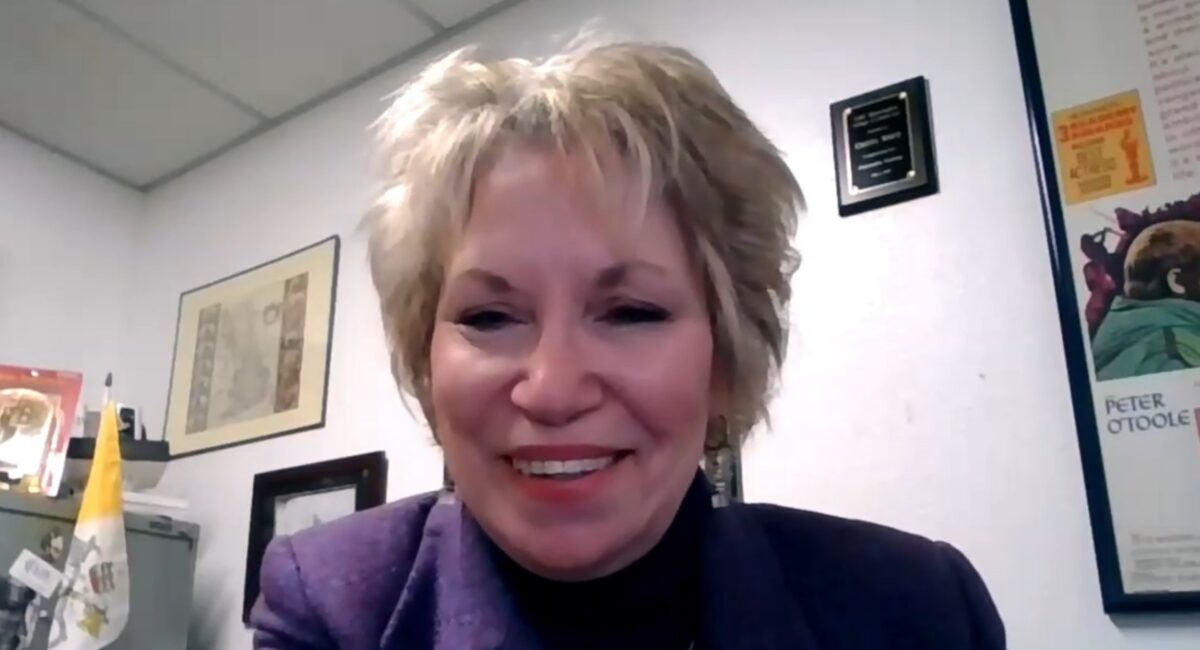
In this episode of Catholic Education Matters, Troy Van Vliet speaks with historian Dr. Cheryl White of Louisiana State University at Shreveport to explore the enduring mystery of the Shroud of Turin. Dr. White shares her powerful journey as both a convert and revert to the Catholic faith, and explains why the Shroud – an ancient 14.5-foot linen cloth bearing the image of a crucified man – continues to challenge historians, scientists, and skeptics alike. From forensic evidence of Roman scourging and crucifixion to modern light-pulse experiments that still cannot reproduce the image, the conversation unpacks the Shroud’s profound intersection of faith and reason. Addressing the controversial 1988 carbon dating, recent research developments, and stories of personal conversion sparked by encounters with the Shroud, this episode invites listeners to confront one of history’s greatest mysteries—and consider what it ultimately means.
Transcript:
[00:00:01] Intro: Welcome to Catholic Education Matters, the podcast that celebrates the beauty of Catholic education, highlighting excellence in academics, athletics, and the transformative power of faith. Join us as we share the stories of those making a lasting impact on Catholic education. Let’s begin.
[00:00:26] Troy Van Vliet: Thank you for joining us today for Catholic Education Matters. My name is Troy Van Vliet, and I’m really excited today to have Dr. Cheryl White with us. And today we’re going to be talking about the Shroud of Turin. And Doctor. White, welcome. You’re tuning in with you’re joining us, from Shreveport, Louisiana, and that’s why we’re doing it over Zoom today.
[00:00:49] We do that every now and then when our guests are from out of town. So welcome to Catholic Education Mailers.
[00:00:55] Dr. Cheryl White: Thank you. Thank you. Happy to be here.
[00:00:57] Troy Van Vliet: Thank you. So and if I may, I’m just gonna read out your bio because it’s quite extensive and it’s just it’ll just give everybody a quick overview of who you are and then we’ll jump in to our conversation. So, Doctor. Cheryl White is a historian whose scholarship brings clarity, discipline, and depth to one of the most studied, debated artifacts in human history. She’s a professor of history at Louisa State University at Shreveport, where she specializes in medieval and early modern European history with particular emphasis on Christian history and material culture.
[00:01:38] Known for her insistence on primary sources and carefully and careful methodology, Doctor. White is widely respected for approaching complex and often controversial questions with intellectual honesty, precision, and humility. Doctor. White is internationally recognized for her research on the Shroud of Turin. Her work includes extensive archival research including material connected to Vatican sources, as well as sustained engagement with the scientific, historical and cultural scholarships surrounding the Shroud.
[00:02:19] She serves on the board of Shroud of Turin Education and Research Association and has advised museum exhibitions and educational initiatives internationally. Beyond the academy, Doctor. White is deeply committed to public education. She regularly speaks to students, educators, parishes, and international audiences, helping them understand how historians evaluate evidence and why the shroud continues to challenge modern assumptions about history, science, and faith. She’s also a cohost of the podcast, who is the man of the shroud.
[00:02:59] So that’s the name of that podcast, where she models rigorous historical inquiry while demonstrating how faith and reason, when held together with integrity lead not to easy answers, but to deeper understanding. My goodness. That’s you have quite the resume.
[00:03:19] Dr. Cheryl White: I don’t know who wrote that. I’m impressed.
[00:03:23] Troy Van Vliet: There you go. That would have been so very I’m sure when she was she’s producing. So
[00:03:29] Dr. Cheryl White: Okay.
[00:03:29] Troy Van Vliet: On you. So that’s quite the overview there.
[00:03:33] Dr. Cheryl White: Okay.
[00:03:34] Troy Van Vliet: And Yes. Once again, thank you for joining us here. Lot of excitement with this with the Shroud of Tour, and especially here because we have the exhibit coming to Saint John Paul the second academy. And Right. In the spring coming up, and you are going to come in up to Vancouver, and you’re gonna actually speak here to students from other schools and from for all around the Lower Main Lower Mainland and Greater Vancouver area.
[00:04:05] So I’m really excited about that. But let’s start with you and the Shroud and how did you get interested in and involved with the Shroud?
[00:04:17] Dr. Cheryl White: Yeah, my story goes back many years. I was actually an undergraduate history major in the early 1980s when the very first peer reviewed science began to be published about the shroud coming out of that 1978 research project, which is the only time the shroud’s ever been allowed to be scientifically examined. So I was pulled into the story then because I was a history major, number one, and number two, I was interested in Christian history particularly, and I was a brand new Catholic. I came to the faith as an adult. I was 18 when I was baptized.
[00:04:52] Pope Saint John Paul II was Pope, and he was a rock star to So I was really pulled into the story then, I think that really is when my academic interest began. And then in 1988, when the Carbon 14 dating results were published, which I hope we’ll have an opportunity to talk about, everybody, I think, in the tribe world kind of took a step back because we were told it was medieval. And as a medieval historian by that time in graduate school, I knew that couldn’t be true. And so I’ve leaned in even more ever
[00:05:29] Troy Van Vliet: That’s awesome. Okay, now I’m going to go back a little bit get off topic, but it’s on topic for your for Catholic education matter. You just mentioned that you became Catholic when you’re 18. Yes. How did that happen?
[00:05:45] Dr. Cheryl White: Well, I was unchurched as a child, and I didn’t really know anything about the Christian faith. But I had visited a Catholic church with some neighbors that lived across the street beginning when I was a child, And I knew that there was just an inexplicable peace in those walls and in that space. Even though I didn’t really understand it as a child, I knew by the time I was forming my own conscience and my own outlook on my life as a young adult at 18, I sought out private catechesis with a Dominican priest. And it was the most incredible year of my life I spent in all of my education. It was the most incredible time that I had.
[00:06:32] And he really unfolded all the mysteries of the faith for me. And so, yeah, I was baptized as an adult, which is a great gift to me because I have the memory of it.
[00:06:43] Troy Van Vliet: That’s beautiful. You were you have a family?
[00:06:47] Dr. Cheryl White: I do. I do. I’m married. I have two sons. I have two granddaughters.
[00:06:51] And
[00:06:52] Troy Van Vliet: Good for you.
[00:06:53] Dr. Cheryl White: Yeah. So I am
[00:06:55] Troy Van Vliet: you’re truly blessed.
[00:06:56] Dr. Cheryl White: Very blessed.
[00:06:58] Troy Van Vliet: Yeah. That’s excellent. So and you said so you were kind of introduced as a child with neighbors. Actually, know something else where that kinda happened as well. That that was in their introduction to the Catholic faith was going to going to mass when they were kids with their parents of their friends that lived next door.
[00:07:18] So that was your introduction. Then it was your own curiosity that kept you going, like into your teens or what have you?
[00:07:27] Dr. Cheryl White: Yes. Yes, absolutely. By the time I turned 18, knew that there was a movement in my soul I just had to answer. It’s one of the things that parallels the way that I teach about the shroud is that I think that anybody who confronts that kind of mystery, you’ve got a you’ve got a challenge in your at the level of your soul, something you have to respond to. And I would say this even to skeptics, you know, you have to answer what that is.
[00:07:54] And so, for me, it was to lean really fully into the Catholic faith, and I’ve never looked back really. I had a period of time also in my life where I was, as an older adult, I was outside of the church. And I’m very grateful for that time too, because being exposed to a Protestant tradition, as I was, really sharpened my focus when I returned, and made me ever so much more grateful for what we have, and the richness and the depth.
[00:08:29] Troy Van Vliet: When did your Protestant exposure go?
[00:08:33] Dr. Cheryl White: So that happened in my late thirties. I had married, and I married a Protestant. And so, yeah, I spent many years out side of the Catholic faith, always sort of looking through the window though. You know, I didn’t go far. Went to the Episcopal Church, in The United States was an expression of the Anglican Communion, and I felt like it was kind of like Diet Catholic, Catholic light.
[00:09:03] And so I didn’t lose the liturgical experience as much, but I sure missed the richness. And as I said, it made me ever so much more grateful because, you know, it’s like seeing something in full color, in full vivid color, versus looking at it in grayscale. And for me that’s what that Protestant experience was like. I knew that God perhaps was in that, but not in the full rich color that I knew from Catholicism. So yeah, that’s also been a very important part of my formation.
[00:09:39] Troy Van Vliet: So, what drew you back?
[00:09:43] Dr. Cheryl White: What brought me back? Oh my gosh, my heart just never turned loose. And I remember a lot of times on Fridays I would sneak into Mass on my lunch hour and steal away and do that because I missed it so much. And actually what happened is, it was a gradual growing My sons grew up. My youngest, I think by the time he reached the age of 16, we had that kind of pivotal moment in the household where it was the showdown.
[00:10:12] I’m not going to church anymore, that kind of thing. And it was a ditch that I didn’t feel like I would die in. I know that some parents would disagree with that, but I didn’t. And because I knew that I had formed him, I had raised him in the way he should go, and I felt like, you know, at that point, I would have done more harm than good to force it. So literally no one in my family was going to church but me.
[00:10:38] And
[00:10:38] Troy Van Vliet: I Mhmm.
[00:10:39] Dr. Cheryl White: And I and I walked into that to that Episcopal Cathedral as beautiful as it was. I walked in one Sunday morning and looked and thought, what am I doing here? You know? This is not this is not me. I didn’t do this for me.
[00:10:52] I did this for my family. And so that was when I returned, and that’s been about twelve years ago now.
[00:10:58] Troy Van Vliet: God bless you for that.
[00:11:01] Dr. Cheryl White: It’s a great part of my life. Yes.
[00:11:07] Troy Van Vliet: Has your husband remained as a Protestant? Is he Yes. And it works. Good for you.
[00:11:13] Dr. Cheryl White: It yeah. Well, it has to.
[00:11:16] Troy Van Vliet: Yeah. Yeah. Yeah. Well, that’s wonderful. And thank you for sharing that with you.
[00:11:20] I know that wasn’t Yes. Or but I’m always I’m always fascinated to hear that. Like, what’s Yeah. What brings people in? What brings people back?
[00:11:31] Quite often, I’m a cradle Catholic, but, in my, probably twenties and early thirties was kind of I was always Catholic, but I was less practicing, just wasn’t as
[00:11:43] Dr. Cheryl White: Sure.
[00:11:44] Troy Van Vliet: Deep in my faith. And, of course, then when you have kids, sometimes that turns the light on again. You’re like, okay. Wait a minute. Now it’s not just about me anymore, and it’s all about my kids, and how’s that gonna look?
[00:11:56] And then I championed building Saint John Paul the second Academy and for my kids to go to. So it would started off as a selfish act because I wanted something for my kids turned very quickly into a big give back, realizing tens of thousands of kids are gonna get a Catholic education over the life of the school, and then having to work with so many people that are deep in the faith really kind of brought my faith back to me. I have I had more of a big reversion rather than a conversion. Yeah. Yeah.
[00:12:35] Because I was already Catholic in that way.
[00:12:38] Dr. Cheryl White: Well, I was a I’m a convert and a revert. So that’s how that goes. Yeah.
[00:12:42] Troy Van Vliet: Yeah. I think you might be the first that the first that I’ve talked to about that is a convert and a revert. So Yeah. That’s great. Well, welcome back.
[00:12:52] Dr. Cheryl White: Thank you.
[00:12:53] Troy Van Vliet: So let’s get back to the shroud now.
[00:12:57] Dr. Cheryl White: Sure.
[00:12:58] Troy Van Vliet: Yeah. So you’ve done lots of work with it. You do lots of talks about it, whatever. Do you do that in the university as well?
[00:13:07] Dr. Cheryl White: Yes, I do. Secular I’ve lectured universities, seminaries, really all over the world. It’s been the Louisiana State University System has been very supportive of my work on the shroud because I primarily focus my research on historical method. So you can view it either completely, objectively, academically as a real historical artifact, or you can look at it as more nuanced. Obviously, history can answer, you know, what it is, but it cannot really answer its meaning or its purpose.
[00:13:41] So, both of those things are very important to the way that I teach about it, is both as potentially the most important thing that’s ever existed in terms of the physical artifact, and just all the many mysterious properties about it that we can’t really answer. It’s a unique intersection of faith and reason that you don’t find. I don’t know of any other object in the world that invites the contemplation of faith and reason the way that artifact does.
[00:14:12] Troy Van Vliet: Wow. Okay. Well, we that’s a that’s a kind of a good segue into Yeah. Telling us a little bit more about it and why
[00:14:20] Dr. Cheryl White: What it is.
[00:14:22] Troy Van Vliet: Yeah. Is it before we get into that, is it a well attended course that you teach? Is it a course or it’s just part of the subject?
[00:14:29] Dr. Cheryl White: No. No. No. This is just part of what I do in my public speaking. I don’t teach it here at the university, but I have given lectures at universities on the Shroud.
[00:14:40] And it’s always tailored to the audience. If I am dealing with secular audience, then I am going to speak about it more as a historical mystery, and if I am dealing with certainly with a Catholic or Christian, any Christian denomination, any audience, I can deal with it very differently. So there’s so much depth to it. I don’t ever run out of anything to talk about.
[00:15:03] Troy Van Vliet: Well, let’s delve into it then. Alright. Let’s a little bit more about what we’re going to be seeing when it comes to visit us at our school.
[00:15:13] Dr. Cheryl White: Well, I want to introduce students to this great mystery because, you know, what we’re talking about is a 14 and a half foot strip of linen cloth that bears a forensically accurate and anatomically perfect image of a man who has been scourged and crucified in Roman fashion, who has been capped with something thorny on his head, who bears 360 plus wounds on his body that are consistent with a Roman flagrum, and that description, that physical description only matches one person in history. So nobody ever looks at this cloth and says, I wonder who that’s supposed to be. You know, who is that supposed to represent? But the mystery, of course, is that it is anatomically and forensically perfect. There’s dimensionality that’s encoded in the very top fibrils of this linen image.
[00:16:05] So it’s not a painting. It’s not an artwork. It’s not a photograph. We cannot really explain or reproduce the image formation process in the twenty first century. We have no laboratory that can do that.
[00:16:21] And believe me, people have tried. And so it’s a great opportunity to encounter mystery, as I said, but also that kind of intersection of what happens when your human reason hits the wall. So I just had a book that came out just a couple of months ago, and it’s called The Shroud in the Third Millennium, question mark, confronting the limits of human knowledge. What I deal with in this book is exactly the philosophical challenge I’m referencing here is that I don’t know anything else that pulls you in to study it. It’s been studied more than any artifact we know, but yet we don’t understand it.
[00:17:02] That’s the inverse of the way academic inquiry works. You know, the more you study something, the more you’re supposed to be able to understand it. Objects of the material world always give up their mysteries the more you study them. And yet we find the opposite with this. The more we study it, the more questions we have.
[00:17:20] And so I think that makes it puts in a class of artifact all its own.
[00:17:26] Troy Van Vliet: What kind of questions do you think come from that? As the the more it gets studied, the more questions What’s come an example of that?
[00:17:33] Dr. Cheryl White: So for instance, in the nineteen seventies, the big question was, well, is the image somehow an artwork? Did someone create that, you know, using some sort of pigment or paint or dye or imaging process? And that study, of course, concluded that that remains a mystery. We don’t know how it got there. It’s none of those things.
[00:17:51] So the more that we ruled out pigments, paints, dyes, fact that it’s not an artistic representation, but it’s actually the shroud itself actually wrapped a real human form, and the image was made while this real human form was inside of it. Then the question becomes one of, wow, let’s see if we can reproduce some sort of process in a laboratory that can do that. But here’s the challenge. I mean, we mathematically and sort of using theoretical physics, could understand how you could do such a thing. You know?
[00:18:33] It’s light. It’s light on a spectrum that we don’t have on planet Earth. It’s light on a spectrum that that created a chemical reaction in the top fibers of the linen. We understand the process. We just can’t reproduce it.
[00:18:50] So that you see, that’s the biggest thing. That’s the biggest mystery. Right? It’s not reproducible, but it’s also not falsifiable. It’s a real artifact.
[00:19:00] It’s really there. The image is really there. So that’s the biggest mystery of all. And then, of course, you know, we can study it scientifically. We know that there’s human blood on it.
[00:19:11] We know that it is type AB blood. We know that forensically you can examine the wounds, and you know that they’re caused by a very specific type of weapon. The, this man was crucified. There’s a nail wound, a large puncture wound at the left wrist. The the right wrist is not visible.
[00:19:35] There’s a large puncture wound at the feet. There’s over 50 individual puncture wounds at the head, the, you know, the forehead, the nape of the neck, the back of the head, consistent with something on his head that produced the same kind of puncture wound. And then this man was pierced right between his fifth and sixth ribs with a weapon that can be replicated. You know, forensically, we know the width, depth, and breadth of the lance that entered this man’s side, and then it left like a bloodstain with a serum halo. So it’s a postmortem wound.
[00:20:15] Like, we know all of these things forensically, but it doesn’t answer the most important question we have is how did the image get there, and what does it mean? And you see, it’s the what does it mean that calls us into a different way of knowing.
[00:20:38] Troy Van Vliet: Okay. Questions for you there.
[00:20:40] Dr. Cheryl White: Okay.
[00:20:41] Troy Van Vliet: Okay. So you’re saying there is blood, a b type blood?
[00:20:46] Dr. Cheryl White: Yes. Yes. Yes. It is real human blood.
[00:20:50] Troy Van Vliet: And is that real human blood found in all of those images of the wounds? Or is it just Yeah.
[00:21:02] Dr. Cheryl White: Every place there is a blood stain on the cloth from a wound that this man suffered, it is type AB human blood. It’s all the same blood.
[00:21:12] Troy Van Vliet: And is it and so when you’re saying there’s three hundred and sixty plus wounds? Caused by scourging. So then there’s 300 and that’s 360 spots of blood.
[00:21:26] Dr. Cheryl White: Correct. And not all of those 360 bled. Some of them are bruised, but you can still see the wounds. Microscopically, they’re all the same. They were caused by what aligns with a with a Roman flagrum.
[00:21:38] And as a matter of fact, CSI forensics would tell us that this man was beaten by two men. There was a man on his right and a man on his left, and they each had the same identical weapon, but one of the men was taller than the other because of the directionality of the wounds. So when you begin to consider the shroud as a crime scene, you know, and you begin to look at it that way, which is how I often talk to students about it, because I think that gets them excited in the story, the mystery, you know. When you begin to look at it that way, then then one question just begs another. You just you go from one thing to the next.
[00:22:19] Well, if this man was beaten with that type of weapon, well, what does that mean? You know? And he has all this man has all the wounds that that are unique to only one person of history. So that’s, of course, the greatest mystery of all.
[00:22:40] Troy Van Vliet: When people I haven’t seen the shroud yet. I’m more Catholic, Christian. Have you experienced people that have seen it and that have listened to the history behind it and the science behind it, the forensic studies behind it? Have you seen any of those people become curious about the faith that maybe are from the Sure. Their world or what have you?
[00:23:08] Dr. Cheryl White: Yeah. As a matter of fact, I think that’s probably I I get asked the question a lot. What are the miracles that are associated
[00:23:15] Troy Van Vliet: Yeah.
[00:23:15] Dr. Cheryl White: With the shroud? And because, you know, it’s I think that’s a fair question. And to me, the miracles have been in conversions. And I think that that in the visual culture that we live in today especially, the empirical understanding that we all want to have about things, it’s uniquely it’s kind of a unique time for it to be in front of us. It’s the age of the image, age of the selfie, you know.
[00:23:46] So so I have seen people come back again and again, and actually it happened there in Vancouver a few years ago when I was there. There was a young man that came to a public presentation, not the one for the students, but for a public presentation that I did there. And he was very skeptical, and I would say almost not quite hostile, but almost, you know. And I have learned to see that as an honest inquiry. That kind of yearning of the heart, trying to understand often comes out that way, I think, for people.
[00:24:23] And so I was as patient as I could be with his questions afterwards. And then he came back the next night and for the second one and wanted to sort of challenge me again. And so afterwards, I asked him. I said, you know, look, it’s a it’s a Saturday. You were here last night.
[00:24:44] Don’t you have something else you want to do? I mean, this is
[00:24:47] Troy Van Vliet: Mhmm.
[00:24:48] Dr. Cheryl White: Why would you take the time to come to talk about something that you clearly don’t you say you don’t believe in? And that was the beginning of a journey for him, I know, because I actually was in correspondence with him later, and I don’t know that he’s become Catholic, but I know that And he was on a faith so I’ve seen that over and over again, some variation of that in many different places. So, yeah, I think that’s maybe its most important sort of mission in the world for it as a religious object is that it does call people to have to confront. You have to confront an inexplicable image. And if you look to science because you’re scientifically minded only, well, then you’re gonna hit a wall.
[00:25:36] So You are.
[00:25:37] Troy Van Vliet: You are. Yeah. It’s funny that there’s a lot of people that are atheists that use science as a lot. I believe in science. I don’t believe in God.
[00:25:49] I believe in science. Yeah. Sure. Typical mind that gets thrown out all the time. And quite often, if it’s somebody that I, you know, I’m conversing with about it, I was like, well, what is exactly does that mean?
[00:26:01] And, because realistically, when you get down to it, science is what proves God exists.
[00:26:07] Dr. Cheryl White: Science is the language of God.
[00:26:09] Troy Van Vliet: Yeah. Isn’t it? And with science, we’re not inventing things. We’re discovering things that were already there.
[00:26:16] Dr. Cheryl White: And
[00:26:19] Troy Van Vliet: so with the shroud, no science of today can show where this came from.
[00:26:27] Dr. Cheryl White: That’s right.
[00:26:28[ Troy Van Vliet: Yeah. It can show what isn’t known. Like Right. How did this image appear?
[00:26:35] Dr. Cheryl White: And we’re beginning we’re beginning to understand, you know, a little more than we knew in the eighties and nineties. We know now we have a really pretty strong indication that the flax for the linen was grown in The Middle East. It’s not a European cloth. We’ve done that with isotope testing. There’s some new dating methods that are coming out that challenge that 1988 medieval date.
[00:27:01] Troy Van Vliet: Yeah. Can you talk a little bit? The carbon date that that somewhat disproved the Yeah. The timelines and the original when the original studies were being done on it.
[00:27:16] Dr. Cheryl White: Yeah. A lot of people stepped back from the shroud in the 1980 late nineteen eighties because of that. You know, because the carbon fourteen dating said that it could be no older than the year December. And as I said, my problem with that was as a medieval historian I knew of no process of the Middle Ages that could produce something that sophisticated, so I just simply leaned in more. It actually added to the mystery for me, and so what happened is that the British Museum was the custodian of all of those results.
[00:27:49] There were three laboratories in the world, University of Arizona in The United States, University of Zurich, and University of Oxford that were all they all had new carbon 14 dating laboratories, and they were given permission. Their protocol called for them to take six samples from across the linen. Each laboratory would get two samples, and then they would compare their results. And then they sealed the records. They wouldn’t let anybody have access to them after the press release.
[00:28:20] So in 2017, there was a young French lawyer by the name of Tristan Casabianca, who was a recent convert to the faith because of the shroud, actually. And he called up the British Museum and asked if he could see the raw data from the 1988 test, and they told him no. So he sued them under he sued the British Museum under the Freedom of Information Act and forced them to release it. And what we know now is that the samples were taken not from six different places on the linen, but the sample was taken from one area of the linen, the top left corner, that they had been rewoven in the sixteenth century after a fire. So it doesn’t even represent the entirety of the linen.
[00:29:10] And it didn’t take six samples. They took one sample and cut it into six And you and I know that’s not the same thing as sampling. That pretty much that was published in 2019 and that kind of made headlines, not as many as we would have liked, but it certainly turned that on its head. So there are two laboratories now that are working in Italy that have done some nondestructive environmental dating methods that are still under development, but that are pointing to a much older date. Both of them are giving a date of the first century plus or minus a 100 years or so.
[00:29:51] So we have every reason to believe that it’s kind of the future trajectory, if you will, of environmental dating is going to give us a significantly older result.
[00:30:07] Troy Van Vliet: So in the color, well, for lack of it, the image
[00:30:12] Dr. Cheryl White: Right.
[00:30:12] Troy Van Vliet: It’s in this fiber
[00:30:15] Dr. Cheryl White: Right.
[00:30:15] Troy Van Vliet: But we don’t know where it came from. We don’t know how it got.
[00:30:17] Dr. Cheryl White: Exactly. Exactly. But it’s in the very top fiber, so it kind of floats on the linen. This is kind of unusual thing about it too. It doesn’t penetrate more than about, you know, a micron.
[00:30:28] I mean, it’s very, very superficial. You could scrape it off with a razor blade, but it also carries three-dimensional information that’s that gives you a perfect forensic modeling of the man. So it’s both superficial and it’s complex. It’s both of those things at once, which is mind boggling when you think about it. And it appears to be, scientifically, it is there’s something that happened in the linen that is an interaction with light and the cellulose fibers of the linen.
[00:31:04] So in other words, there’s a chemical reaction in the linen to a light event of some kind. And the contact with the light dehydrated the top fibrils of this linen, changed its color, and left the imprint of the man. So, you know
[00:31:28] Troy Van Vliet: So we do kind of know.
[00:31:31] Dr. Cheryl White: We know the process, we just can’t reproduce it.
[00:31:35] Troy Van Vliet: Right, can’t reproduce that.
[00:31:36] Dr. Cheryl White: Wow. Let me tell you what happened. In twenty ten, twenty eleven, Doctor. Paolo de Lazaro, who worked with excimer lasers in Italy, and he was very interested in this because we knew it was a light process, but no one could introduce light to the linen to like, if you took a sample of linen and tried to do this Mhmm. No one could introduce light at the right pulse to get just that precise depth and no more because most laser light would destroy the linen.
[00:32:10] Troy Van Vliet: Mhmm.
[00:32:11] Dr. Cheryl White: The pulse that’s required to reach just that exact depth. He finally did. He finally was able to achieve that on a postage stamp sized piece of linen with no image. Okay? With an excimer laser firing at one hundred billionth of a second.
[00:32:35] So I would challenge your viewers to write that number down. Light pulsing at one hundred billionth of a second. And any more than that and you destroy the lemon, and any less than that you don’t get the image.
[00:32:50] Troy Van Vliet: Wow. So he didn’t get an image, he just basically changed the color of the cloth?
[00:32:54] Dr. Cheryl White: He just changed the color. Exactly. At the right depth.
[00:32:58] Troy Van Vliet: At the right depth. Wow! Doctor.
[00:33:03] Dr. Cheryl White: So there is no laboratory we can do that in the world. There’s no And place we could do that.
[00:33:09] Troy Van Vliet: When the color changed, would it was it like a similar color as well?
[00:33:14] Dr. Cheryl White: Yeah. I mean, can we could replicate the dehydration of the fibrils of the linen and the depth of the of the pulse. There’s no image there. There’s no there’s no dimensionality. It’s just that he was able to replicate what the pulse of light had to be to change the chemical character of the linen that way.
[00:33:35] And that’s a mind numbing number that certainly no one in the thirteenth century knew about.
[00:33:42] Troy Van Vliet: Yeah. That is incredible when you when you dig Yeah. Now, and has AI done some new testing or studying on the shroud recently?
[00:33:59] Dr. Cheryl White: So yeah. I mean, there’s a lot of interest there’s a lot of interest right now among certain researchers, especially to employ AI tools and to study the shroud. I don’t. I honestly can’t tell you that I know of anything Mhmm. That AI has told us that we didn’t kind of already know.
[00:34:15] Mhmm. Because remember that AI is still very much a tool that’s being informed by what is already human knowledge. It’s already what’s out there that’s been that’s been published. But I think the best use of AI for us is going to be in education. I think it holds great promise there.
[00:34:33] And kind of refining our methods a little bit, maybe pointing us at questions we didn’t know we had. But as far as findings, no. Nothing that I would say we didn’t already know or don’t already or kind of aren’t already on the track to know.
[00:34:53] Troy Van Vliet: So was AI like, you had said that you could pull a three d image out of the out of the image.
[00:35:05] Dr. Cheryl White: Right. Right. Yeah, we did that in 1976 though, long before yeah. There was We did that in 1976 when
[00:35:14] Troy Van Vliet: Can you
[00:35:14] Dr. Cheryl White: just ran
[00:35:15] Troy Van Vliet: it method?
[00:35:17] Dr. Cheryl White: Yeah. It was done with a BP eight analyzer that was developed for jet propulsion laboratories. It was looking at they were looking at photographs from outer space and trying to read them for dimension. And so one of the researchers had the idea of running a photograph of the shroud through this analyzer to see if there was any dimensional characteristics to it. He suspected that there were.
[00:35:37] People had long suspected that there were, and sure enough, it produced a perfect three d relief. So that’s how we’re able to do the forensic body model imaging.
[00:35:49] Troy Van Vliet: Oh, okay. So and then have there been three d models then that were built?
[00:35:55] Dr. Cheryl White: Yes. Yes. Okay. There’s several different ones. Actually, I have one in my slide presentation that I’ll show the students that’s forensically accurate and it also has all the body wounds on it.
[00:36:10] It’s pretty powerful.
[00:36:14] Troy Van Vliet: Where does that reside?
[00:36:17] Dr. Cheryl White: Oh, well there are several different ones, but I just have a photograph of one I’m going to be using in my presentation. But I do have a three d body model that I use for teaching purposes, but it’s on loan right now to the Basilica in Orlando, Florida because they have an upcoming event.
[00:36:33] Troy Van Vliet: Yeah. It’s life
[00:36:34] Dr. Cheryl White: It’s readily available on the web. You can find those images.
[00:36:37] Troy Van Vliet: Okay. And it’s is it I would imagine it would be life size or was it reduced in size?
[00:36:42] Dr. Cheryl White: I actually have a tabletop size because I like I like for students especially to be able to take the shroud and wrap it over the body and then be able to visualize kind of how that that would have occurred.
[00:36:54] Troy Van Vliet: Okay. Yeah, that would be a very powerful thing.
[00:36:59] Dr. Cheryl White: Yeah. What I do instead of being able to bring it with me is I have it’s kind of a brief a very short animation that I show that we developed. I was actually the historical consultant on the on the exhibit that was at the Museum of the Bible in Washington DC in 2022. And so we realized very quickly that people have difficulty orienting themselves to the image. Mhmm.
[00:37:26] Because when you look at it, it doesn’t make any sense.
[00:37:29] Troy Van Vliet: Mhmm.
[00:37:29] Dr. Cheryl White: So it’s very helpful to have that animation to show a body that’s inside it and then the shroud wrapped over it.
[00:37:37] Troy Van Vliet: Right. And isn’t there there’s some story about is the image in reverse? It’s like a negative or something like that?
[00:37:43] Dr. Cheryl White: Yeah. It is a negative. A
[00:37:45] Troy Van Vliet: negative. Okay.
[00:37:46] Dr. Cheryl White: The image itself is a photographic negative or functions like a photographic negative Because when you take a photo of it, the positive photo you’re looking at then becomes a negative image. So it’s a negative of a negative, which is a positive image. Right? And so it’s actually the inverse of the way photographic principles work, which is another major imaging characteristic about it that makes it unlike anything else ever photographed.
[00:38:13] Troy Van Vliet: Okay. Yeah.
[00:38:16] Dr. Cheryl White: Yeah. Which I also invite students to do with their iPhones, by the way. There is a setting on your iPhone. You can take your camera and set it to classic invert. Because students, young people don’t understand photographic negatives.
[00:38:33] You know, they didn’t grow up with film photography. So I used that to sort of show them how you can set your phone to a negative setting and you can actually put it against a positive image of the shroud, and the negative comes out. It’s really incredible.
[00:38:51] Troy Van Vliet: Okay. So the shroud that we’re gonna be displaying, of course, is a is a replica. Yes. The real one doesn’t travel around.
[00:39:01] Dr. Cheryl White: Right. No. No. No. No.
[00:39:02] Troy Van Vliet: And it’s currently the shroud right now is in Turin, or where is it?
[00:39:08] Dr. Cheryl White: Yes. It’s in Turin, Italy, and it will never leave there. It has been there since 1578 at the cathedral there, and it it will it will never leave there.
[00:39:20] Troy Van Vliet: And when was it discovered?
[00:39:25] Dr. Cheryl White: Well, I mean, it turns up in the documented historical record in the middle of the fourteenth century, but there’s certainly something that’s been venerated as the burial cloth of Christ going back to early church. So it’s just it’s a question of vocabulary. The relic that’s in Turin, Italy today that’s called the Shroud Of Turin, we know where it’s been every day since 1355. Before then, I can I can put together historical timeline, but the vocabulary trips us up? You know?
[00:39:56] Are we talking about the same thing? Yeah. So, yeah, we don’t have any reason to doubt that it that that we could trace it back to the earliest church, though.
[00:40:08] Troy Van Vliet: Through historical records.
[00:40:09] Dr. Cheryl White: Right. Exactly.
[00:40:11] Troy Van Vliet: So now you said so you’ve known where it’s been every day since 1355, which has been I don’t expect you to know every day, but has it moved around a lot during that time?
[00:40:22] Dr. Cheryl White: No. It actually it moved from Lire, France, it shows up on public display in the middle of the fourteenth century. It moves from there to Chambere, and then it moves to Turin, Italy, which is where it is today. Before it was in Lirae, France, I believe it was in Constantinople. We have a historical record that places it there.
[00:40:41] Something a burial linen that was in in Constantinople until 12:04 in the fourth crusade. I believe it was taken from Constantinople and went underground until the middle of the fourteenth century. And then before Constantinople, there’s a record of something that’s venerated in Edessa, Turkey that sounds like the same thing. There’s something before that in Antioch, which was an apostolic community. So I think I think we could trace it back to the first century.
[00:41:08] Troy Van Vliet: And the oh, no. I was saying this. Okay. Why Turin? Why is it there now?
[00:41:16] Dr. Cheryl White: Because of the Savoy family. The house of Savoy has owned it from 1350 excuse me, from 1453 until 1983 when it became the property of the living pope. Pope Leo the fourteenth owns it today as an individual. It does not belong to the institutional Catholic church.
[00:41:38] Troy Van Vliet: Oh, okay. So it’s privately owned.
[00:41:41] Dr. Cheryl White: It’s privately owned by the popes. Yes.
[00:41:43] Troy Van Vliet: And it’s in the church?
[00:41:45] Dr. Cheryl White: Yes. Is in the church and it is never on public display, or it is rarely on public display. I’ve had the privilege of seeing it twice in private event, two times, And they’re concerned obviously about lighting, the effective light on it. There is concern about the display of it. It can’t be hung upright anymore because of some slippage of the fibers.
[00:42:11] So now it lays flat in a reliquary. So there’s all sorts of conservation concerns, which means that if it goes on public display, will be very, very limited. And I think I know that the scientific committee that takes care of the cloth today is working very hard to come up with ideas about how to share it with people.
[00:42:35] Troy Van Vliet: It must be quite moving to see the real one. Is it?
[00:42:40] Dr. Cheryl White: It is. It is. But it is, I was actually asked this question today for a publication that’s doing a story about, about my book, actually. The first time I saw it, I think I had the predictable, conservative emotional response to it. You know, the one that was that was more driven by my own personal encounter with who I believe the man of the shroud is.
[00:43:13] Troy Van Vliet: Mhmm.
[00:43:15] Dr. Cheryl White: And then very quickly, I noticed that that turned to an academic curiosity because this is something that I have studied for a very long time. And so I was able to look at it and say, Oh, there’s that blood stain, there’s that water stain, and there’s that grease. And you know, it seems to me like it’s kind of the perfect it’s the perfect pairing of the way God created us to know him though, isn’t it? You know, it’s the awe and it’s the wonder, and it’s also the rigor of using your mind. And it’s so it’s faith and it’s reason.
[00:43:48] It’s again, we come back to that intersection of those two things and that cloth. And I don’t know of anything else that challenges us that way. In the same moment, in the same moment, to have those two completely different reactions, I think is the paradox of the cloth itself.
[00:44:10] Troy Van Vliet: Does it sort of put you on a bit of a time
[00:44:15] Dr. Cheryl White: travel? Yeah, I think that’s a good way to say it. Don’t know how to explain it other than to say that it appealed to two very different aspects of me and almost simultaneously. So I don’t know many other things that would do that.
[00:44:41] Troy Van Vliet: For those few that have been able to see it, it must be emotional. It must be something that
[00:44:45] Dr. Cheryl White: Yeah. Makes you
[00:44:49] Troy Van Vliet: getting back to the replicas that there’s several, that have gone on tour different parts of the world different parts of North America, I know. The one that we have actually, we’re storing it in our facility here right now. We’re storing it in the building, and it will go on display. And I think it’s gonna be tour around a little bit more. How you’ve seen both, the replicas Right.
[00:45:12] In the real thing. Right. How well are the replicas made?
[00:45:16] Dr. Cheryl White: The replica the replica is just as if you are seeing the shroud. I mean, it is, the ones that that I’m yes. They’re very well done. They’re done from, high resolution digital photography of the actual shroud. I actually have a replica.
[00:45:31] I know that the one that I I believe that that you’re gonna have there in Vancouver, I believe it’s printed on cloth. Mhmm. The one that I have, that I tour with sometimes that I take with me, and I actually may bring with me to Vancouver Mhmm. Please because do. Because I can show it on a table top.
[00:45:49] I can lay it flat and people can look at it that way, which is how the shroud is visualized today anyway. But it is printed on linen and it’s a one to one scale, very high resolution digital image. I mean, you wouldn’t you wouldn’t know you weren’t looking at the real shroud except, of course, you’re not. But Right. But the image, the I mean, the precision with which they are produced is very good.
[00:46:17] Troy Van Vliet: Well, I’m so looking forward to seeing it.
[00:46:19] Dr. Cheryl White: Good. Yeah.
[00:46:21] Troy Van Vliet: It’s really exciting. There’s a lot of people that are excited. I know the Yeah. One last time that was done in our parish, I think 15,000 people, I think, came over a week.
[00:46:32] Dr. Cheryl White: Yeah.
[00:46:33] Troy Van Vliet: Yeah. And to experience it.
[00:46:35] Dr. Cheryl White: Yeah. And to have the to have the opportunity to hear a speaker about it too, I think, of adds a whole dimension to it. A lot of times, in the exhibits I’ve seen, there’s a lot of text, there’s a lot of panels, there’s a lot of things to read, but it means a whole lot to have someone who understands the cloth and its complexities to just be able to explain it.
[00:46:57] Troy Van Vliet: Mhmm.
[00:46:57] Dr. Cheryl White: So I’m looking forward to being able to doing that.
[00:47:00] Troy Van Vliet: Yeah. Well, thank you. And why this might sound like a crazy question. Why do you do what you do? Why does this fascinate you?
[00:47:07] Why are you willing to do these talks?
[00:47:12] Dr. Cheryl White: Oh, this was put on my heart and mind a long time ago. And, I mean, why do we do anything? You know? We do things that that I think somehow we get the sort of the feedback either from the experience or from sharing it with people or there there’s something that comes back to us that tells us, yes, this is what you’re supposed to be doing. And I’ve always felt that about this cloth.
[00:47:51] There’s never been a time that I’ve been asked to speak on it somewhere that I have not been repaid a 100 times over in graces and blessings and just knowing that, you know, that was a job well done. And so, I’m always blessed to do it. And I don’t mean that in a selfish way. I don’t mean it to sound that way. It’s just that you ask why I do it.
[00:48:23] It’s not because I expect the blessing, but it’s more so because I think the blessings are what convince me that I’m doing what I’m supposed to be doing.
[00:48:34] Troy Van Vliet: That’s awesome. And
[00:48:35] Dr. Cheryl White: I do have to jump off in a few minutes. So just FYI. Okay. I’m gonna ask you
[00:48:40] Troy Van Vliet: one more question then, and we’re so looking forward to having you here. You enjoy being challenged by people on it that are Yes. That are really searching or trying to find out the truth? Is that Yes. When you know so much about it.
[00:48:56] Is that is
[00:48:57] Dr. Cheryl White: that I do.
[00:48:58] Troy Van Vliet: I think when people ask hard tough questions.
[00:49:01] Dr. Cheryl White: I do like it. Well, you know, there’s sort of the academic part of me too. Remember, I’m a college professor. Yeah. So there’s academic part of me that I like to be challenged because it forces me to think about things in a different way.
[00:49:13] Even my students, I love it when they challenge me because then I do sometimes have to go away and think, Now wait a minute, okay. So that’s good. That’s a good thing for me. It’s a way to keep me growing. But more importantly, when I see someone who is at a public shroud event, who could be anywhere in the world at that moment in time, and they’re skeptical and they have all of these questions, that is somebody who’s a journey already.
[00:49:44] I mean, regardless of what they might say, something made them come. And so I always try to lean into that with a little more patience, I think, than anything, and to see in that person’s face an inquirer just like I was once. Mhmm. Somebody that’s seeking to understand the meaning of all of this and knowing there’s something greater than I am, And that maybe, maybe, just maybe, this cloth could reveal the image to me, the face of the man who is that thing that’s greater than me. You know?
[00:50:24] So, yeah, I do try to lean in with patients, but I always find that very rewarding to be able to answer a question that they think they’re going to trip you up on.
[00:50:35] Troy Van Vliet: Something for me. Well, that’s great.
[00:50:37] Dr. Cheryl White: Well, thank
[00:50:37] Troy Van Vliet: you for doing what you do. Roy, thank And you I’m so looking so forward to meeting you person in the spring. Yes. Yes.
[00:50:45] Dr. Cheryl White: I’ll be there in less than a month.
[00:50:46] Troy Van Vliet: Less than a month. Yeah. Yeah. So really looking forward to it. A lot of people are excited about it here, so we’ll be ready for sure.
[00:50:52] Wonderful. You everybody for joining us today. If you like what you see, leave comments, like, and subscribe please, and we’d love to hear from you. Thank you, Doctor. Cheryl White.
[00:51:04] Dr. Cheryl White: Thank you so much for having me. I’ll see everybody in Vancouver soon. Okay?
[00:51:08] Troy Van Vliet: Alright. Take care. Alright. Bye for Alright. Bye.
[00:51:11] Outro: Thank you for listening to Catholic Education Matters. If you enjoyed this episode, please follow the podcast on your favorite listening platform, rate it, and also leave a review. Don’t forget to share this episode with your friends and family to help spread the word about the impact of Catholic education. Be sure to listen again.