Chapters:
00:00 Intro
00:58 Raised Evangelical: Early Faith, Doubt, and Searching
02:37 A First Conversion: Realizing God Was Missing
04:06 A Life-Changing Encounter with Christ in Scripture
06:21 Letting Go of Idols and Learning True Surrender
07:28 Studying Church History and Questioning Sola Scriptura
11:48 Who Decided the Bible? Authority, Councils, and Tradition
13:43 Marriage, RCIA, and Entering the Catholic Church Together
18:03 An Entire Family’s Gradual Conversion to Catholicism
23:26 Cradle Catholic Reversion and the Power of Catholic Education
31:15 The NAPA Institute and Renewing Catholic Leadership
35:27 The Vision and Impact of the NAPA Institute
36:21 Teamwork Consulting: Building Mission-Driven Organizations
38:20 Why Strong Leadership Shapes Culture
40:38 Addressing Dysfunction and Protecting Culture
45:53 Hiring with Discernment in Catholic Education
46:31 Final Reflections and Closing Blessing
46:53 Outro
If you are interested in our school, make sure to check out our website:
https://www.sjp2academy.com/
Follow us on social media:
Watch on YouTube
Instagram: https://www.instagram.com/sjp2academy/
Facebook: https://www.facebook.com/sjp2academy
X (formerly Twitter): https://x.com/SJPIIAcademy
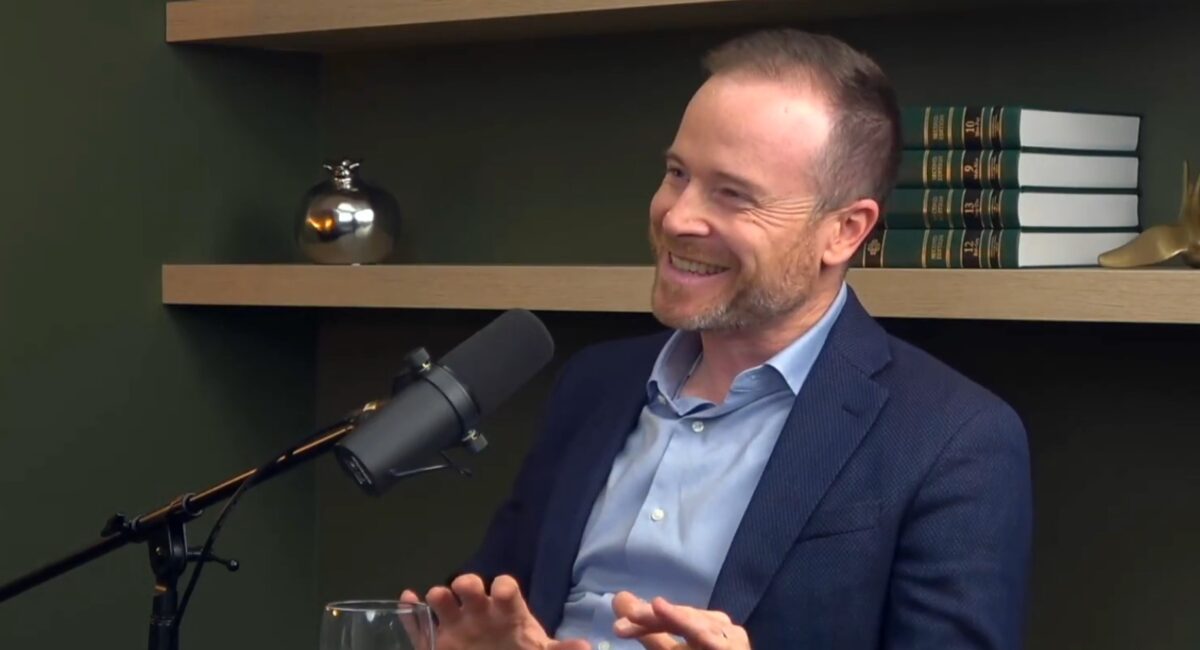
In this episode of Catholic Education Matters, host Troy Van Vliet chats with Kyle Neilson to explore his powerful journey from an evangelical Protestant upbringing to a deep and thoughtful conversion to Catholicism. Kyle shares how a secular pursuit of success and a passion for golf gradually gave way to a profound encounter with Christ, sparked by Scripture, study, and an honest search for truth. Through examining Church history, authority, and key theological questions—such as sola scriptura, the canon of Scripture, and the nature of worship—Kyle discovered the coherence and fullness of the Catholic faith, a journey he ultimately shared with his wife and, over time, his entire family. The conversation also weaves in Troy’s own reversion story as a cradle Catholic and his passion for Catholic education, highlighting how faith, discipline, and authentic community can transform lives. Together, they reflect on the beauty of the Church, the importance of formation, and the hope found in vibrant Catholic initiatives like the NAPA Institute, underscoring why Catholic education and faithful leadership matter now more than ever.
Transcript:
[00:00:01] Intro: Welcome to Catholic Education Matters, the podcast that celebrates the beauty of Catholic education, highlighting excellence in academics, athletics, and the transformative power of faith. Join us as we share the stories of those making a lasting impact on Catholic education. Let’s begin.
[00:00:26] Troy Van Vliet: Good day, everyone. Welcome to Catholic Education Matters. My name is Troy Van Vliet, and I am excited today to have mister Kyle Nielsen, a new friend of mine, I’d like to say. I know your mom and dad quite well. And Kyle, glad to have you on the show. We got a couple of real fun things to talk about.
[00:00:44] Kyle Neilson: Thank you, Troy. Good to be here.
[00:00:45] Troy Van Vliet: Yeah. Thanks for coming. First of all, Kyle, I wanna tell you a little bit of tell us a little bit about yourself. You’ve got a bit of a great conversion story that we’ll get into here too.
[00:00:58] Kyle Neilson: I’m grateful to be a Catholic today. I wasn’t always a Catholic. I was raised in an evangelical Protestant home. And after a fairly pagan high school experience, I had a conversion to Christ and then became really serious about the faith. And then over time discovered Catholicism.
[00:01:19] There’s a longer story behind that, but it was mainly through study and through discovering things that weren’t really consistent in my evangelical faith essentially.
[00:01:28] Troy Van Vliet: Where’d you go to high school?
[00:01:29] Kyle Neilson: I went to Prince of Wales High School in Vancouver
[00:01:31] Troy Van Vliet: Public School. And then you went to university. You go right into university?
[00:01:38] Kyle Neilson: I did. I bounced around. I was a serious golfer at the time. So it was one of my gods actually in my life, small g gods. And I was hoping to play at university and become a pro at one point and become rich and famous.
[00:01:53] The secular dream. And I went to UBC for a year, had a conversion there during that time, then ended up it’s a long story, but I went to a number of different schools, ended up after my conversion at Trinity Western University and finished my undergrad there.
[00:02:08] Troy Van Vliet: So how did you go through conversion at UBC?
[00:02:11] Kyle Neilson: Yeah, it was while at UBC, not because of being at UBC. It just happened to be at that time in my life that through this conference that was sort of in the realm of personal development that my parents had got involved in that had good virtue based stuff, although it wasn’t inherently faith based. Through that at church one day through that, I realized I was missing God in my life. So it triggered this new desire
[00:02:37] Troy Van Vliet: So that inspired while I was at UBC. Your or re inspired your faith?
[00:02:43] Kyle Neilson: I would say my faith was basically dead for a few years because of my darkness heart sin. I still believed, but I’d made decisions and my habits and patterns of thinking and acting were not wholesome at all. And thank God this is before the internet just because the opportunity for other stupid things to spend time and interest on didn’t exist yet. And so yes, the Lord just thank God came and spoke to my heart and revealed the fact that my life was very empty at that time. So I was around 18 years old.
[00:03:16] And it just so happened coincidentally to be when I was at UBC.
[00:03:20] Troy Van Vliet: When you were at UBC. Okay. It was at that time in your life. Yes. And then were only there for a year, UBC?
[00:03:27] Then you went?
[00:03:27] Kyle Neilson: I to went a small college in Ohio, an evangelical college to play golf. But God brought me there really for Himself. Because backing up, I got baptized that summer because we didn’t baptize infants in my background. And I got baptized after that year when I was at UBC of slowly growing in my faith and also making friends with other Christian people, which was a new thing for me and helped a lot. And some of them are friends today and went to this small school for golf, but then I had a huge second big conversion there through reading the scriptures one day.
[00:04:06] Had this really, this kind of mystical encounter with Christ in which I realized my very simply and clearly I realized the depths of my rejection of God through what I’d chosen as a young person and also the deeper depths of His love and then a call to really give myself to follow Him. Cause I think for that year I’d straddled, I’d been kind of on a fence of wanting to surrender. I still wanted to hold onto control. I was afraid, I think that where might he take It was a control issue, but he made it easy for me. He kind stacked the deck in that experience and made it clear that it was the best option to really say yes.
[00:04:44] Troy Van Vliet: And what college were you at?
[00:04:46] Kyle Neilson: It was called Malone College. It’s in Canton, Ohio, which is where the football hall of fame is if you care about football. And I went for the golf program, but God brought me for him. So that was a year there. And then after What was interesting is I went through this big conversion about a month in.
[00:05:08] And then through that, the Lord led me to evaluate a lot of other things in my life I hadn’t really looked at yet. Even things like the music I listened to and how I spent time and my internal thought life, areas that the Holy Spirit hadn’t yet got to or hadn’t let him,
[00:05:24] Troy Van Vliet: I guess.
[00:05:25] Kyle Neilson: And one of those was golf because it was basically, I realized I prioritize, I prized this so much that it’s probably unhealthy, and holy even. And I realized, yeah, this is maybe a God. It has been a God in my life. So I just said to the Lord, I said, Here you go, Lord, what do you want to do with this part of my life? Because you’re shaping healing and changing all these other areas.
[00:05:50] And over that year, he basically took my interest level from really high down to almost nothing. So at the end, I didn’t actually want to play golf anymore. And so I came home for the summer and my friends basically thought I was a different person.
[00:06:05] Troy Van Vliet: That’s fascinating.
[00:06:06] Kyle Neilson: It was really surprising. And just to be clear for the golfers listening, you can play golf and love Jesus Christ. Are not opposite That’s right. It was just in my personal experience that apparently had to happen.
[00:06:21] Troy Van Vliet: Well, if it was getting in the way at that time, then it was the right thing to do. So you still go off now?
[00:06:26] Kyle Neilson: I don’t. I don’t even really enjoy it. Partly because I’m so bad now because I hardly ever play. And when I do, it’s very humbling.
[00:06:34] Troy Van Vliet: It’s a frustrating sport if you don’t play a lot.
[00:06:36] Kyle Neilson: It’s true.
[00:06:37] Troy Van Vliet: Yes. It’s very So after Ohio, then?
[00:06:41] Kyle Neilson: Then I went to a Baptist Bible College locally for a discipleship year, really wonderful formation in the Baptist kind of milieu and got really into studying the faith and really love the Scriptures and knowing more about them. I started to study things like how to interpret the scriptures. Was part of that discipleship year. And then the next year, that was just one year I went to Trinity Western, which was in the area out in Langley. And they basically got confused about Protestantism and realized that it didn’t all make sense historically, internally, rationally, and scripturally.
[00:07:28] Troy Van Vliet: Wow, can you give us a little more of
[00:07:31] Kyle Neilson: that? Sure, there are a few things. I knew nothing of history firstly, I was very ignorant. And the more you look at early centuries of life and thought and worship, the less Protestant it tends to look. For example, there’s the liturgy and the church hierarchy.
[00:07:54] And so in a church history class helped me to realize that there’s just so much I didn’t know. So much that I believe now that’s based on decisions that were made in the early centuries. And I remember asking a question in a church history class once we were talking about the early church councils, the ecumenical councils where doctrine was clarified and confirmed and disciplinary matters were addressed by those gathered in the council as councils do. And that’s where creeds came out of, right? Our summaries of faith.
[00:08:31] And I remember asking, oh, let me back up. So I was trained when I was at the Baptist school, etcetera, that everything we should believe should be based on the scriptures alone, famous sola scripture, scripture alone concept. But then I discovered that we have these councils in history that were used to confirm and articulate and clarify what was orthodoxy and what was heresy. And I thought, wait, aren’t scriptural. That’s not scriptural.
[00:09:03] Those are events in which men are gathered and make decisions that are authoritative. And I remember asking a question in class, this was when I was at Trinity, of how do we know that those men, that body of men decided is true? Because of the solo scriptura concept, the answer I got was pretty weak or at least maybe unsatisfying, it was the better word. It was something like, well, we just trust that the Holy Spirit was guiding them. And more or less, at least that’s what I recall hearing.
[00:09:38] And I remember leaving thinking like, Oh, that just doesn’t seem to be consistent. What I later realized is that actually was the right answer, but who the men were really matters. And I didn’t quite get that yet, that these were Catholic bishops who were doing what Catholic bishops have always done per Jesus’ plan, which is gather on occasion in support of and defense of the truth to confirm and clarify things that come from Jesus. They’re not invented. Sometimes they’re more deeply articulated to apply to a need or clarify a teaching.
[00:10:11] And so essentially what therefore I had was believing even about the authority of the Scriptures itself came from Catholic councils. So I was already implicitly trusting the authority of the Catholic church to teach just by even believing that the Scriptures had divine origin because someone had to say what was in At beginning, it was a very confusing thing because I didn’t know anything about Catholicism and I had no point of reference. I didn’t have a very positive view because I hadn’t met many. I was just a young person, had met many Catholics. I didn’t go to a Catholic school, the very few I knew of.
[00:10:55] And the snippets I’d heard maybe through the media of say Pope John Paul II at the time didn’t seem intriguing. I was very ignorant and I had some anti Catholic bias too that was baked into my formation. I began long story short through further studies, I started to read some Catholic sources and it basically just started to make a ton of sense. It answered seeming contradictions that I’d struggled with. Like, it by faith or by works?
[00:11:26] Where is grace and our salvation? Do you need to be baptized or not? What does it mean to persevere in the faith, but also rely only on Jesus as our savior? What about Mary and the saints in purgatory? Issues, these common things, which are challenging topics for people that aren’t Catholic at this point aren’t yet.
[00:11:44] Troy Van Vliet: And the books. What books are in the book? Yeah,
[00:11:48] Kyle Neilson: it was an interesting discovery that the table of contents of the Scriptures is actually a tradition from outside of the Scriptures.
[00:11:57] Troy Van Vliet: Sorry, say that again. The table
[00:11:59] Kyle Neilson: of contents. Think an interesting author, he said, it’s called the tradition of the table of contents. In other words, what determines what is the list of the books in the scriptures is not in the Bible. And so if faith is all in the Bible, then you have a bit of a quandary there. Those are some of the kind of compelling points that made me open to and then finally resolution in the Catholic faith.
[00:12:23] Troy Van Vliet: And the books that differentiate us from the Protestant faith is they were determined pre Jesus’ life. Like, they were Greek interpretations. Translations. The
[00:12:43] Kyle Neilson: seven books.
[00:12:43] Troy Van Vliet: The seven books. Yeah. So and it wasn’t until I think later in the first century that might no. No. No.
[00:12:53] That wasn’t challenged till the Reformation. Yeah. It was sixteenth century.
[00:12:56] Kyle Neilson: I think there might have been was
[00:12:58] Troy Van Vliet: a there was a Jewish
[00:12:59] Kyle Neilson: smaller Old Testament.
[00:13:00] Troy Van Vliet: Used that. That’s what and that’s where they got it from. Yes. Right. Which I knew there was something in the first century.
[00:13:04] Kyle Neilson: Was like, what is that? Yeah. Exactly.
[00:13:07] Troy Van Vliet: Yeah. So that’s fascinating. So you’re so you’re at Trinity for two years?
[00:13:12] Kyle Neilson: Yes. Sorry. That’s right.
[00:13:14] Troy Van Vliet: That’s right. Okay. So two years. And so then where was the big pivot? Where was the big turning point?
[00:13:22] Kyle Neilson: To becoming Catholic or to coming on your podcast?
[00:13:25] Troy Van Vliet: Yeah. Well, that’s a real big pivot.
[00:13:29] Kyle Neilson: Yes. Let me think. I got married right after Trinity and my wife and I basically was very beautiful and organic and really miraculous that she was receptive to what I was discovering.
[00:13:43] Troy Van Vliet: Was she at Trinity as well?
[00:13:45] Kyle Neilson: She was. Yes, we overlapped for one year. We met there and she had come from no faith background at all, but it had a conversion in university. And after life went sideways in her world, and she was an athlete, got injured and it was pretty devastating. And then met a missionary on campus and we got married and then a year later entered the church together.
[00:14:10] Troy Van Vliet: Oh, wow.
[00:14:11] Kyle Neilson: Yeah. So we left. So that was in the year. Was about twenty five years ago, basically.
[00:14:17] Troy Van Vliet: So you didn’t have anybody sort of coaching you along the way. It was through your own research?
[00:14:23] Kyle Neilson: Mainly through the study. That’s why I didn’t know Catholics. I eventually got to know them, but it wasn’t prompted by that. So yeah, God uses all kinds of ways, right?
[00:14:34] Troy Van Vliet: Catholic Pacific College wasn’t there at the time?
[00:14:35] Kyle Neilson: Yeah, put a little plug in for CPC. At the time it was called Redeemer Pacific College. It did exist, but I didn’t take any classes there. I did walk over there after discovering a friend’s brother in Texas who knew someone who was on faculty there. It’s kind of circuitous thing.
[00:14:53] And he suggested I go talk to him. And I did. And it was good to talk to a real person and ask some questions. It affirmed a few things and helped me. And then we basically went to the local parish after we got married in Vancouver and went through RCIA.
[00:15:09] Troy Van Vliet: Which parish was that?
[00:15:11] Kyle Neilson: It was St. Augustine’s.
[00:15:12] Troy Van Vliet: St. Augustine’s? Oh, and kids.
[00:15:13] Kyle Neilson: Yes.
[00:15:14] Troy Van Vliet: That’s where both my daughters were baptized. Okay. Yeah. Lovely parish that is actually. Beautiful church.
[00:15:21] Yes. Beautiful church. So and where is the rest of your you have siblings?
[00:15:27] Kyle Neilson: Yes. Two siblings. Yep. And And your mom
[00:15:30] Troy Van Vliet: and dad, where were they in all of this?
[00:15:32] Kyle Neilson: So the end result is that they’re all Catholic now. How we all ended up there is it’s a miracle. It’s not like I went home and was working on them one by one. It was more organic than that. That’s what it should be really.
[00:15:49] And they have their different paths. My brother I think was closer earlier through other means. I can’t remember how it all happened, but he’d been reading some spiritual writers who were Catholics or at least had Catholic roots. And he was drawn to, I think the mystical tradition. We both had become, I don’t know what the word is, tired, disillusioned by, turned off by a highly emotional form of worship and wanted something deeper, something maybe more masculine, frankly too.
[00:16:25] So we were looking without And even knowing it for something. So I went home and shared with my parents as I’m making these discoveries, not went home. As we’re discovering Catholicism, we would just talk on occasion. I think one thing with my brother, one of the teachings of the church that was really, what’s the word? Maybe significant and timely for us is that Denise and I, we got engaged and then discovered basically Catholic teaching on contraception and its view for marriage and family life, which was so beautiful and surprising to us because we didn’t know anything and had a very caricatured view.
[00:17:01] And through reading, I think it was the Roman Sweet Home book in which that’s one of the topics. It led us to reading Humanae Vitae by Pope Paul VI written in 1965, I think. And we were so impressed with hearing the articulation of what it means to love in marriage and God’s vision and plan for that. Denise, my wife felt very honored and almost like this speaks to my feminine heart so beautifully, whereas the world gives a lie that hurts us and doesn’t respect our dignity. And this just makes sense.
[00:17:38] It’s kind of logical. So there was a book about that that I think I had borrowed from a friend and was sending back to our friends because we didn’t have a car when we were first married. And my brother was the What do you call it? The delivery guy, but ended up reading it during the delivery, just circumstantially, and then that did something. So God uses these creative things.
[00:18:03] So my brother and his now wife, they became Catholic a couple of years later. And then my parents, I think a couple of years after that, then my sister a couple of years after that. So in the course of about eight years, we all became Catholic. Thank God.
[00:18:20] Troy Van Vliet: Isn’t that amazing?
[00:18:21] Kyle Neilson: I can’t imagine not being Catholic.
[00:18:25] Troy Van Vliet: And your mom and dad are such wonderful people too. I had the privilege of meeting them through Legatus and spent lots of time with them now. I actually love them to death. And I haven’t heard their story. Well, I’ve heard their story through you.
[00:18:43] So actually I think they’re going to be coming on the podcast as well. So I’ll be able to get it firsthand. I’ll pull it out of them too.
[00:18:50] Kyle Neilson: It’s a long time ago. So you’ll find out if some of these parts need to be refined a little bit in my memory. One quick funny anecdote about my mom. Now that’s too personal. Nevermind.
[00:19:02] Some of these matters get very personal, obviously. And some aren’t stories for me to tell.
[00:19:06] Troy Van Vliet: I’ll see if I can pull it
[00:19:07] Kyle Neilson: up She can tell you.
[00:19:08] Troy Van Vliet: That’s fascinating. Fascinating story. So and your mom and dad, now, how did they come around? You had conversations with them, but were you influenced or did you just give them some information and then they researched it on their own and they thought actually, yeah, this is the direction I
[00:19:27] Kyle Neilson: want go.
[00:19:28] Troy Van Vliet: And when was it? How long after was it?
[00:19:32] Kyle Neilson: So I went to grad school at Steubenville from 2003 to 2005, which was awesome. And I did a theology program because I thought I would do church ministry work as my career. Through being there where I was really immersed in this stuff, my mom, I’m going butcher the chronology, I remember I said some kind of shocking things to my mom. I wasn’t always and sometimes not always as gentle as I should be. I try to be, but I’m not always.
[00:20:02] And I think I said something like, Mom, I’m actually not sure if you’re saved. Because at the time I wasn’t certain. And there’s nuance around that question when you’re dealing with people outside the Catholic church that needs to be carefully understood and articulated. And so on occasion I would kind of shock, not intentionally.
[00:20:23] Troy Van Vliet: Throw a few singers in there.
[00:20:24] Kyle Neilson: Maybe though that intrigued her and maybe to inquire, was sort of like, What? And then she’s curious enough or just cared enough about my life to maybe look into it. So she started reading and she’s more probably of a reader in general than my dad. There’s different people.
[00:20:44] Troy Van Vliet: What then would she have read or do you know?
[00:20:46] Kyle Neilson: Some of the converts books like Jeff Cavan’s books, I think Life on the Rock, maybe Scott Hahn’s book, Rome, Sweet Home. I don’t remember, but there was probably a couple of them. There’s also one by a guy named Thomas Howard that we had a very remote family connection to, like third cousin or something called Evangelical is Not Enough, where he looks at really the liturgical angle, how man needs liturgy, man is made for worship, structured worship. That is ultimately what God’s given us in the mass and the sacramental life around it. And even experientially, we crave that God made us for it.
[00:21:25] Books like that. And she visited us when we were living in Steubenville and came to some classes. And I remember, I think she came to a mass at which there was this African priest preaching and said something very poignantly. And basically Jesus is not a polygamist. He has one bride.
[00:21:45] And the implication was he made one body, is the Catholic church. That’s the one he established for us. And you can be indirectly connected with it, but that’s where he wants all of us. That’s the unpolitically correct truth. He wants everyone to be a Catholic.
[00:21:58] And I think it kind of hit my mom, because when you’re a strong evangelical, I wasn’t at least aware of what the Catholic church says about itself. It does not claim to just be another denomination that you might prefer to be in. No, it’s just the one that
[00:22:14] Troy Van Vliet: It’s God gave not denomination.
[00:22:15] Kyle Neilson: It’s actually not a denomination.
[00:22:17] Troy Van Vliet: You’re right.
[00:22:18] Kyle Neilson: The church Jesus founded. That’s a very bold claim. It has massive implications. And I remember being kind of shocked to hear it because of how it’s either terribly false and should be rejected because it’s ridiculous, or it’s true with massive implications for your life. So she heard a sermon like a homily kind of like that and kind of just the Lord used it at the right time to intrigue her.
[00:22:42] And then we came back to Canada and we’re starting going to church together with the family. And I think a lot of us were in the same parish.
[00:22:52] Troy Van Vliet: Was that in St. Augustine?
[00:22:53] Kyle Neilson: No, this was in East Van. It was St. Francis of Assisi at the time. And it was a practical thing for my dad. He’s thinking my family’s all in the same parish, I’m gonna go.
[00:23:04] And the Lord used a different way for him. It was more, he just started to be drawn towards it. And in particular, I think the Eucharist, there’s some excellent priests that he got to know that helped him. So we all came through kind of different ways, but
[00:23:20] Troy Van Vliet: yeah. Story. Love it.
[00:23:24] Kyle Neilson: Thanks be to God.
[00:23:24] Troy Van Vliet: As I say, welcome aboard.
[00:23:26] Kyle Neilson: Thank you. It’s good to be home. It makes sense.
[00:23:31] Troy Van Vliet: That is awesome. You’re a Cradle Catholic, Troy? Am a Cradle Catholic. Yeah. My story, we grew up Catholic.
[00:23:37] I didn’t go to Catholic elementary school but my brother and sister did for a while and then we moved from North Delta to South Surrey White Rock area. And so we went through the public system there. My brother and sister were a little bit older, well five years older than me. So they were kind of going through the high school scenario long before I was looking at going to high school. And then when it got to me going to high school, my mom and dad said: Yeah, you’re not going there.
[00:24:10] You’re not going to the public system. You’re going to St. Thomas More. And I was upset. I was mad.
[00:24:15] I wanted to go where my brother and sister went. Of course. Friends were going there and oh, I was mad. And I found out later, much later in life that it was my brother that told my mom: Yeah, don’t let him go to school over there. Send him to St.
[00:24:31] Thomas More in Burnaby, which was a long commute for me at that But so glad I did because that’s where you’re surrounded by others in the faith. Not everybody. It a bit of a it was a different school then. It was all boys at that And the uniform was your shirt had to have a collar, no jeans and you couldn’t wear runners. That was our uniform.
[00:24:54] So it was still a mishmash but it was much more pleasant still. Like it wasn’t, you know, these guys weren’t walking around with Mac jackets and jean jackets. They weren’t allowed to do that. So it was a little bit more refined. And then I went to UBC.
[00:25:12] That’s why I was like, you know, saying like: What? You got converted at UBC? That was sort of your Of which there was nothing. It was secularism at its best. Wasn’t, you know, there was there was none of it there.
[00:25:27] Although fortunately, because I went there to play football, a bunch of the guys on the team there were also recruited from Notre Dame Catholic School, Vancouver College. These were all my enemies. Then we all ended up, you know, playing on the same team. So there was there was still a good Catholic representation on our football team there as well. You know, and then and then I too though after university, I mean, the faith was not a priority for me at all.
[00:26:04] You know, we’re all chasing gods. We all have a god. Everybody does. Right? You know, just who is it?
[00:26:08] Which one is And so I was quite entrepreneurial. I didn’t really want to work for somebody. Always wanted to work on my own and create my own business. So I had aspirations in that regard. And then, you know, when I got married to my wife Lisa, we had kids and right away Lisa was my high school sweetheart actually from grade eight.
[00:26:34] So we had took a long route around to finally actually get married because we were 37 or 38 when we got married. So kids right away. And our youngest daughter had Down syndrome. So we moved from we were living in Vancouver at the time at St Augustine’s. That was our parish.
[00:26:54] And then we moved to White Rock where Lisa’s sister was a vice principal at the Catholic school there. Fantastic school. Star of the Sea. So they went through there and it was a matter of where they’re to go to high school. And so my faith was there.
[00:27:11] It was important. You you have kids and it’s like: Okay, we want to bring them up in the faith, we want to kind of give them some roots. It was secondary to everything. I’m ashamed to say, but I’m happy to say that we started, we went down the road of championing the school being born. And that really came from motivation from my daughter Anika because I wanted her to be able to go to school with her peers, go to high school with her peers.
[00:27:43] It’s twelve years we’ve been working on this new high school and that has created a massive reversion for me and my faith. Like every year that went by, it’s just more and more getting to know Archbishop Miller and being here quite often at the pastoral center and just surrounding myself good, strong Catholics. And it just got better and better and better, you know? And it changed very quickly from I want a school for my daughter to go to: We’re going to transform these kids’ lives and we’re going to build something that the entire community is going to benefit from. Because we’re going to be building these, creating these student leaders that are grounded in faith to others.
[00:28:33] So I had more of a reversion story than a conversion story because yes, I was a cradle Catholic. And I think more often than not we are complacent as cradle Catholics because you kind of get caught up in almost more of a routine. The traditions of it which are great. I have more respect and I treasure the traditions now, way more now. I appreciate them now.
[00:29:05] But yeah, it could just become this redundant thing that you just do once a week or whatever. But faith, I’ve encouraged others too that it really starts with the discipline And if going to Mass even just starts as a discipline, at least it’s a discipline of goodness. And you go there and then if you can question what’s going on in Mass take it upon yourself to learn more about it and then start asking questions as you did and start digging and digging and digging rather than just showing up and mailing it in and then I’ve done my duty for the week and I’m back to my normal self of selfish lifestyle that so many of us, you know, a lifestyle of narcissism that we live.
[00:29:52] Kyle Neilson: Which is sold to us every
[00:29:53] Troy Van Vliet: hour through media and social media. Yeah. And it’s relentless. It’s absolutely relentless. So that’s where Catholic education to me, especially with a strong Catholic school like what we’ve built, we’re pretty proud of that and we want to continue it.
[00:30:09] We’re trying to give our kids a chance. We really see the school as an extension of the family. Actually it’s funny, Archbishop Smith yesterday corrected me and he says: Well, it’s supposed to be an extension of the parish. Okay, yes, right.
[00:30:26] Kyle Neilson: There’s three.
[00:30:29] Troy Van Vliet: Everybody’s extensions of everything. Was like, yeah, that’s right. And not all of our students are Catholic at the school. Everybody’s welcome. But we want the families that are coming that are looking for a Catholic education to adapt to what we’re doing.
[00:30:52] Not having our students adapt to what they’re doing. And so far it’s working great. Fantastic job. So back to you. Tell us a little bit about what you’re doing now.
[00:31:04] We went together to NAPA. And I’m going to let you tell that story more in terms of what NAPA all NAPA Institute in California. It was your first time. It was my first time.
[00:31:15] Kyle Neilson: So that was my second time. NAPA Institute Summer Conference is a four or five day gathering of Catholics in California that the NAPA Institute runs and it’s sort of to gather in my words, three groups of people. I don’t think there’s anything like it in North America. The first group would be the really dynamic apostolates in the church who have been effective and successful and have done stuff, have achieved things. They’re not just starting out or trying things.
[00:31:49] And then people that want to know them and maybe support them. And then people that work with them or do business with them, which is more in my kind of thing is I help in my work, I help mission driven leaders, be they in business or in nonprofits. They have to really be aligned with a Catholic worldview implicitly at least. And I’ve worked with a lot of Catholic organizations, help them build or improve their teamwork and their internal organizational culture. So I was there because I think I have some clients there and some groups that are just good to network with in the work I’m trying to do to help them.
[00:32:27] And you and some others were there, I think just to be inspired by this gathering. At the gathering, they have a range of things, liturgies, like every hour there’s a mass somewhere in two places. And this hotel has Catholic art in the hotel lobby and a chapel with the blessed sacrament and it’s really exceptional. It’s fascinating. And then open meals where you get to meet people, no assigned seating.
[00:32:49] And we’re at the same time and it’s tied into my work as I mentioned, because those types of organizations are ones I love to work with because the work we do helps them, can help them with stuff that’s universal issues with my team, dealing with internal, how we’re hiring well, managing people well or not, which affects all the outcomes of whatever the entity exists to do. And it was very inspiring event. And I think very fruitful for those us who went down
[00:33:20] Troy Van Vliet: to Incredible event. And people coming from all over The U. S, but now Canada as well.
[00:33:25] Kyle Neilson: And even in some cases of the world, I met not a ton, but there I met a fellow who runs a Catholic fertility clinic, the biggest one in Spain. He was there.
[00:33:35] Troy Van Vliet: I met him too. I know that you’re just jogging my memory. Yeah. People from all over the world doing great things Catholic everywhere. It was very inspiring in that way.
[00:33:46] And very entrepreneurial too. Catholic universities, pro life groups. Right. High school. Yes.
[00:33:53] And and everybody was different religious orders in there as well. Yes. And everybody just was so eager to share what they were doing. Everybody was so eager to listen and to and to network and to express challenges and solutions. What an incredible group.
[00:34:13] Didn’t matter what table you sat at or who you bumped into, there was an interesting conversation to be had.
[00:34:20] Kyle Neilson: And a real openness, as you say, to just meet and explore how you might do things together, support each other, just encourage each other, even just be friends.
[00:34:29] Troy Van Vliet: Let me hear your inspiring story. What are you all about? What have you got going? And what was inspiring as a whole to me is just to hear all of these great things Catholic going on around North America and the world. That was just like, oh, wow.
[00:34:48] I didn’t even know that existed. You know, this type of like that group that started the alternate to the SAT exam.
[00:34:58] Kyle Neilson: Yes. Yes. Yes. Yes. The classical learning test
[00:35:00] Troy Van Vliet: or something like And think it’s recognized at about 80% of the universities. Interesting. So it’s something to be so rather than having to study some of the woke issues that are out there, it’s another way of doing it. So you don’t have to go down that road and it is recognized.
[00:35:20] Kyle Neilson: Fascinating universities. UBC recognizes it? I
[00:35:24] Troy Van Vliet: don’t know about that one.
[00:35:25] Kyle Neilson: It might be a tough sell.
[00:35:27] Troy Van Vliet: Might be a tough sell. The Holy Spirit. So NAPA Institute, absolutely fantastic. Recommend anybody Catholic that wants to go there just to go. It’s a great, great experience.
[00:35:39] Kyle Neilson: Yes. And I mentioned four or five days and if you’re relational and you like to meet people, most people are, but some more than others. And you’re willing to put yourself out there and introduce yourself and sit not just with the people you know, it has this beautiful compounding effect where you meet someone and then the next day might meet their friend and they meet your friend and it’s this beautiful growing network.
[00:36:02] Troy Van Vliet: It’s great. If you’re Catholic and you want to see the church and the community from a broader perspective and see what’s going on, it’s actually a great place to do it. Your company, your work, tell us a little bit about that.
[00:36:21] Kyle Neilson: Yes, I have a small consulting company called Teamwork Consulting. It’s team with two Es and it’s a play on words that comes back. Maybe I’ll talk about the roots of the name quickly. It’s an allusion to the Genesis account of creation where the waters on, I think day four were teaming with life. And the idea is all of God’s creation of us, His plan for goodness for us, the fall of mankind, starting with Adam and Eve that brought disorder and sin into separation from God.
[00:36:51] And then of course, Jesus comes to redeem and save. And then that continues through the church. There’s
[00:36:57] Troy Van Vliet: still
[00:36:57] Kyle Neilson: the human level of organizations and teamwork that is sometimes also dysfunctional as well as our root dysfunction of sin and separation from God.
[00:37:07] Troy Van Vliet: And
[00:37:07] Kyle Neilson: in my first ten years of my professional life, I was more working in that category of helping in the church’s mission directly through adult evangelization work, etcetera. And then God not by my plan brought me into this kind of work where we work on the kind of natural level of dysfunction in mission driven organizations and businesses, like I said, where they care about people and about doing good work, etcetera. We’re not just trying to make money or such, although that’s important for a business. Helping teams get better, helping people hire better, helping people deal with You mentioned the bad apple metaphor before we started the recording, address people who are undermining the team. And the premise being that when the team functions well with good meetings, good communication, good accountability, when you have good people practices like hiring and managing people, developing people, it affects everything, the mission, the outcomes, the results you’re looking for.
[00:38:08] And when those things aren’t ideal, it also affects everything. So my business is to help leaders that want to work on those things, make the team better, organizational health, culture better.
[00:38:20] Troy Van Vliet: How important is, I mean, sounds like an obvious question, but I’ll let you elaborate anyway. How important is strong, good leadership?
[00:38:28] Kyle Neilson: It’s essential because the leader has to drive and maintain and protect the culture and the type of teamwork that you want. And Protect the culture.
[00:38:40] Troy Van Vliet: That’s a great way of putting it.
[00:38:42] Kyle Neilson: Yeah. We actually have, that’s one of the pieces that we look at in our work is once you’ve made a culture or tweaked a culture, how do you protect it? And we use a little hawk. Is it a hawk image for that? Because that’s kind of the idea is you want to be guarding it.
[00:39:00] And I think analogously, it’s like I have children and my kids are getting to the age where they may, if they’re called to get married. So I have potential in laws coming into my Like daughters in law, sons in law coming into my life. You wanna be very hawkish. I don’t mean militarily or whatever, how it might be used, but discerning, discriminating in a good way, careful and also with your teamwork and organization.
[00:39:26] Troy Van Vliet: Do you think good leaders are born or are they made?
[00:39:28] Kyle Neilson: I think it’s probably a bit of both. I think you’ve got natural raw material, but then you have virtue and virtue is and be, and must be acquired by practice education and God’s grace.
[00:39:39] Troy Van Vliet: Virtues and
[00:39:39] Kyle Neilson: prudence and fortitude. Some have natural inclinations in those areas, but it has to be honed and refined through ultimately virtue. Education, yes, but I think more virtue.
[00:39:50] Troy Van Vliet: I’ve seen some incredibly educated people even that have taken the leadership courses that just don’t fit the bill. They don’t fit
[00:40:04] Kyle Neilson: in the education. It’s not enough. Perhaps one thing.
[00:40:12] Troy Van Vliet: Leaders that are pushy, not pulley, that don’t lead through example. That’s a tough one. You see that in different organizations. You must see that. I mean, how do you deal with when you’re coming in and talking to an organization and you’re brought in by the leader and the leader is the problem.
[00:40:40] Has that happened to you?
[00:40:42] Kyle Neilson: It probably has. I have to be very vague.
[00:40:48] Troy Van Vliet: On a different planet. I’ve worked with a
[00:40:52] Kyle Neilson: lot of groups. That is challenging and you don’t always know until you look under the hood together. But that is a tricky situation.
[00:40:59] Troy Van Vliet: And then you got to somehow try to find out a way to point it out without getting fired.
[00:41:05] Kyle Neilson: Well, we try to not worry about that because we want to be in the service But of the yes, it’s tricky. That rarely happens because it’s usually the leader that has the humility and courage to address the things. And if they have humility and courage, they’ve got like half the battle And there it’s maybe just helping them get a little better.
[00:41:28] Troy Van Vliet: So they’re looking for that constructive criticism.
[00:41:32] Kyle Neilson: Yes. Exactly. They’re wanting help with applying what we discover together to make things better, including with themselves. And it doesn’t work when we’re asked to work with someone who hasn’t wanted it just by its nature. Exactly.
[00:41:48] Troy Van Vliet: Well, and if you’re being brought in to work with leaders well, if you’re being brought in, let’s say by an owner to work with the leaders of the company and the leaders of the company have the problem, I guess it would be up to you to point that out to the owner or what have you. Hire me.
[00:42:03] Kyle Neilson: Yeah, exactly.
[00:42:04] Troy Van Vliet: This is a bit of a problem over here.
[00:42:07] Kyle Neilson: That does get a little tricky though
[00:42:08] Troy Van Vliet: for sure. Do have you any stories that you want to share about that? I’m putting you on the spot here with that now, but anything that you think maybe you had a big impact on a company or?
[00:42:18] Kyle Neilson: Let me think of a story. Yeah, there was a situation where I’ve been doing these for ten years and there’s a range of different incidences and impact stories. Maybe I’ll use a bad apple thing. And this was a long time ago in a different location, etcetera. But there was a team just because someone says that they are a person of faith doesn’t necessarily mean that they are acting wholesomely all the time.
[00:42:53] And we know that from ourselves.
[00:42:54] Troy Van Vliet: I can be a little hypocrite.
[00:42:56] Kyle Neilson: I can be passive aggressive. I don’t want to be, I try not to be, but I have wounds and I have imperfections. But sometimes it’s more. There was a team where basically a member started to get challenged by the teammates in a kind way and a respectful way, which was good about trying to be all team players more so working on team player characteristics from the Patrick Lencioni model of the ideal team player. And one member basically started to get challenged by the teammates about his willingness to be more collaborative, a little more humble and help the team win versus just thinking about his area.
[00:43:41] And it led to a really dramatic thing. We kind of reached an impasse in that discussion. It was on a whole day session. So we called a break and then I huddled with the team leader and then the boss of the team leader. And what it led to was basically a very direct confrontation, God, it’s maybe too strong, but where the person ended up actually getting terminated.
[00:44:08] And this was after efforts to really kindly and patiently, this over a few days, first clarify, is this really what he was thinking and saying? And did he really not want to try to change it, which there was a lot of support and helps around, but eventually wasn’t willing to. So they had to just end it with justice and with kindness, but decisively. And there’s sometimes addressing that one factor, like the apple analogy affects everything else. I think I currently have a bruised apple in my fridge that I haven’t addressed, but it probably will make the other ones not good if I don’t deal
[00:44:52] Troy Van Vliet: Yeah, with supposed to spread.
[00:44:53] Kyle Neilson: It just spreads. And our work isn’t always that dramatic and sometimes it’s more just let’s build on the good there and tighten up the quality of your meetings and tighten up just kind of optimizing how the team is communicating and acting and talking in discussions and meetings so that you’re also then executing better. But that would be a more kind of dramatic example. And then on that kind of more macro scale, we help organizations in time have less likelihood of people like that getting in. And this is like the hawkish thing.
[00:45:25] You don’t want to let people into your family, just like you wouldn’t want your son or daughter to enter into your family, someone they’d marry, that’s not going to be a good thing. So we help leaders have a little more discipline and be a little more careful than they maybe are around the people they’re bringing in as well as helping them move along or address and then invite them to change the people that they currently have.
[00:45:53] Troy Van Vliet: We’ll have that challenge at the school going forward because we will be hiring probably at least four teachers a year. That’s five years. That’s a big deal. And that can dilute the pot really quick in terms of your culture of the school. True.
[00:46:06] It’s got to be really discerning with that. You have a podcast as well?
[00:46:10] Kyle Neilson: We do. We have a podcast called the Serious Playfulness podcast. We talk about teamwork, virtue, organizational culture and with a bit of a playfulness, but it’s mostly serious stuff around teamwork and the things we talked about. That’s great. People are welcome to watch.
[00:46:27] Troy Van Vliet: We’ll put it in the comments.
[00:46:30] Kyle Neilson: Sounds good.
[00:46:31] Troy Van Vliet: You. Kyle, I want to be respectful of your time. Thank you so much for coming out and sharing your past with us and your conversion story. That’s awesome. And best of luck to you and your work what you got coming up.
[00:46:45] Good to be right. Thanks so much. Thanks everybody for joining us here today. And we’ll see you in a couple of weeks. Have a good day.
[00:46:53] Thank you for listening to Catholic Education Matters. If you enjoyed this episode, please follow the podcast on your favorite listening platform, rate it, and also leave a review. Don’t forget to share this episode with your friends and family to help spread the word about the impact of Catholic education. Be sure to listen again.