Chapters:
00:00 Intro
02:40 From Farm Life to Fully Funded PhD Journey
05:12 Transition from Christian to Secular University
07:21 Building a Christian Community on Campus
10:05 DEI Training, Ideology, and University Culture
12:13 The Loss of Truth and Moral Foundations in Society
16:27 Restoring Faith in Universities and Education Systems
21:08 Biblical Literacy, Art, and Reclaiming Cultural History
25:08 “Professing Christ”: Bringing Faith Back into Universities
27:22 The Battle of Ideas: Competing Worldviews in Academic Publishing
31:27 Faith-Based Media & Taking Action (Angel Studios Example)
34:28 The Role of the Christian Professor in a Secular World
39:02 Questioning Technology: What It Means to Be Human Today
44:08 How Technology Has Transformed Human Thinking
49:19 From Radio Imagination to Passive Screen Consumption
50:48 AI: Tool for Truth or Threat to Humanity?
52:25 The Future of Work and Purpose in an AI World
58:21 Social Media, Anxiety & the “Anxious Generation”
1:10:24 A Culture Searching for God Again
1:19:30 Outro
If you are interested in our school, make sure to check out our website:
https://www.sjp2academy.com/
Follow us on social media:
Watch on YouTube
Instagram: https://www.instagram.com/sjp2academy/
Facebook: https://www.facebook.com/sjp2academy
X (formerly Twitter): https://x.com/SJPIIAcademy
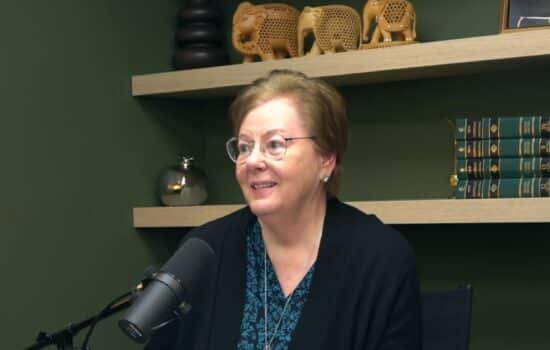
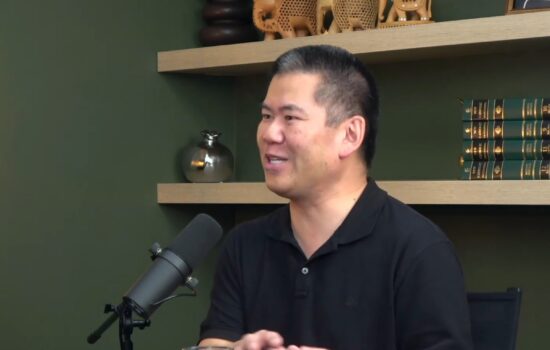
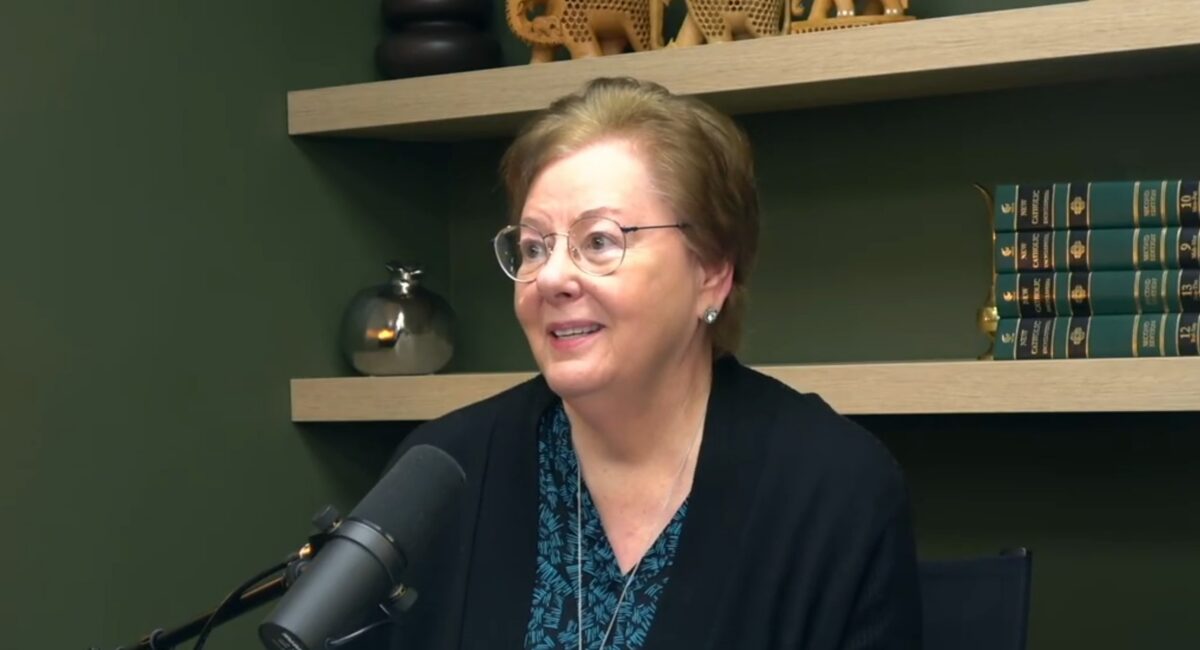
In this episode of Catholic Education Matters, host Troy Van Vliet welcomes Dr. Geri Forsberg, a distinguished scholar in media ecology and communication, to share her remarkable journey from humble beginnings to earning a fully funded PhD at New York University and her work as a professor at Western Washington University. Dr. Forsberg reflects on the stark contrast between Christian and secular education, her efforts to build a faith-based community among professors, and her decades-long mission to reintroduce Christian thought into higher education. The conversation explores concerns about ideological influence in universities, the loss of moral and historical grounding in society, and the importance of restoring truth through education, publishing, and cultural engagement. Together, they emphasize the urgent need to bring faith, critical thinking, and a strong moral compass back into schools, while offering hope through grassroots initiatives, renewed scholarship, and a growing movement to reclaim the spiritual foundations of Western education.
Transcript:
[00:00:01] Intro: Welcome to Catholic Education Matters, the podcast that celebrates the beauty of Catholic education, highlighting excellence in academics, athletics, and the transformative power of faith. Join us as we share the stories of those making a lasting impact on Catholic education. Let’s begin.
[00:00:26] Troy Van Vliet: Good day, everyone, and welcome to Catholic Education Matters. And we are so delighted today to have with us Dr. Geri Forsberg.
[00:00:36] And I’m just gonna read, Dr. Geri, a little bit of your background here because there’s a lot on here. And once again, I’m privileged to have somebody that’s much more educated than I am. So we’ll have some fun conversation. But Doctor. Geri Forsberg is an accomplished scholar, educator and communicator whose work sits at the intersection of media, language, culture and faith.
[00:01:01] She serves as co president of the International Jacques Eleus Society and is a member of the English faculty at Western Washington University in Washington State, where she teaches courses in media ecology, media and culture and professional communication. Doctor. Forsberg earned her PhD from New York University, where she studied under the renowned media ecologist, Neil Postman. And her research explores how communication practices shape, shape identity, community and human understanding. She has published extensively on media, ecology, critical thinking, and the role of language and technology in contemporary culture.
[00:01:47] She has contributed to numerous scholarly works that examine the theological and cultural dimensions of communication, technology and education. Doctor. Forsberg’s leadership in the International Jacques Iloule Society reflects her deep engagement with questions of truth, the word and human flourishing in a time of cultural challenge. That is a mouthful of, incredible credentials and things that you’ve done. Once again, welcome Doctor.
[00:02:16] Forsberg. Yeah, so glad to have you here and you’ve come up from, Western Washington in Bellingham, a town close by where I grew up. I grew up on the Canadian side though, so in White Rock. Thank you so much for making the trip up here today and joining us. So how about we start with a little introduction of yourself?
[00:02:40] If you can tell us a little bit Western Washington, Bellingham, but let us know a little bit how you grew up.
[00:02:45] Dr. Geri Forsberg: Okay. So I grew up in that area. I grew up on a farm. And I was telling you a little bit earlier that when I grew up, we didn’t have very much money. So when it came to university and college, I basically started working when I was in high school, saving up the money to go to college, to get my bachelor’s degree.
[00:03:11] And I paid my entire way through all of my university education.
[00:03:17] Troy Van Vliet: Good for you.
[00:03:18] Dr. Geri Forsberg: Yeah. The wonderful thing was when I went to get my master’s and my doctorate at New York University, again, I didn’t have funds, but I was able to do a two year master’s in one, which helped.
[00:03:32] Troy Van Vliet: Oh, wow.
[00:03:32] Dr. Geri Forsberg: And then I came back to the Bellingham area and I was praying about the doctorate and how I was ever going to fund that. And while I was praying, was literally on my knees praying, that God would provide. And, I went back, to the city. When I got there, I’d already been doing some work in the city and I had a mailbox there. And I came across a letter that said, from New York University, that said, We have a teaching fellowship available for you.
[00:04:08] But that letter had come several months before. I didn’t receive it. Didn’t know that.
[00:04:14] Troy Van Vliet: Oh no.
[00:04:15] Dr. Geri Forsberg: Yeah, this is the truth. So I got on the subway, hurried down to New York University, talked to the director of the program, English program, and said, I’m here and I got this letter. And he said, oh, I’m so sorry. He said, all of those fellowships have been filled. Oh.
[00:04:33] And I just looked I know I looked devastated. Yeah. And he goes, well, come back at three. So I went back at three and he goes, you’re in. Wow.
[00:04:43] And so I received a teaching fellowship at New York University that paid my entire doctoral program.
[00:04:48] Troy Van Vliet: Oh my
[00:04:49] Dr. Geri Forsberg: goodness. So when I graduated, and that was several $100,000. And so when I finished, I didn’t have any doubts or anything. Oh, good for you. That was a great, great thing.
[00:04:58] Troy Van Vliet: Yeah. Great start.
[00:05:00] Dr. Geri Forsberg: Yeah, great start. And then when I finished, I was asked by the president of Trinity Western University if I would come and teach there. And so for ten years I taught at Trinity Western
[00:05:12] Troy Van Vliet: Oh, really? That’s where my daughter is now. Oh really? Yes. Oh really?
[00:05:15] She’s at Catholic Pacific College at Trinity Western. At Trinity. Awesome. She’s in her second year of psychology. Wonderful.
[00:05:23] Dr. Geri Forsberg: Yeah. So I taught there in their communication department for ten years. And then, eventually, I’m going to shorten all these stories. But eventually I met the man that I was to marry and I was hosting an event for professors from Western Washington University at my home. And he heard that this single woman was there hosting this event and he came and, eventually we married.
[00:05:53] And so then I moved with him to Western Washington University where he’s at.
[00:05:59] Troy Van Vliet: And you’ve been there ever since?
[00:06:01] Dr. Geri Forsberg: And I’ve been there ever since at So I moved from this wonderful Christian university to this wonderful secular university.
[00:06:09] Troy Van Vliet: Quite a challenge. So how long ago was that, first of all?
[00:06:14] Dr. Geri Forsberg: Well, I moved probably around 2000, maybe 2002 or so.
[00:06:22] Troy Van Vliet: Yeah. And how much of a shocker was it to go from Christian University to secular?
[00:06:29] Dr. Geri Forsberg: It’s a big difference. There’s a big difference, a very big difference.
[00:06:33] Troy Van Vliet: Wow. Can you
[00:06:34] Dr. Geri Forsberg: You can just see the need in the secular university from the from the student. Yes. You know, they without the Lord, without Jesus Christ, they’re really lost.
[00:06:47] Troy Van Vliet: And
[00:06:49] Dr. Geri Forsberg: that’s why when I see that, it makes me want to reach out to the universities, the secular universities.
[00:06:58] Troy Van Vliet: I mean,
[00:06:58] Dr. Geri Forsberg: I love the Christian university. I love Trinity Western University. But we’ve got universities right down the road where people are really, really lost and they need the Lord. So that’s been really great. And so at Western Washington University, I was pregnant with our son.
[00:07:21] And that was, wow, looking back, he’s just turning 27. So that was twenty seven years ago. I began a ministry with the professors on that campus. Oh. Yeah.
[00:07:33] When
[00:07:34] Troy Van Vliet: God bless you for that. Yeah. In a secular And there
[00:07:38] Dr. Geri Forsberg: was nothing happening with them. There might be Christian professors working in different departments, but they didn’t know each other. They didn’t know that there was another believer on campus. So what I did is I went through the churches and asked the pastors and priests, Do you have anyone in your congregation that’s a professor at Western? And they would give me the names and then I would take those names and have dinner parties and bring these people together so that they could meet each other.
[00:08:12] And I’d bring a speaker in and have the speaker talk about being a Christian professor in the university and what that means. And these professors really bought into it. They said yes. And some of them have now retired, but many of the ones that started out are still really involved at Western. So every year, pretty much at Western, we would have speakers come Christian intellectuals who could speak from an intellectual point of view, but also bring their faith into that conversation.
[00:08:46] So that people in the university and students in the university could hear a different perspective from a Christian point of view. And so that’s what I’ve been doing for twenty seven years at the local level.
[00:09:01] Troy Van Vliet: Wow, that’s great. So, and how well received is it?
[00:09:06] Dr. Geri Forsberg: Very well received. Yes, yes. It’s been wonderful. We’ve seen hundreds and thousands of students exposed to the gospel.
[00:09:16] Troy Van Vliet: Oh, isn’t
[00:09:17] Dr. Geri Forsberg: that fantastic? Yeah. Wow.
[00:09:20] Troy Van Vliet: Western Washington University, how secular is it? How liberal is it, if for lack of better
[00:09:27] Dr. Geri Forsberg: It’s very liberal.
[00:09:28] Troy Van Vliet: Is it?
[00:09:28] Dr. Geri Forsberg: It’s very liberal. I want to be pretty careful what I say, but it’s pretty wonderful that we did have to have DEI training. And now since our new president is in there, don’t get any messages about going through DEI training.
[00:09:47] Troy Van Vliet: Anymore. I don’t
[00:09:48] Dr. Geri Forsberg: get those messages. So we’re seeing a change,
[00:09:51] Troy Van Vliet: but
[00:09:52] Dr. Geri Forsberg: it’s very liberal.
[00:09:54] Troy Van Vliet: That, well, not to get too, well controversial or whatever, but we’ll go there a little bit anyway. With the DEI stuff, what was that training like there? I mean, we’ve got it here as well, but
[00:10:05] Dr. Geri Forsberg: Well, I just went through it one time and then after that I refused to do it. So I just deleted the message when it said I need to go through it because the training, if you didn’t get the answers that they wanted you to get, you had to go back and take it over again until you got the answers they wanted. Oh, wow. It was indoctrination.
[00:10:27] Troy Van Vliet: Was it a conversation or
[00:10:29] Dr. Geri Forsberg: Online was it written and I thought it would take maybe thirty or forty minutes. It took hours to go through that training.
[00:10:36] Troy Van Vliet: Oh,
[00:10:37] Dr. Geri Forsberg: wow. And every time, if the answer wasn’t exactly what they wanted, you had to go back and do it over until you got the answer that they wanted. And so I could see right away, no, this isn’t really right to take professors and have them go through this training, which is indoctrination.
[00:10:57] Troy Van Vliet: When you’re saying indoctrination, what are they indoctrinating us in?
[00:11:03] Dr. Geri Forsberg: They’re wanting you to buy into the LGBTQ agenda basically.
[00:11:13] Troy Van Vliet: And is that it? Or is there more outside of that?
[00:11:18] Dr. Geri Forsberg: And it’s really the underlying thought is the critical theory, which is spread all throughout the universities. And not just the secular universities, but these critical theories have spread all throughout our entire culture, entire society. So the professors, they’re going to be in the education department, they’re going to be going out and teaching our children. And this is what they’ve learned in the school system.
[00:11:49] Troy Van Vliet: Wow.
[00:11:50] Dr. Geri Forsberg: Yeah. And the challenge is that even our Christian young people who are going to the university, they’re hearing all these theories by professors that they respect and they’re adopting the theories. They’re taking them on for themselves and thinking that they are true and right.
[00:12:13] Troy Van Vliet: Yeah, that’s the scary part about what’s happening in today’s society is that truth isn’t true anymore. Like it’s anything goes, right? And do whatever you want all of the time. And people think that that’s an okay way to live. And it’s just going to create, well, it already has created just massive chaos when it comes to some of the basics in life.
[00:12:36] And it’s, confused our young people to the point where they don’t know what’s in hence, we hope that, what’s coming of it is that they are searching and that they’re open to get back to what’s built Western society to begin with, which is Christianity and Christian values. So I’ve said it many times to many other people sitting in your chair there too, that, the fall of society started out with the fall of Christianity in the West. And, with the fall of Christianity, you have the fall of the family, first of all. And then with the fall of family, society starts to crumble as well. Everything is just all mixed up and nobody knows where it’s going.
[00:13:18] So you’re like, well, it started with this and started with that. Well, we had a guiding light to begin with in North America. Well, in the West in general, we had a guiding light and we all followed it or for the majority, we all followed it. There was rules and there was laws in place and they were backed by our Christian beliefs. And then what happens is when you get away from that, you can maybe get away with it for a generation or two, where it’s like, well, the law is just the law, but people start questioning the law and they don’t know where the law originally came from and what it was inspired by.
[00:13:51] And then it’s like, well, why do we even have that law? You know, it’s, well, if you don’t have faith anymore, now you don’t understand where that law came from or why it’s there. And then anything goes, and then you’ve got this huge influx, especially in Canada with MAID. And of course our abortion is out of control too. You know, the levels of abortion are out of control because everything, there is no moral compass anymore.
[00:14:13] So, but we do see a research, which is very, brings hope, I suppose, you know, Christians are persecuted more now than ever. There will be this divide I see happening, you know, with one side to the other, rather than everybody just kind of getting along. Now it’s like, no, you know what, what’s been going on is becoming extremely problematic. So, I’m happy to see that you’ve got this resurgence in your university towards the faith. So congratulations to you for that, because it sounds like you had played a really big part in actually getting that going.
[00:14:55] Dr. Geri Forsberg: And it takes a lot of people working together. It’s not just one person usually, it’s many people coming together. I really love the story about Constantine,
[00:15:09] Troy Van Vliet: the emperor,
[00:15:12] Dr. Geri Forsberg: who came to Christ, he came to faith, and there was disunity among believers at that time. And so, Constantine brought all these bishops at his own expense. He brought them together and I think it was for several months they worked on What came out of it was the Nicene Creed that we say every Sunday.
[00:15:38] Troy Van Vliet: Yeah. Say it every Sunday.
[00:15:39] Dr. Geri Forsberg: Every Sunday, the Nicene Creed. And that came out of Constantine’s bringing those bishops together to work it out, work it out. Because he understood that if there was not unity in the church, there wouldn’t be unity in the empire.
[00:15:57] Troy Van Vliet: Is that true? Yes. It’s so true. And look at how countries, nations rise and fall. And they rise to greatness and then they fall away from the basics and then everything starts to crumble.
[00:16:13] There’s nothing that gets, like I said, there’s no truth anymore. It’s like, well, there is the truth. And once you start falling away from that, there’s a collapse of an entire society.
[00:16:27] Dr. Geri Forsberg: And that’s what I’ve been concerned about with our universities. You know, our universities, Harvard, Yale, Princeton, all of our major universities, they were founded by believers to help bring faith to their students and develop their students of good moral character and to be sending them out to be salt and light in the world. That’s the foundation of our universities. And they’ve just departed from that.
[00:16:54] Troy Van Vliet: Totally departed from it.
[00:16:55] Dr. Geri Forsberg: Totally departed from it. Mission drift. And so my heart and vision and hope is that we will start bringing faith back into our universities and into our educational system. And that’s what I tell my husband, I’m gonna give 100% of my time now to this. This is it.
[00:17:15] This prime time. This is the time to bring faith in Christ back into our school system, into our ever? Educational system. Is Yes, Yes.
[00:17:26] Troy Van Vliet: Well, we’re the proud parents of a new high school, a new Catholic high school in South Surrey, which is, that’s been a twelve year journey to get it from, you know, from idea stage to, can we do this to get it to where it is today? And it’s been the most fulfilling thing that I’ve ever done in my life outside of having a family. And, to see the lives that it’s changing and the formation, for us to build servant leaders that go out into our community and contribute with a moral compass and with Christianity at the foundation of everything that they do, is huge. So to hear it coming from other universities, especially secular, we can’t forget about our public system, because it’s still the vast majority. I mean, we’ve got a very big, you know, the Society of Christian Schools in British Columbia, it’s big.
[00:18:26] There’s a lot of schools in it, but it’s not the majority of schools. And, we we have to really advocate, be advocates for change in our public system that we got to get back to the grassroots as to our modern day education system was built by the church originally. It was invented by the church. The design was for the church and it’s like, Oh, we don’t need that anymore. We’ll just get rid of it.
[00:18:52] So we’ll hold on a second here. You know, all this greatness that we’re just tossing to the side. Well, that’s one of the purest forms of evil right there is not recognizing where you’ve come from and holding onto that.
[00:19:06] Dr. Geri Forsberg: Do you know that in The United States anyway, there was one person who got prayer and the Bible out of the schools?
[00:19:15] Troy Van Vliet: Yeah.
[00:19:16] Dr. Geri Forsberg: One person. Isn’t that something? Madeleine O’Hare Murray is her name. She’s an atheist. She didn’t believe in God.
[00:19:24] She did not want anybody in the school system to have to pray or know the Bible. And she she used her own son as the plaintiff to get that through.
[00:19:38] Troy Van Vliet: Wow.
[00:19:38] Dr. Geri Forsberg: Yeah. The Supreme Court. That was in 1962. Prayer went out of the school and then the Bible in 1963. But she used her son and I had the opportunity to meet her son, Bill Murray is his name.
[00:19:56] And he came to faith in Christ and he just had the hardest, hardest time with what his mother did. He said it was pure evil, pure evil what she did. And he came to faith. He’s in Washington DC now and he’s reaching out to others, with the faith. But, yeah, that’s what one person can do.
[00:20:19] So if one person, I think can get prayer and the Bible out of schools, maybe another person can come along
[00:20:26] Troy Van Vliet: and get back in and
[00:20:28] Dr. Geri Forsberg: restore it. So I’m planning on working on that.
[00:20:33] Troy Van Vliet: Well, good for you. That’s a big task, but that’s something that no, we need leadership. And, we do. It’s a, and that’s a tall order. Because when I was in elementary school, I remember I was in public elementary school.
[00:20:50] Yeah, we didn’t, think in kindergarten grade one, we still had the Lord’s prayer and then all of a sudden it went away. Yeah, it wasn’t talked about again after that. And there’s the beginning of the end right there.
[00:21:08] Dr. Geri Forsberg: So I just wrote an article. It was just published recently in a secular journal, academic journal, peer reviewed. It was published and it’s called Narrative Art, Narrative Text. And it’s a media ecology perspective, but I’m advocating in there and I’m arguing that our children are basically biblically illiterate and they don’t know history. They have no history back on.
[00:21:34] And so all around the world, Europe, everywhere, we see this beautiful art. It’s religious art. It’s based on a lot of biblical art based on the biblical stories. Yeah. And so people by the millions go into these museums and they look at the art and they go, oh, that’s beautiful.
[00:21:56] Isn’t that wonderful? But they have no understanding of means what
[00:22:00] Troy Van Vliet: And what the story
[00:22:01] Dr. Geri Forsberg: is and behind what the story is Yes. So my argument is that it’s time to bring biblical art, art and the text that goes with it Yep. Back to our children. And so I’m in prayer that one state will adopt this. We will develop curriculum for K through 12 with biblical art and biblical text.
[00:22:26] Or I’m calling it narrative art and narrative text. Art and narrative text is what I’m calling it.
[00:22:32] Troy Van Vliet: That would be beautiful to get that back. I remember, going on a Europe tour when I was in high school and you go to all these museums and you go to these castles and something, you see the art. And then eventually, especially as a young person, go through another picture, painting, this and that, until somebody tells you what it means and what’s the story is behind it. And all of sudden you’re fascinated behind the whole story. You’re like, Oh wow, okay.
[00:22:57] Now art has a whole new meaning, you know, when there’s a story behind it. So, yeah, we need to have that back.
[00:23:05] Dr. Geri Forsberg: We need to have that back because why would you have your whole population traveling and going places and looking at all this art and not knowing the meaning behind it?
[00:23:13] Troy Van Vliet: Yes, absolutely.
[00:23:16] Dr. Geri Forsberg: And not knowing history.
[00:23:17] Troy Van Vliet: And history, I was going say there’s a history that goes behind it, not just a story, but true historical story. Yeah. I know I wasn’t so interested in history in high school. I’m way more interested in it as a mature adult, I’ll call myself. I’m fascinated by history now because you see how much it has impacted today’s cultures and where we are today.
[00:23:41] And when we forget history, which is shamefully happening right now, we’re, you know, erasing, trying to erase people from history saying like, wow, they did something bad, you know, two hundred years ago, so we shouldn’t be talking about that person anymore. You know, judging with today’s, you know, laws, you know, from two hundred years ago, which I think is a gross mistake to do that because you don’t just erase it, you know, you can talk about it, but you don’t erase it or discredit everything just based on a story like that too. We have that with our own founder in our country, in Canada, with John A. MacDonald, the first prime minister, where I think of eight or 10 bronze statues, there’s only two left in the country because they’ve all been torn down recently because of some, you know, scandals that he had at the time. So I should know more history on that, but it’s just like that, that in itself is wrong.
[00:24:36] We can’t do that. We can talk about our histories. We can talk about everything, but, and learn from it, but we don’t discredit it or get rid of it because of it. There’s still true stories. Yeah.
[00:24:50] So, now you do a whole bunch of things that you’re going to, you’ve got three books here as well that I don’t want to, well, why don’t we jump into that because you didn’t author the books, but you authored a chapter in each of these prominent books. So we have, the first one, which is Professing Christ.
[00:25:08] Dr. Geri Forsberg: Yes.
[00:25:09] Troy Van Vliet: You wrote a chapter in here. Yes. First of all, what was the book about somewhat It’s a little a
[00:25:16] Dr. Geri Forsberg: collection of professors who are working in the universities and they’re saying, We want to bring Christ into the classroom, to our students. We want to bring Christ into our scholarship and our writing, and we want to let the world know.
[00:25:34] Troy Van Vliet: Brilliant. Love
[00:25:36] Dr. Geri Forsberg: it. So that’s what this book is all about.
[00:25:38] Troy Van Vliet: Okay. And then the chapter that you wrote.
[00:25:41] Dr. Geri Forsberg: Yes. All right. I think I wrote on transforming the university.
[00:25:45] Troy Van Vliet: Transforming the university, what you’re trying to do, what you are doing.
[00:25:49] Dr. Geri Forsberg: That’s what I’m working on.
[00:25:50] Troy Van Vliet: So can you dive into that a little bit more?
[00:25:52] Dr. Geri Forsberg: So we know, like I was talking about that the universities were founded on truth, founded on the, or very tossed truth, their mottos were all about bringing Christ in. And so I believe that to transform the university today, we do need to bring Christ back in. And I we need to work with the professors because the intellectuals, they work on ideas and then they spread their ideas either by going to universities and speaking or they write them in books. And those books circulate. They go out around the world.
[00:26:36] And the professors are the ones that adopt these ideas. And I believe we need to get truth back into the books, into the intellectual research and the ideas, and take on some of these underlying presuppositions that are being the ideologies that are out there and address them and address them from a biblical perspective and a biblical worldview. And then give those ideas to our students. So let me give you an example. I go to the National Communication Association Conference and it’s a conference for communication professors and there will be literally thousands of professors coming together.
[00:27:22] And so one of the last ones that I went to, I went to the ballroom where they have all the different publishers and the publishers are there to let the professors know what books are coming out that they can use with their students in the classroom. So I walked around looking at the different publishers, talking with them and looking at the books that are coming out. They’re all coming out with an ideological base. We call it woke. And these are woke.
[00:27:52] They’re all coming out from critical theory.
[00:27:55] Troy Van Vliet: So not a truth base, an ideological base. Yeah.
[00:27:58] Dr. Geri Forsberg: No, not at all. So I’m thinking, I’m looking at this going
[00:28:03] Troy Van Vliet: Some of it’s a Marxist base.
[00:28:05] Dr. Geri Forsberg: It’s a Marxist base. So I’m going, wow, where’s the Christian voice here in the publications? We have got to get books out that the professors can adopt that come from a Christian worldview, a Judeo Christian worldview. We’ve got to do that. That’s our responsibility.
[00:28:23] Troy Van Vliet: And
[00:28:24] Dr. Geri Forsberg: so that’s in part what that article is talking about transforming the university is basically we’ve got to bring the truth back into the books and the texts that the students are going to be reading in the classroom.
[00:28:38] Troy Van Vliet: So how do you do that without getting formal pushback? Like, you have to do it kind of under the radar and subtly
[00:28:45] Dr. Geri Forsberg: or We’re starting right now. We formed a publishing company and I serve on the board of it. It’s called Integratio Press. So Integratio Press published both of these books, Professing Christ and From the Outrageous to the Scandalous. So Integratio Press published both of those.
[00:29:07] We have a couple that were working on a book on the family and they had a contract with another publisher. And once the publisher saw that they were supporting man, woman in marriage, they broke their contract. They broke the contract and said, No, we won’t publish that. So we’re saying, okay, the secular publishers aren’t going to publish the truth. So we a publishing arm that will publish the truth.
[00:29:42] Troy Van Vliet: That’s So why we have the mainstream publishing organizations are also woke now. So they choose what they, what’s going to go out, not based on what they think will sell anymore, which I believe most publishers would have done in the past. It’s like, well, will this sell? We’ll put it out there. You know, now it’s, well, does this fit into what our ideology is?
[00:30:09] And if it doesn’t, then no, we’re not going to put it out.
[00:30:12] Dr. Geri Forsberg: That’s what’s going
[00:30:14] Troy Van Vliet: on. Which mainstream media suffers the same thing, right? Suffers from the same disease. Know, if it doesn’t fall into this guideline, it’s not news. You know, if we can’t twist it or spin it to make it look like this one’s bad and this one’s good or whatever, we put it out there at all.
[00:30:35] It’s a tough battle, isn’t it? Because you’re persecuted at every level all through. And sometimes what it comes down to is, yeah, well, if we can’t get anybody to do it, we have to do it ourselves, which is what you’re doing, which is incredible. You know, you look at, not to get off topic, promise I won’t go way down a rabbit hole here, but Angel Studios. You’re familiar with Angel Studios and The Chosen.
[00:30:58] Well now it’s this massive production company and it came from that, you know, came like, you know, if we could have put out faith based stuff, nobody wants to put it out there. So we’ll just do it ourselves and away they went and it’s crowdfunded, you know, you become a member and you help fund the and you get to vote on which shows you want to see coming up. So, it’s incredible. And one of the reasons I promoted is because my daughter’s cast is a cast member on one of the upcoming shows from Angel Studios. Yeah.
[00:31:27] But, that’s the same kind of thing, you know, if you can’t, you can’t just sit and complain about it, you have to actually do something about it.
[00:31:40] Dr. Geri Forsberg: So that’s coming out of the Integratio Press and they’re publishing about 20 books a year now. Oh, They’re going Full speed ahead.
[00:31:53] Troy Van Vliet: Nice.
[00:31:53] Dr. Geri Forsberg: And it’s primarily volunteer, volunteer basis.
[00:31:57] Troy Van Vliet: Love it. Isn’t that, see, and that’s how the same thing. That’s how the West was built. And now we’ve erased volunteers with government workers is what we’ve done. And I’m throwing it out there too.
[00:32:11] I know I’m going to open up a can of worms everybody saying that, but it’s just, you know, what we used to rely on with the churches to take care of the sick, to take care of the needy, to help the homeless and all that kind of stuff. We used to rally around as communities and now, and we used to count on it, you know, and then people started saying the government should pay. Well, the government has no money to pay. So it’s going to come from you anyway, Or there ought to be a law. That’s another thing you have to be very careful when you’re saying that because you’re, you know, we ended up being regulated to the point where you can’t do anything or you can’t get anything done, which is really a challenge in today’s world in itself.
[00:32:50] So it’s awesome that you’ve taken the charge on this in your university, which I couldn’t commend you more. You have two other books here.
[00:33:02] Dr. Geri Forsberg: Yeah. So another one that came out from Integadio. May I? Okay.
[00:33:08] Troy Van Vliet: From the Outrageous to the Scandalous. Oh, that sounds good. Reimagining Christian Thinking and scholarship in an age of tribalism and ideological resentment. Oh, wow. Okay.
[00:33:22] So you wrote a chapter in here.
[00:33:23] Dr. Geri Forsberg: Yes.
[00:33:25] Troy Van Vliet: Tell us a little bit about the book and then also your chapter.
[00:33:27] Dr. Geri Forsberg: Okay. Maybe I better look and see what my chapter is.
[00:33:30] Troy Van Vliet: Okay, for sure.
[00:33:31] Dr. Geri Forsberg: I think I wrote in this book, on the role of the Christian professor in the twenty first century. That was the focus on the the professor.
[00:33:40] Troy Van Vliet: And would that be the Christian professor generally speaking or ones in secular universities?
[00:33:49] Dr. Geri Forsberg: I think mine was probably focused on the secular university in this book, but it would be for both. Yeah, The Christian Professor in the twenty first Century was the chapter I wrote. And basically, in all my work, I’m just encouraging the Christian professors to really get close to the Lord, get close to the Bible, get close to the word, bring the light into the university, into the classroom, bring love.
[00:34:29] Troy Van Vliet: In how they teach.
[00:34:31] Dr. Geri Forsberg: In how they teach with the mind of Christ, bringing the mind of Christ and bringing Christ into the university.
[00:34:38] Troy Van Vliet: It’s kind of the best way to evangelize, isn’t it? Just by being that great person, that person that people gravitate towards. Yeah.
[00:34:45] Dr. Geri Forsberg: Just being a person of love. I know that because I spend time with the Lord, He’s filled me with joy and He’s filled me with happiness. I was telling somebody the other day, somebody wrote in my course evaluation, This professor is always happy. What is happening? I was like, Something’s wrong.
[00:35:08] She’s always happy. Well, I’m happy because I have the Lord and I have hope. You know, without Hope.
[00:35:16] Troy Van Vliet: There it is right there. Yes.
[00:35:19] Dr. Geri Forsberg: Know where
[00:35:19] Troy Van Vliet: I’m at. Hopeless world.
[00:35:21] Dr. Geri Forsberg: In a hopeless world. Yeah. I have some hope. So why not be happy? Exactly.
[00:35:28] Why not bring joy forward? And I’m becoming, as a Christian professor working in the classroom, in the secular institution, I’m becoming a lot more open in the classroom about my faith. And I teach a course in professional writing. It just started up a week or so ago. And in my first class, I talked to them about the importance of writing.
[00:35:51] And I said, You know, you’re probably here to get the credits, right? You want five credits so you can graduate. They’re all going, Yeah, that’s it.
[00:36:00] Troy Van Vliet: You might as well learn something too while you’re here.
[00:36:01] Dr. Geri Forsberg: So in writing I said it’s really, really important. And if you even go back to these ancient books written thousands of years ago, God was telling people to write it down. You saw Moses at the very beginning write it down. All through the Old Testament and I went through all these different passages where God is saying, write it down, put it in scrolls, put it in books, and clear up to revelation. Mhmm.
[00:36:35] John is being told to write it down. I said why do you why did you write? Why are you here in this class? Why is this so important? It’s important because the things that you write will carry on for even centuries.
[00:36:49] They can carry on for centuries. And they’re a way to go back and think about what you’re saying, to analyze, to consider what’s being written. It gives you time to reflect when you write it down. So I was going through all these advantages of writing it down, but from a biblical basis. It’s the first time I’ve done that.
[00:37:13] Troy Van Vliet: Wow. And how was that received?
[00:37:15] Dr. Geri Forsberg: They were all listening. Nobody walked out. They’re all with me. It’s really
[00:37:21] Troy Van Vliet: Well, it makes sense. And it’s true. And it’s true. How do you fight that? I know a teacher, a music teacher, brilliant music teacher in the public system here in BC.
[00:37:36] She got written up because one of the songs that she was teaching had the word Lord in it. Can you imagine? Unbelievable in today’s world. No. Like unbelievable.
[00:37:55] Know, we’re learning about, our kids are learning about indigenous, history. Nothing wrong with that. Indigenous traditions. Nothing wrong with that. But nobody’s standing up and saying, I’m against that.
[00:38:14] We can’t do that. It’s against my faith or my belief or whatever. We still teach it. It’s part of our culture. It’s part of our history.
[00:38:23] So was the word Lord, by the way, especially in the West. Like, my goodness. But it has to be buried to the point where it can’t even exist? We have to pretend it doesn’t exist at all? Yes.
[00:38:36] Like, wow. Where have we come?
[00:38:39] Dr. Geri Forsberg: Yes. I think I’m done being silent.
[00:38:43] Troy Van Vliet: Yes, I know I am too. Know I probably step in a few too many times, but whatever, you know, we have to take some bullets. You have another book here as well that you, if I may.
[00:38:57] Dr. Geri Forsberg: So that is Questioning Technology.
[00:38:59] Troy Van Vliet: Questioning Technology. Okay.
[00:39:02] Dr. Geri Forsberg: This is
[00:39:03] Troy Van Vliet: going to be a good one. Yes. All right.
[00:39:07] Dr. Geri Forsberg: And that’s really good because we need to help our children and everyone basically think about the technological society that we’re living in. Because it has a whole different set of values than the biblical values. So we need to help people question technology and think about it critically and think about what they’re going to adopt, how they’re going to adopt the different technologies and what they’re doing to them as human beings. So my chapter in that book is what does it mean to be human in a technological society?
[00:39:44] Troy Van Vliet: Oh, okay. So do tell. How can you elaborate?
[00:39:48] Dr. Geri Forsberg: I’m looking at it from theological perspective, what it means to be human, from Jacques Lohl’s writings. And Jacques Lohl, he wrote over 60 books and he wrote from a sociological point of view and then a theological point of view. Sociological, theological. He says all of these books are really one book with separate chapters. All those books are chapters in his overarching book.
[00:40:18] Troy Van Vliet: Nice. Yes. He writes like a biblical, like the Bible made up of several books.
[00:40:24] Dr. Geri Forsberg: Yes, exactly. Exactly. So, Jacques Lol was a French sociologist. He taught at the University of Bordeaux. And he was there when Nazism and Hitler and everything was taking place.
[00:40:44] And while he was teaching at that university, he realized that if students went to a certain area of France, they would get conscripted into the German army.
[00:41:02] Troy Van Vliet: Oh.
[00:41:03] Dr. Geri Forsberg: Yeah. And so one day he spoke and I think it was to around 50 students and he told them, If you go to Alsace where the German army is, you’re going to get conscripted into that army. And one of the students listening to him reported on him for saying that. Oh. For saying the truth.
[00:41:26] And the university dismissed him.
[00:41:28] Troy Van Vliet: Oh.
[00:41:29] Dr. Geri Forsberg: He lost his job, he lost everything. He was married, he took his wife, and at that time his children, he took them out into a rural area to raise I don’t know if it was sheep or potatoes, I can’t quite remember. He was out in the rural area and then he joined the French resistance. Yeah.
[00:41:49] Troy Van Vliet: Wow.
[00:41:49] Dr. Geri Forsberg: And during that time, he helped, save Jewish people and he is now listed in Jerusalem at Yad Vashem as one of the righteous among the nations for saving the lives of Jewish people.
[00:42:04] Troy Van Vliet: Wow.
[00:42:05] Dr. Geri Forsberg: So Elul, I was reading when I did my doctorate, I was reading the technological society, I was reading propaganda and I really didn’t know that much about his faith. I really didn’t know that much about him as a person. But then I started reading and learning and I thought, wow, this is a person that I would like to bring forward because not only of his writings, but of who he was. What he stood for and his courage.
[00:42:36] Troy Van Vliet: Stuck his neck out for, yeah.
[00:42:38] Dr. Geri Forsberg: Stuck his neck out to speak the truth. Yeah. Yeah. And I admire that and want to follow his footsteps on that. And so I began writing articles about Elul his faith, his theological perspectives, and taking those to academic conferences and sharing his theological thoughts with my secular colleagues conferences and getting these articles published.
[00:43:10] So I’m currently putting a book of those articles together to get those articles published. I’m looking at his theological perspectives and how they bring hope. People thought, well he’s so negative. Ilo is so negative about technology and everything. But he wasn’t because every one of his books that he’s critiquing technology and everything, he’s presenting another book with the hope, with the theological perspective.
[00:43:40] Right. Yeah. So he wasn’t you know, people could get it wrong because they just were reading the sociological books, not his theological ones. So I’m bringing those theological perspectives into the academy. That’s what I’m doing.
[00:43:56] Troy Van Vliet: So with the technology, it’s not that the technology is bad, it’s what the technology is being used for can be bad.
[00:44:08] Dr. Geri Forsberg: Is that it’s an entirely change in society. So if you go back in our society, there’s a time when cultures were basically oral. Didn’t have reading, they didn’t have literacy at all. They were oral cultures. They got up when the crows when you get up in the morning and the sun sets at night.
[00:44:34] They were very much connected to the natural universe, these cultures. And then, the alphabet was developed and people like Plato, Socrates, they were worried because with the alphabet, they were scared because they said that’s gonna create a situation where people can’t remember. Because the oral cultures could remember everything, you know, they stored everything in their minds. And so, Plato, Socrates, they were worried about the alphabet. And in a way they had the right to be worried because everybody did start using the alphabet and writing things down.
[00:45:11] And the memories that the oral culture had, we no longer have. When you have a then we have the invention of the printing press. And the printing press developed a whole new culture. So out of the printing press, have the school system too. You have books for first graders, second graders, third graders.
[00:45:36] All of that came out of the development of the printing press. So the educational system where you have this developmental process with different books for different age groups and everything. So the printing press basically changed everything. Everything. Wow.
[00:45:55] And changed the way. And then now television has come along and television and visual media are changing everything again. And that’s what the humiliation of the word is largely about.
[00:46:08] Troy Van Vliet: There’s probably radio before that, a little less so.
[00:46:12] Dr. Geri Forsberg: Yeah, there were other technologies too.
[00:46:15] Troy Van Vliet: But then TV was a massive one.
[00:46:17] Dr. Geri Forsberg: It was a major one that came along computers and now AI. But when these technologies come along, they change everything in a culture. They influence everything and they influence your cognition, the way you think. So you saw in the early oral cultures, people thought differently. Stored things in their memories.
[00:46:40] Troy Van Vliet: And
[00:46:41] Dr. Geri Forsberg: then when you move into the print culture, everybody’s writing things down. And thinking too becomes very linear, a linear type of thought. Marshall McLuhan from Canada really went into that and talked about how thinking changes with the invention of the printing press.
[00:47:03] Troy Van Vliet: Yeah.
[00:47:04] Dr. Geri Forsberg: And now with television and visual media, thinking is changing again. And like I say, a Lull was writing back in 1985 and he was seeing the effects already of the change with image culture. And that’s why he says the word is being humiliated. It’s this conference that I’m working on, the word humiliated in a time of crisis. It really, a spin off from Jacques Ehlil’s book, The Humiliation of the Word.
[00:47:42] And Ehlil is talking about the Word in many different senses. He’s talking about the Word in terms of the logos. In the beginning was the word. The word was with God. The word was God.
[00:47:54] So he’s talking about the word in that sense, the logos. But he’s also talking about the word in terms of scripture. And then he’s also talking about the word and what makes us human. The word makes us human created in the image of God. Elul’s looking at the word in all these different ways and he’s saying it’s all being humiliated right now because of the movement to visual images.
[00:48:23] And images work the same way in the mind. They don’t create critical thinking. You respond emotionally. So we’re seeing that in our society where everybody is responding to things emotionally.
[00:48:37] Troy Van Vliet: It’s just
[00:48:38] Dr. Geri Forsberg: a huge emotional response now. It’s gotten and he was writing in ’85, now we’re in 2026. And it’s just gotten so much worse. So Elul was really prophetic and what he saw
[00:48:51] Troy Van Vliet: coming was the
[00:48:53] Dr. Geri Forsberg: combination of the word.
[00:48:55] Troy Van Vliet: That is, wow. That’s a lot to take in. Well, I know just the way the different, okay. Going back to, we were just talking about the radio briefly, versus television, how the radio stimulated imagination because you were listening and you had to imagine what was going on. Like if you listened to a play by play of a hockey game, well, you had to sit there.
[00:49:19] I mean, you could be staring at the radio, but you’re not seeing anything. You’re staring at the radio and you’re visualizing the puck moving, you know, as you’re describing what’s happening in the game, you know, and then they score and you cheer and, but that was totally all that imagination was gone as soon as the TV came out. And now you are, you know, now you are just taking it in visually, taking it a different way, but you’re not, your brain’s not imagining anything anymore. It’s just input, input, input, input.
[00:49:51] Dr. Geri Forsberg: Exactly.
[00:49:51] Troy Van Vliet: So, and I guess the internet is a even, well, it’s probably even worse because that information can come from you. Any information you want comes so fast, which can be a good thing, but it just comes like right at you, right at you, right at you. And then if you don’t like it next one, like the short videos, the TikToks and the, it’s just like, you know, you can start flipping through these, an hour is gone and it’s like, I haven’t done anything but watch someone’s cat video and somebody’s this and what they ate for dinner. And you just see, you know, like, and you’re, someone’s not neat. And the next one, oh, it’s kind of funny.
[00:50:29] And the next one, and you’re just like, what have I done? And it’s just been nothing input, you know, a form of lazy entertainment really. So what do we do? Like, how do we get around like, and then AI is coming, you know? Use It’s it for different
[00:50:48] Dr. Geri Forsberg: change everything too. Going to change thinking and cognition.
[00:50:53] Troy Van Vliet: It is. Now you’re questioning AI in terms of how accurate it is, but is it for Christianity in general, which, I believe you believe it was Christians believe is truth. Is it a lot easier for those that are curious now to find the truth with AI because you can find out any information pretty accurately. Let’s say it’s not a 100%. We know it’s not a 100%, but pretty darn accurately about general information, even about our own faith.
[00:51:29] I was like, what about this? What is this, in the Bible, you know, from, or where does the church history on this? Or where did this come from? Or why do we do this? Where does that tradition come from?
[00:51:39] What did it? And these questions are being answered. So somebody that is saying, I kind of want to know what the truth is, finds it with AI. And is that helping to bring back more people to the church in your opinion? Don’t know.
[00:51:56] Dr. Geri Forsberg: Yeah. There’s so many questions right now about AI, what it is going to give us and what it’s going to take away. And that’s as, I was trained as a media ecologist and that’s what we ask, what is this technology giving and what’s it taking away? How is it helping us and how is it hurting us? And so those questions and those are the questions that are going to be asked at the conference that I’m organizing at the University of Notre Dame.
[00:52:26] The conference is on the word humiliated in a time of crisis. So we have right now 30 professors that are all prepared to come and present papers. And they’ll be presenting, I think the majority of what I’ve heard is on AI. And so they’ll be addressing these questions as intellectuals, as professors, they’re going to be thinking about what is it giving? What’s it taking away from us?
[00:52:52] So there’s a lot of
[00:52:53] Troy Van Vliet: There’s a lot that it’ll take away. That’s for sure. When I look at people with simple jobs that can easily be done by robots, well, that’s going to happen. And what is that going to do for those that might only be qualified to do the simple job? All of it, you see it happening even in a restaurant like McDonald’s, where you walk in and in a lot of them, have a choice now.
[00:53:20] Well, I think I haven’t been in McDonald’s a long time, quite frankly, but, the last time I was in there, I was shocked I hadn’t been there in so long and it was, you can place your own order on a tablet or whatever in front of you. It’s like, there’s nobody there. There’s no teenage kid there that’s just, you know, getting through school, taking your order anymore. Now it’s a computer and it’s like, okay, well the guy making the fries is still there, but how long before he’s gone? Robotic fries?
[00:53:51] I mean, you look at, you know, the way car manufacturing is done today, it’s 90% robotics. If they can build cars with robots, I think they can make french fries.
[00:54:02] Dr. Geri Forsberg: People are losing their jobs.
[00:54:03] Troy Van Vliet: And people are losing their jobs. All of a sudden, those whole careers. And they say, well, you know, but it creates new jobs. For everybody. It doesn’t create jobs for everybody.
[00:54:11] Not everybody’s going be a computer programmer or an AI specialist. And even the specialists, we use a software called Salesforce. You may know of it. And I heard this year that Salesforce wasn’t hiring any more junior program software designers because it’s all being done with AI now. And they’re laying off a bunch of the juniors and they’re only keeping the senior program developers at this stage because AI can do it all.
[00:54:46] You can just you can think what you want the program to do, tell it verbally, you don’t even have to type it in anymore. And the program’s created. It’s like, okay, where are the Like, is going to turn the world upside down in terms of how it’s going to turn the world upside down in terms of who has a job and who doesn’t. And when you take people’s careers away, well, a lot of times you take away people’s sense of purpose and meaning that goes along with it. And, it’s not the only thing we live for is to have a career, but it is a sense of contribution to today’s society.
[00:55:25] And it happens to a lot of people when they retire as well. Sometimes depression can set in. It’s like, oh, I don’t think I’m contributing anymore. You know, what am I doing? Who needs me?
[00:55:37] And we all need to be needed in one form or another. I don’t know, I’m rambling on here now, but
[00:55:43] Dr. Geri Forsberg: No, but you’re exactly right. And it’s affecting writers, writers who are losing their jobs as writers because people are just letting AI do the writing. It’s affecting artists, all the creative people. So what does that do to a human being?
[00:56:05] Troy Van Vliet: Absolutely. And when you look at how AI, I mean, you watch now a YouTube clip, they can take, you know, visuals of you and I and all of a sudden and dub our voices over an AI generated, character on the screen. And it’s already, you have to look, you know, once or twice to go, Oh, wait a minute, that’s AI. That’s not far away from it being bang on that you can’t tell at all. Exactly.
[00:56:35] The general public can’t tell at all.
[00:56:36] Dr. Geri Forsberg: And everybody can do it too. Has access
[00:56:40] Troy Van Vliet: It’s to a free version of AI, you know, and it’s like, you don’t even have to be some massive company that anybody can do it. All of a sudden, wow, do you really say that? Yeah, no, he didn’t actually. That was AI. It
[00:56:51] Dr. Geri Forsberg: was AI. Yeah. And it’s been used for all kinds of nefarious purposes. People getting calls from, they think it’s their daughter or grandson or somebody crying and saying they just ran into some kind of trouble, they need funding and people sending the money and then they find out it wasn’t their child at all or son or grandson. But you can take the voice and it sounds exactly like your loved one.
[00:57:26] Sounds like them. So, know, crazy. For
[00:57:32] Troy Van Vliet: haven’t heard of that one. I’ve seen the tech, well, I’ve had it happen to me, not that I fell for it, but text messages, stuff like that. Hey dad, I need this and this and this. I lost my phone. I’m boring a friend’s phone.
[00:57:43] That’s why you don’t recognize the number. You know, that type of thing. And so, but I need help or whatever. Can you send my money? And I lost my wallet.
[00:57:51] I don’t have access to, you know, can you send money to my friend at this number and then I can pay for this to get my house? Wait, what?
[00:58:00] Dr. Geri Forsberg: It’s a scam and they’re using There
[00:58:02] Troy Van Vliet: are people that will fall for it. I’m just like, well, you got my number. Why didn’t you phone me? You know, that’s my first thing.
[00:58:09] Dr. Geri Forsberg: No, there have been many people that have fallen for it and lost thousands and thousands
[00:58:13] Troy Van Vliet: of Yep. Very sad, crazy. So where do go from here?
[00:58:21] Dr. Geri Forsberg: Well, I think teaching people about technology, that’s questioning technology, that teaching them to think and question. Is this true? Is this real? Is it factual even? We have to have a media literacy.
[00:58:40] We have to have media literacy teaching people. And it’s affecting our young people, the social media. Percentage of people like 90% of our young people are all immersed in social media and they’re considered the anxious generation. I was just listening to John Hite, who’s a professor at New York University and wrote a book called The Anxious Generation. And they’re anxious, they’re depressed, they’re feeling meaningless, hopeless, but they’re all immersed in the social media world, a world of comparison and negativity and anonymity.
[00:59:30] Yeah. Worse. Yeah. They know that their names aren’t out there, so they say whatever they No
[00:59:39] Troy Van Vliet: consequences. No. I’m on the other side of the planet and you don’t know who I am. I’m going to say this. Oh, I know I fell for that during COVID, you know, being on Twitter or on Facebook and stuff like that.
[00:59:52] And somebody would say something I don’t even know, don’t even know their name, don’t know anything about them. And I’d be enraged. I’m like, I’m typing back to this person who I don’t even know who they are. And I’m you can’t do that. And I’m like, I’m all upset.
[01:00:07] I’m like, this is ridiculous. I ended up having to delete it. Like I deleted the whole app for a long time and I thought I got to recalibrate. You know, like I’m not getting anything positive out of this. And if I think I’m changing the world by responding to this, I was like, I’m not.
[01:00:24] So it’s like, you know, let them get away with it. Do you think there’s, is there going to be a, like we already have, in our schools, I’m not sure what they have in Washington, but in our schools in BC, we’ve gotten rid of phones use during school. So the kids don’t, they’re not allowed to have their phones during school, which is massive, you know, especially for social interaction with the kids. You know, we see them having lunch and talking to each other, you know, having to work through that awkward moment of, you know, okay, I don’t really have a friend or I really like to talk to that person, but, you know, I don’t know. Otherwise I’m just going be sitting off here by myself doing what?
[01:01:03] Like nothing, you know? So I better actually get off my rear and talk to somebody. Huge impact. And I think kids are seeing the benefits of not having their phones all the time as well, even though they’re, you know, they complain about it and stuff. Think they’re seeing the better.
[01:01:20] Do you think there will be a, like a revolt or, you know, where it’ll be cool not to have a phone or to not be on your phone. You know, you can have it, but you know, like, I don’t know. I see that, like when things, when the pendulum swings so far the other way and everybody’s so miserable and they realize it’s from this thing, you know, it’s from this phone, it’s from being able to be contacted and followed and all the time, and then just constant input of what everybody else wants. Like, are people going to realize that?
[01:01:55] Dr. Geri Forsberg: I our young people are, they’re very smart. And I think that they are going to come to realize that this isn’t really good for me. I think that they will be making their own decisions about, not using the iPhone as much. I think that they will come to that. But also I know that they’re, like John Hite and others are trying to put, laws through that, would restrict the use of some of these technologies, by young people.
[01:02:31] And I know in Australia laws have been put through that not allow young people to have the iPhones because they’re seeing what it’s doing to them. They’re seeing the damage that it’s doing. So I do think that. And I think that the children who do not grow up with all the technologies, the social media, the video gaming and everything, I think those children will have an advantage in our society if they’re not growing up with it. And if they’re growing up with books and play and a normal, what we consider a normal childhood, I think they will be in an advantage in our society.
[01:03:13] Troy Van Vliet: And hopefully become leaders.
[01:03:14] Dr. Geri Forsberg: And become leaders in our society.
[01:03:16] Troy Van Vliet: Cause Yeah. They’ve been brought up in truth or more truth anyway. That’s incredible. Well, we hope and pray that that will society, mankind will stick handle their way through this. What is that?
[01:03:31] Speaking of Australia, I think even The UK, they’re talking about banning like Twitter and stuff like that. Is that a good thing or is that a bad thing?
[01:03:40] Dr. Geri Forsberg: I think it’s a good thing.
[01:03:41] Troy Van Vliet: Really? Why?
[01:03:44] Dr. Geri Forsberg: I think that for at least, banning it for the children. So the children
[01:03:50] Troy Van Vliet: are
[01:03:50] Dr. Geri Forsberg: on this.
[01:03:51] Troy Van Vliet: Okay. Yeah.
[01:03:52] Dr. Geri Forsberg: Because, like, everywhere children are on their iPads. I have pictures of children in the airport just sitting with their iPad and their little ones. And so if they can get on Twitter, I’m not on Twitter, so I don’t know all that’s on there, if they can get
[01:04:13] Troy Van Vliet: Everything’s on there.
[01:04:14] Dr. Geri Forsberg: If they get onto sites that aren’t good, it’s basically, it is the disappearance of childhood. And you know, Neil Postman, I studied under Neil Postman, he wrote a book called The Disappearance of Childhood. And he’s basically arguing that when we move from the print culture to the television culture, we’re moving to a different culture where children are not viewed anymore as they once were. At one point in time, if a child walked into the room and you were discussing something that was more geared for adults, you would say, Johnny, go out of the room right now. We’re discussing something.
[01:04:57] But now Johnny sees everything. They go on television or in the media and they see everything that it’s an adult. So it’s breaking down the whole aspect of what it means to be a child, childhood itself. So the child is not protected as it once was.
[01:05:17] Troy Van Vliet: Right. Couldn’t agree more. Now what about as an adult? And the reason why I’m asking this is because, you know, there’s a lot of talk about free speech laws, which is scary. It’s scary to remove that because, especially with mainstream media, I’ll say it out loud, I can’t stand mainstream media.
[01:05:37] There is nothing but narratives behind it and there’s nothing but, they pledge allegiance to whoever’s writing them the check. They’re always afraid of losing their funding. And so there’s been this rise of free media, which, you know, online or either via YouTube or via Facebook or whatever, whatever the model is that you are or, X. What, what is the danger of banning that and then, or censoring it, you know, taking away the freedom of speech and then relying on the mainstream for our information and our news. Cause for me that is also very dangerous.
[01:06:27] And, and it’s always been something, it’s been a fight that, you know, that we’ve had to, things that we had to fight, whether it was a printing press, whether it’s newspapers, you know, control the media, you control the people. So, and free speech has been the same thing, the West has thrived on, you know, otherwise you end up with communism and Marxism, you know, you’re controlling the people in that regard. So I personally am very afraid that if that happens, because our Canadian government does nothing but want to control that more and more and more. And that scares the heck out of me. I think if you take that away, people’s ability to speak up, whether it’s true or not, you know, people should be able to say it.
[01:07:12] Whether it’s offensive or not, people should be able to say it because who’s to determine what’s offensive? Well, that lies with me. So if I’m saying it’s offensive, well then you shouldn’t be allowed to say it. So you’re out, you know, like that’s not right. People might be offended by our conversation right now.
[01:07:29] So where do we draw the line with that?
[01:07:31] Dr. Geri Forsberg: Those are hard questions. Those are hard questions.
[01:07:35] Troy Van Vliet: They are. So I think you can’t draw the line with it. I think you have to have that freedom of communication online. I think, yeah, no kids should not, shouldn’t have a free rein to it. I know my kids are, well, my youngest one is definitely limited as to what she can see.
[01:07:55] The computers, the Chromebooks that the kids get at school are all limited and censored. So they can’t just jump online and start doing whatever they want, which I think is healthy. Cause you do need to know how to use the technology, but it’s, you got to learn how to do it in the right way. Kids aren’t, their brains aren’t developed to be able to know what’s right and wrong or what they should or shouldn’t watch on the computer. So I agree with that kind of censorship, which has also always existed since the beginning of time.
[01:08:26] You know, we always took care of our kids and made sure that or you shouldn’t watch that or no, can’t, or you can’t be part of this conversation. Whereas now it’s like, you know, was, oh, I want my kid to be resilient. They can watch whatever. There’s no, you’re destroying them. So once again, I’m rambling on, but No,
[01:08:43] Dr. Geri Forsberg: you’re right.
[01:08:45] Troy Van Vliet: Do we draw a line? Do we say anything goes for adults within the law? But, do we start banning things like Twitter or we start putting all kinds of regulations on Twitter or X and Facebook and say, you can’t say this, you can’t say that, or this is offensive, that’s not offensive. But then who’s the arbiter of it? Who makes those rules?
[01:09:09] The guy that owns X, you know, or the guy that owns, Facebook or, you know, so you have any thoughts?
[01:09:20] Dr. Geri Forsberg: Well, yeah. It’s a complex thing because we want free speech.
[01:09:25] Troy Van Vliet: We do.
[01:09:26] Dr. Geri Forsberg: We don’t want to eliminate that. We want people to be able to
[01:09:29] Troy Van Vliet: Even in the universities.
[01:09:31] Dr. Geri Forsberg: Yeah. And we’ll The free speech. I just come back to the thought that we need to change the hearts of the human being, the hearts of mankind. They have to be turned to that which is good. And that’s the whole idea that I’m working on is bringing Jesus Christ and bringing the Word back into our culture, back into our society.
[01:09:58] Because when you have people whose hearts are changed, then what they want to see, what they want to do, what they want to think about, everything changes. Everything changes. But right now we are living at a time when people are floundering and they’re looking for hope. They’re looking for meaning. They’re looking for purpose.
[01:10:25] And because we’ve taken God out of our society, there’s a hunger that you see coming about right now. It’s a revival and it’s remarkable. You know, back in 1979, I worked in Eastern Europe. I traveled throughout Eastern Europe in communist countries. So I saw up close and personal what was happening there where you took God out of the society.
[01:10:54] People weren’t allowed to have Bibles. They weren’t allowed to even say the name of God. Nothing. And at that time, I was given an assignment to go as a photographer to document what people of faith were doing in the midst of that communist society and what was happening to bring that information back to The United States where we could develop discipleship materials for people who lived under that type of a dictator. So I traveled by train in Poland.
[01:11:28] This is one example. I traveled by train in Poland, way up into the mountains, by Krakow. When train stopped, I got off and I hiked up to the mountains where priests were working with Catholic young people and they were discipling these young people. And there were 100, 200 young people that had come from all over Eastern Europe at the risk of their own lives to find out to know more about God.
[01:12:01] Troy Van Vliet: The forbidden truth.
[01:12:02] Dr. Geri Forsberg: The forbidden truth. They wanted to learn, they wanted to know. And I’ll never forget one evening, they had an amphitheater there. And in the amphitheater, all these young people were singing and they were raising their hands up and they were singing, Our God reigns. Our God reigns.
[01:12:21] It was beautiful.
[01:12:22] Troy Van Vliet: Isn’t that something?
[01:12:23] Dr. Geri Forsberg: And they understood, they knew that you can’t shut God out. God is sovereign. He rules over all. These students, they got it. And at the same time, Pope John Paul II was there and he was in Krakow and he was also in Warsaw.
[01:12:44] And the Polish government did not want him to come. But They were fighting they allowed him to come. And they thought, well, maybe thousands of people will go and hear him. Maybe even a 100,000 people will go hear. Millions people turned out to hear him.
[01:13:02] And when he talked to them, he talked to them about not having fear. He said, you you can’t shut God out. He’s here. And the people in unison, a million of them, at least a million, maybe more, they raised their voices and said, we want God. We want God.
[01:13:22] We want God. Isn’t that amazing? Oh. And so when you try to shut God out of a culture, out of a society, out of a university, you try
[01:13:31] Troy Van Vliet: to
[01:13:32] Dr. Geri Forsberg: the the human being wants something, I think it was Pascal who said, in the heart of every human being, there’s a God shaped vacuum that only God can fill. And that’s what’s happening now in our culture, I believe. These God shaped vacuums are there in our young people and our people’s lives and they want God. And so we have this opportunity right now to bring God back to our society.
[01:14:05] Troy Van Vliet: I love it. I love it. And I see it happening. I do.
[01:14:10] Dr. Geri Forsberg: Yes. Yes. In Arizona over the Christmas break, 34,000. This is what I was told yesterday by one of the leaders of Turning Point. He said that 34,000 people showed up.
[01:14:23] Wow. Young people. So young people. And at conferences, Christian conferences across The United States and probably here in Canada, they’re coming together by the thousands. They’re coming back because they want God.
[01:14:38] They’re going, we want God. We want something that’s transcendent. We want something ourselves. We’re tired of this self centeredness, this narcissism.
[01:14:49] Troy Van Vliet: It doesn’t work. Everybody’s miserable with it.
[01:14:52] Dr. Geri Forsberg: Everybody’s miserable. So miserable. They’re so unhappy. And they want hope. They want something to fill that longing.
[01:14:59] And we have that opportunity now to bring that back.
[01:15:03] Troy Van Vliet: Yeah, I think we
[01:15:03] Dr. Geri Forsberg: It’s a really exciting It’s exciting time to be.
[01:15:07] Troy Van Vliet: With our education, you know, we used to see our education as the extension of the family and, well, especially in our schools. And now quite often the family is so weak. These kids are coming from homes with no direction, you know, they’re broken homes and they don’t have, they may not have a mom and dad present. And all the focus is around soccer practices, hockey practices, and, you know, running your kids from here to here to here, and none of it is faith based and nobody knows any. It’s like, I’m not happy or I’m miserable and I don’t know how to get out of it.
[01:15:52] And if you have faith so often you can find your way through these things. That’s where you draw your strength from. These kids are coming just broken to us. And it’s like, oh my goodness. So we have to reestablish faith, which will in turn reestablish the family, which in turn will help to reestablish society, in my humble philosophical opinion.
[01:16:13] Dr. Geri Forsberg: It’s true. And that’s what the Emperor Constantine saw in year 03/27. He saw the same thing. He said, we’ve got to build faith in our empire here because that’ll strengthen the entire empire. Yeah.
[01:16:28] Yeah. And that’s what we have to do. And there were believers who formed these universities. They had insight and the wisdom and the passion to develop them. And now we as believers have to support those foundations.
[01:16:49] We have to honor it. We have to have gratitude for those who’ve gone before us and build off of that.
[01:17:00] Troy Van Vliet: Couldn’t agree more. Hey, 12 apostles went out and built a church, you know, with whatever, 2,000,000,000 people or something like that today.
[01:17:11] Dr. Geri Forsberg: That’s right.
[01:17:12] Troy Van Vliet: So, there’s a lot more of us now that can get out there and make a difference in the world.
[01:17:17] Dr. Geri Forsberg: That’s right. Yeah. And I do think it will be us working together, joining hand in hand. I like Nehemiah because he was living in a time when he saw what was happening in Jerusalem, all the walls were burned down. And without those walls, there was no defense.
[01:17:38] The barbarians are going to come in. And so he went to the king, he got permission to go and rebuild the walls. That’s a huge, huge task that he was undertaking. But everybody joined hands and everybody worked on the wall with their own areas of expertise and everything. And it says within, I think it’s fifty eight days, don’t quote me, but I believe it’s fifty eight days that wall was restored, was rebuilt.
[01:18:05] Troy Van Vliet: Isn’t that something?
[01:18:06] Dr. Geri Forsberg: It’s remarkable. It’s remarkable. But it took all of them working together. And that’s what I see happening or needing to happen right now. I think we need to join hands and work together in all respects with the Christian educators, with the pastors, the priests, the lay people, working all together on this.
[01:18:28] This is a huge task, but we can do it if we see that this is something we can’t do in our own individual silos.
[01:18:35] Troy Van Vliet: We have to join No, I agree. Yeah. But it starts with one, you know, it starts with each person with a vision and that gets on board
[01:18:43] Dr. Geri Forsberg: and Exactly. Exactly. Doctor.
[01:18:48] Troy Van Vliet: Forsberg, time has flown here already and I know we’re going to have to have you back. So I want to say thank you so much for joining us here today. Was a true pleasure. This has been one of my favorites so far. So thank you and thank you for your husband driving you out as well.
[01:19:06] So, and thank you everybody for joining us, today. Please be sure to subscribe to the channel, and hit the like button also, and please leave a comment if you’ve got, whatever, good, bad, anything, it helps us. We love to hear your feedback. So please do so and, be sure to join us next time. You everybody and have a wonderful day.
[01:19:27] Thank you. Thank you, Doctor. Forsberg.
[01:19:28] Dr. Geri Forsberg: You’re welcome.
[01:19:30] Troy Van Vliet: Thank you for listening to Catholic Education Matters. If you enjoyed this episode, please follow the podcast on your favorite listening platform, rate it and also leave a review. Don’t forget to share this episode with your friends and family to help spread the word about the impact of Catholic education. Be sure to listen again.